
High-tech tribal tutoring
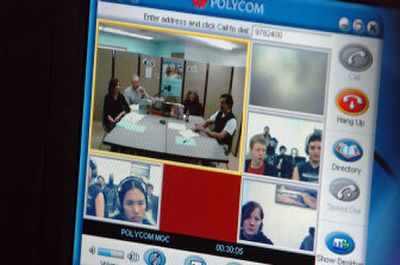
A group of tutors went around and asked students what subjects they’re struggling with in school.
Dakota Hendrick, a ninth-grader, replied, “Science.”
“What do you need help with?”
Hendrick: “Everything.”
So this spring semester, he will receive virtual instruction – complete with live video teleconferencing – from education majors at Washington State University.
Hendrick and seven other Native American students at Lakeside High School are part of a pilot program by WSU and the Coeur d’Alene Tribe that kicked off Tuesday.
“The tribe is looking for innovative ways to make sure their kids stay in school,” said Quanah Spencer, legislative and public affairs director.
The graduation rate on the reservation is about 38 percent. Forty-four percent of students are proficient in math, based on the state’s standardized test, and 56 percent are proficient in reading, making the school one of the lowest-performing in Idaho.
Tribal leaders, educators and parents hope the new program will help change that.
The reservation’s remote location, about 30 miles south of Coeur d’Alene, makes it difficult for tutors to shuttle back and forth, said Marjorie Zarate, the tribe’s educational director. Technology overrides that limitation.
The students aren’t the only ones expected to benefit from the process.
Gerald Maring, a professor of literacy education at WSU, hopes it will train future teachers to be culturally sensitive and adapt their curriculums so they are relevant to minority students.
“A lot of our kids (at WSU) aren’t used to cultural diversity,” he said.
Maring has been involved in 35 such projects involving teleconferencing with students.
“It seems to hold promise,” he said of the technology.
A limiting factor is the high cost of the equipment. But Maring said he can see the technology having wide application in the future, from helping students attending rural schools to high-achievers who aren’t challenged enough in the classroom.
The Lakeside students had mixed feelings about interacting with tutors on a screen instead of in person.
Ryan Seim, a ninth-grader who wants help in reading, said tutoring might work better face-to-face.
His mom, Cheryl Seim, disagreed. She believes the students will benefit from the instructional help and from learning about new technology.
“This is going to be the future,” Seim said. “I think it’s a wonderful idea.”
She and her husband help their son with schoolwork but welcome assistance from budding teachers who are more in tune with what students are learning in the classroom.
Kevin Gorr, a junior, was uncertain about the program’s benefits.
“It might work for me, it might not,” Gorr said. “It’s good to try, I guess.”
As an incentive, the tribe is paying the students $5.15 an hour from federal grant money earmarked for underprivileged and disadvantaged youth.
They spend three days getting work experience on the reservation and two days receiving academic help.
Jacque Kager, a freshman, is not worried about graduating. She’s certain she will.
But she thinks programs like this send the message to at-risk students that people care about their future and are available to help.
Still, Kager admits that if she were struggling in school, she probably wouldn’t have sought tutoring. “I think I would’ve waited for it to come to me.”