
Hawaii tries to fight sky-high gas prices
HONOLULU — Hawaii has long had the highest gas prices in the country, with drivers paying prices close to $3 a gallon, prompting the state to attack rising prices head-on last year. But nearly five months after price controls were enacted, the result is about as clear as crude oil.
Economic studies suggest that drivers aren’t saving money at the pump. But some consumer advocates say the gas caps make prices more fair.
The gas cap was pushed into law by majority Democrats in the Hawaii Legislature who described it as a solution that could reduce prices.
That hasn’t happened since the law went into effect Sept. 1, according to University of Hawaii business economics professor Jack Suyderhoud. His data show that prices have increased about 5 cents per gallon more than mainland prices since the gas caps took effect.
“I don’t think that by any stretch of the imagination you can say that the cap has contributed to lower prices. In fact, it has led to higher prices,” Suyderhoud told The Associated Press.
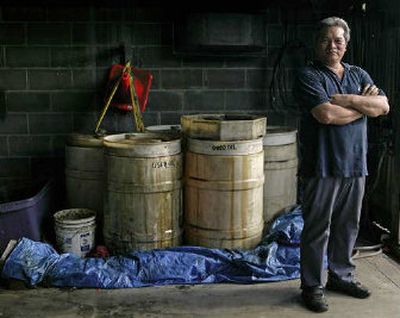
Former Chevron station dealer Frank Young disagrees. He said the gas cap introduced more competition and helped stop price fixing.
“This market was behaving as if it were an oligarchy. Now our prices are going up and down. That was the intent of the law,” said Young, who now runs an auto repair shop.
Hawaii’s gas caps, which vary from island to island and week to week, are set by averaging wholesale gasoline prices in New York, Los Angeles and the U.S. Gulf Coast. Then the Public Utilities Commission adds on allowances for what it costs wholesalers to ship to Hawaii and distribute gas to more remote islands.
It is difficult to say whether controls are working or not, since oil companies won’t say what they would charge without them. The caps themselves are confusing to consumers because they don’t include taxes or dealer markup. And there are many holes in the formula itself.
Because Hawaii gets most of its gas from Asia and Alaska, critics argue that tying the state’s fuel to mainland prices doesn’t make sense. It’s also difficult to say whether the final price is what the market dictates, or simply the maximum allowed by the cap. All the oil companies’ information about their costs and how they set prices is kept private, so the public has a hard time determining if they’re getting a raw deal.
“We passed a gas price cap law without knowing what was actually happening,” said Ted Liu, director of the Department of Business, Economic Development and Tourism. “The price cap brought us from no government intervention in the markets to an absolute government intervention.”
The law accomplished at least one of its goals — more competition among retail gas stations. Prices are only limited on the wholesale level, and retailers still can charge whatever they want. Bargain hunting is common when new caps are announced.
“If you drive around, you can find better prices,” said Richard Miller, a member of the Citizens Against Gasoline Price Gouging and a University of Hawaii law professor.
Gas price controls were introduced because of concerns that Hawaii’s two oil refineries — run by ChevronTexaco Corp. and Tesoro Corp. — were keeping prices high because they controlled the state’s isolated gas market.
A 1998 state lawsuit against Chevron and Texaco before they merged alleged they conspired with other oil companies to fix gasoline prices in Hawaii. The lawsuit was settled for $35 million in 2003.
ChevronTexaco and Tesoro both say the gas cap law hurts their businesses.
The only thing that everyone agrees on is that it needs to be changed.
Analysts and oil companies want it repealed; lawmakers want it to be easier to understand; and supporters want it fine-tuned.
Republican Gov. Linda Lingle, who opposed the system but let it become law without her signature, wants to abolish the cap and replace it with a new system that would estimate what consumers would pay if imported gasoline were available.
But a Democratic state representative, Marcus Oshiro, said he is looking for ways to modify the law so that it is more transparent. He released a study Jan. 11 showing that drivers have saved $33 million because of the cap, based on the widening difference between the cost of unleaded and diesel fuels and excluding the jumps in prices seen after hurricanes Katrina and Rita.
“We need to do what’s best by our consumers — not for the oil companies, not for the politicians,” Oshiro said. “The general concept is to work out what a fair price would be.”