
GM chief sees better times ahead
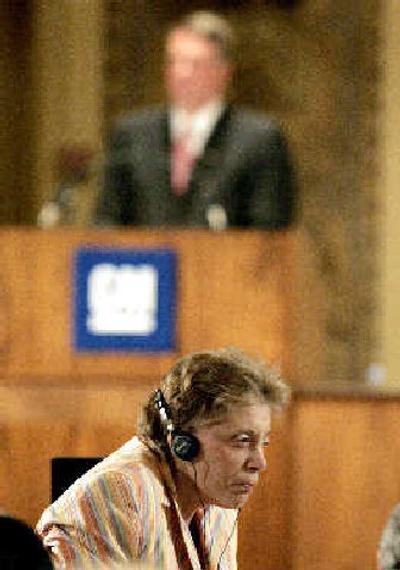
WILMINGTON, Del. — General Motors Corp. has made significant progress on its turnaround plan in the past year, reducing costs and rolling out new products, the company’s chairman and chief executive told shareholders Tuesday.
But shareholders, gathered for their annual meeting, passed two nonbinding shareholder-sponsored proposals that would change election procedures for the world’s biggest automaker. It was the first time that such shareholder initiatives have ever won majority votes at GM.
Yet a plan to replace the entire board was shot down, with each of the current directors getting 96.6 percent of the vote.
Before the votes were announced, Chairman and CEO Rick Wagoner told shareholders that GM’s first-quarter earnings of $445 million were a good sign that better times are ahead for the automaker.
“It’s important to understand that our goal in this restructuring is not just to change GM’s bottom line from red to black. Our goal is to structure GM for sustained profitability and growth to set us up to be successful for years to come,” Wagoner said.
Wagoner touted increased sales in Europe and Asia and pointed to successful new product launches in North America. He said new product launches will account for nearly 30 percent of U.S. retail sales volume this year and about 40 percent next year as more new models roll out.
In North America, Wagoner said the company expects to cut costs by $7 billion by the end of this year, a big step toward the goal of reducing costs from 34 percent of revenue last year to 25 percent in 2010.
“These are huge reductions for GM and any other corporation anywhere,” Wagoner said.
At the meeting at the Hotel duPont, preliminary vote totals showed two proposals that would change the way the board is elected were approved. The changes in the election procedure still would have to be approved by the board, however.
One proposal asks the board to allow cumulative voting by shareholders, meaning that each shareholder can cast votes equal to the number of shares they hold, multiplied by the number of directors up for votes.
The measure would allow a shareholder to cast all votes for one director.
John Chevedden, a shareholder from Redondo Beach, Calif., whose family sponsored the proposal, said it would let shareholders to push for directors with expertise in areas that are needed by the company such as introducing products to capture more market share or corporate governance, which he said needs to be reformed.
The other measure that passed would require each director to win a majority of votes to be elected. Currently the top 12 votegetters are elected.
John Lauve of Holly, Mich., a sponsor of the majority voting measure and of a new slate of board candidates, said change is needed at GM because of last year’s $10.6 billion loss and because the company sold its finance arm, the General Motors Acceptance Corp., with no remuneration for stockholders.
“We’re just left out in the cold as this continues to implode,” he said while advocating a management shakeup.
Other proposals prohibiting further stock options for executives, requiring a report on global warming, requiring separation of the chairman and chief executive jobs and recouping executive bonuses if they were based on earnings that later were restated downward all failed.
Wagoner said the proposals would be referred to the board’s corporate governance committee. Delaware’s corporation law is now under review in regards to majority voting, he said.