
Kootenai Lodge called endangered
WASHINGTON – The National Trust for Historic Preservation has named the Kootenai Lodge in Bigfork, Mont., as one of America’s most endangered historic places.
The trust calls the lodge an “idyllic mountain hideaway so perfect and so secluded that it looks like a piece of Rocky Mountain heaven” and says it should not be threatened by a developer’s plan to build condominiums on the property.
“The Kootenai Lodge is perhaps the most finely crafted and elegantly appointed collection of rustic log buildings in Montana,” said Richard Moe, president of the trust.
Many residents are opposing the controversial subdivision project, which has received preliminary approval from Lake County commissioners.
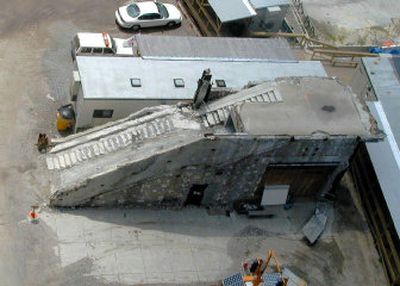
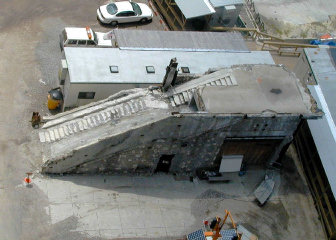
The trust also named the “Survivors Staircase” at the World Trade Center as one of the most endangered historic places. At ground zero on Sept. 11, 2001, they were a last chance for escape. Now they stand as the last surviving above-ground piece of the World Trade Center.
The trust also named whole swaths of New Orleans and Mississippi damaged by Hurricane Katrina.
By singling out the staircase and sections of the South, the National Trust for Historic Preservation is seeking to preserve areas hit by the two biggest American disasters of recent memory. Katrina, noted Moe, “damaged more historic homes than any event in the history of the country.”
The trust is a private nonprofit group founded in 1949.
In New York, the rumbling of construction around ground zero has weakened the staircase, and it is not included in plans for a new tower.
To Sept. 11 survivor Patty Clark, the Trade Center staircase is “symbolic of all of us who were witnesses to that day. It’s still strong, somewhat damaged, but that’s kind of like we all are.”
Clark and other employees of the Port Authority of New York and New Jersey used the staircase to escape Tower 2 after the terror attacks in New York.
She had already walked down 65 flights of stairs when she got to the World Trade Center plaza. Debris from Tower 1, which had just collapsed, filled the plaza, leaving the open-air staircase as the only way out. She and other employees followed the stairs down to ground level at Vesey Street and raced north, escaping just minutes before their own tower collapsed.
“For people who got out of the building, it was by steps, so steps are very important to the people who lived,” she said.
Supporters say they could live with seeing the staircase moved to preserve it, as long as it isn’t placed far from its original site.
Moe said most people don’t know the staircase remains because it is closed to the public. “It’s an enormously important artifact,” he said.
In the South, historic Mississippi towns and New Orleans neighborhoods face wholesale demolition after the 2005 hurricane.
Moe said development pressures may lead towns and property owners to relax building codes and replace historic homes rather than repair them.
“They need the assurance that the rush to rebuild won’t destroy the historic character that the wind and the water didn’t sweep away,” he said.
Also cited on the trust’s new list of endangered historic places are the retirement home of Confederate President Jefferson Davis and Pascagoula’s La-Point-Krebs House.
“Katrina represents the greatest cultural disaster in the history of the country, in addition to being a great human disaster,” Moe said.
Also named by the group were whole sections of New Orleans, including the Lower Ninth Ward, Mid-City, Holy Cross and South Lakeview.
Also named to the most endangered list:
“The Smithsonian Arts & Industries Building in Washington.
“Blair Mountain Battlefield in Logan County, W.Va.
“Doo Wop Motels in Wildwood, N.J.
“Fort Snelling Upper Post in Hennepin County, Minn.
“Kenilworth, Ill.
“Mission San Miguel Arcangel in San Miguel, Calif.
“Over-the-Rhine Neighborhood in Cincinnati.
Kenilworth, a northern suburb of Chicago, was chosen as an example of the intense development pressure to tear down early 20th-century homes and replace them with what the group decries as hulking mansions.