
Zags’ coach values experience in Cuba
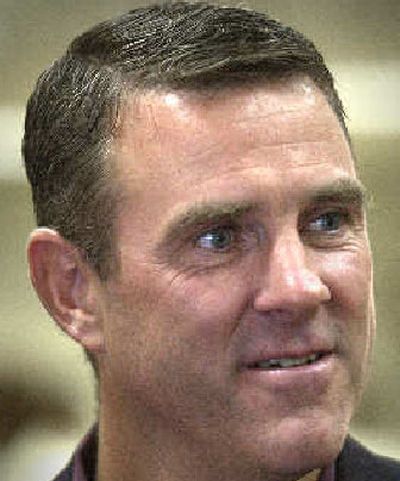

Originally, Mark Machtolf didn’t have much excitement programmed into his summer.
Baby sitting a few incoming recruits, helping his wife, Sheila, entertain their three young sons and taking a few minutes each day to check on the construction progress on his school’s new $8 million baseball complex were at the top of the Gonzaga University baseball coach’s modest to-do list.
But Machtolf’s summer agenda changed dramatically in late March, when he was named one of three assistant coaches on the 2006 USA Baseball National Team that went on to win the FISU World Championships in Havana, Cuba, last month.
Instead of watching the newly sown grass start to sprout on Washington Trust Field – which is scheduled to be completed for the start of GU’s 2007 season – Machtolf was whisked away to serve as the hitting instructor and first-base coach for a team of young college standouts hoping to represent their country in the World Championships.
In the five months he spent with USA Baseball, Machtolf experienced everything from a series of long, draining bus rides along the Eastern seacoast, where the team practiced and played during its trials phase, to the elation of a dominant 18-9 win over Chinese Taipei in the title game of the World Championship in Havana.
He also learned about himself, his players and the people of Cuba, who harbor a love and appreciation of baseball second to none.
“It was a great experience, both professionally and personally,” Machtolf said last week while recalling how his summer ultimately played out. “Any time you can be associated with good coaches, it’s a plus, and we had a really good staff.
“It was great to run ideas past other people and see how they do things, to get some different ideas and perspectives and to verify some old ones, as well.”
Machtolf’s odyssey started in Pittsfield, Mass., where the National Team opened preparation for the World Championships with an intrasquad game. During the next four weeks, the team – traveling primarily by bus – made stops in seven different states, playing against teams from the New England Collegiate League and national teams from several other countries.
“It was good competition,” Machtolf recalled, “but the better competition was among ourselves in the intrasquad games.”
It was about a week into the trials that head coach Tim Corbin, from Vanderbilt University, and his staff were forced to whittle their roster from 36 to 22 players.
“That was probably the most difficult thing we had to do,” Machtolf admitted, “because you ended up cutting guys who were All-American and All-League type of guys who had never been cut in their lives.
“The talent level was so good in the trials that we really felt we needed to pick the best 22 people, not necessarily the 22 best players. So character, makeup, mental toughness and whether we thought the kids could handle playing in Cuba was a huge part of the equation
“And still, of the 22 we ended up with, I wouldn’t be surprised to see 14 of 15 of them playing in the Major Leagues some day.”
The National Team that arrived in Cuba in early August, was introduced to life under the country’s oppressive Communist government in a variety of ways. According to Machtolf, several of the practice fields to which the team was assigned had no bases or pitching screens.
“Accommodations were pretty scarce,” he said, “so we had to kind of run makeshift practices to get us ready.”
In their opening game of the World Championships against the U.S. Virgin Islands, the Americans managed only two hits, but scraped out a 4-0 win, courtesy of the opposing pitching staff, which issued 11 walks.
“We didn’t exactly light it on fire offensively,” Machtolf said. “We were a little rusty.”
But the U.S. team, which Machtolf considered to be among the three most talented – along with Japan and host Cuba, which was upset by Taiwain in the semifinals – at the World Championships, came up big with the bats after that, outscoring its last seven opponents 76-16.
“Talent-wise, we were superior to most teams,” he said. “And the last six or seven games, we really swung the bats well, which was gratifying.”
Among Machtolf’s most vivid memories of Cuba are the Cuban people and their appreciation of baseball. Never, he said, was he or anyone on the U.S. team treated like Ugly Americans.
“To people who had some kind of government ties down there, maybe we were,” he explained. “But most of the contacts we had were with baseball people, and they respect the game so much that we were very well received.
“I’ll never forget the kids and how much baseball meant to them. Just to be able to give them a ball made you think like you were almost changing their lives, because they don’t normally have access to those things.
“Probably, eight or 10 of them I would have taken home with me if I could have.”
Instead, Machtolf returned home alone and quickly re-assumed his duties of overseeing the Gonzaga baseball program. He said he was pleasantly surprised by the progress that has been made on the school’s new baseball complex.
“I missed some things while I was gone,” he admitted. “They were actually mowing the grass when I got back, and they were just planting it when I left.”
So Mark Machtolf never got to check “Watch the grass grow” off his list of things to do this summer.
He found something much more exciting – not to mention rewarding – to occupy his time.