
Keep your dolls and train sets; today’s kids want high-tech gifts
For the toy industry, the recent spate of recall-related headlines isn’t the only thing to fear this holiday season. A more fundamental concern is the iPhone on six-year-old Hilary Roberts’ wish list.
“She’s not after a doll,” says her father, Scott Roberts, an Internet executive from San Francisco. “There’s not one traditional gift she’s asking for this year. She’s asking: ‘Can I have an iPhone?’ “
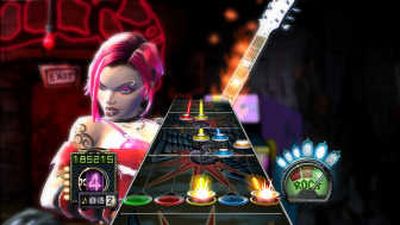
With one weekend left before Christmas, the toy industry finds itself on the defensive again – beset by a host of consumer electronic products. Besides Apple Inc.’s offerings to worry about, toy makers are competing with resurging popularity of entertainment systems from Nintendo Co., Sony Corp. and Microsoft Corp. along with recently released videogame titles. Who needs toy trains when you can take a crack at thundering the Kiss anthem “Rock and Roll All Nite” in the videogame “Guitar Hero III: Legends of Rock”?
That choice reflects the toy industry’s ongoing struggle against “age compression,” the phenomenon of young children reaching for items used by older kids or even adults. These days, kids are grabbing for more adult experiences at ever younger ages, making it ever harder for traditional toys to capture children’s imagination.
According to market-research firm NPD Funworld of Port Washington, N.Y., children begin playing with computers at age 5 1/2; CDs and DVD players around 6; and music players around 8 – all slightly younger than two years ago. And these electronics items have an advantage for consumers: Parents often use and share the same items, which are often far more expensive than the average toy and therefore lock up a lot of the holiday budget.
The toy industry isn’t sitting idle. It has fashioned another generation of electronic gadgetry of its own, cheaper than their adult alternatives and more pink and kid-geared, including videogame tie-ups for preschoolers and branded consumer electronics like digital cameras. This year, toy makers also have released a host of social networking sites aimed to snap up potential users of MySpace and Facebook before age compression overtakes them, too.
It’s unclear whether this year’s run at the online and electronics markets will be enough to reverse the pattern of single-digit declines in toy sales the industry experienced for the past half decade. Toy purchases are expected to come in fourth this year in overall spending – after electronics, clothes and gift cards – according to a recent study by the National Retail Federation.
All the same, Evelyn Viohl, the design vice president at Mattel Inc., says the game plan has been changing to realign operations with the fickle tastes of children, particularly the hard-to-get ‘tween set of kids ages 8 to 12 who flock online.
“We’re in a different place than we were in four years ago,” she says of her own design labs, where it’s not a question of combating high-tech gadgets, she says, but rather making a “fusion of different play patterns with electronics.” That’s meant more dependence on engineers and “designers that are into gaming” to bring in new product lines that will appeal to tech-savvy kids, she says.
The fruits of the push are already apparent on the Internet. The company enters the holidays with Barbiegirls.com, a social networking site for girls tied into a Barbie-shaped MP3 player ($60). The site – where girls are invited to join a virtual world based on the brand – is free to users and takes cues from Second Life, an adult-age virtual world without the branded theme. More than 8.4 million users have registered. Moshi Monsters, a smaller site launched this fall in beta phase, would like to one day hold the place of Facebook for a preteen crowd, says its London-based parent Mind Candy. The site is accessed with a code that comes with a $10 “MoPod” key chain, unlocking a world where users care for a pet that responds with computer-generated emotions.The sites seem to have enough appeal to wean youngsters from game consoles, says Richards Gilbert, a consultant in San Francisco. His 10-year-old daughter heads straight to Walt Disney Co.’s Clubpenguin.com networking site where cartoon avatars waddle around in a snow world. But the site, he says, isn’t a traditional toy. “You could take all their toys away,” he says. “Just give them a computer, Xbox and gadgets, they’d be happy.”
This season, Nickelodeon, a unit of Viacom Inc.’s MTV Networks that also licenses toys, launched NPower, a line of digital cameras ($22 to $80), music players ($25 to $50) and DVD players ($50) branded with characters like SpongeBob and Dora the Explorer.