
Some race to crack iPhone, bet on suppliers
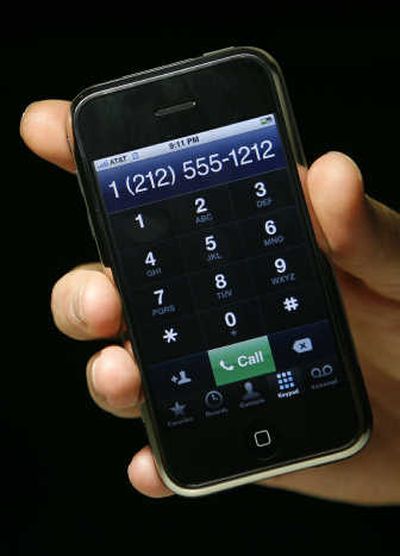
SAN JOSE, Calif. – While most iPhone owners couldn’t wait to try out their pricey new gadgets, a few raced to break them apart.
The dismantled – and in some cases, permanently busted – iPhones revealed one of Apple Inc.’s closely guarded secrets: the names of the companies that supplied the chips and other electronic components for the highly anticipated device.
The findings sent all but a few of the component makers’ stocks higher Monday, the first day of trading since the iPhone – a combination cell phone, music player and wireless Web browsing device – went on sale in the U.S. Friday evening for as much as $600 a pop.
The parts makers stand to profit handsomely if the iPhone proves popular over time. Apple itself has set a target of selling 10 million units worldwide by 2008, gaining roughly a 1 percent share of the cell phone market.
Among the beneficiaries of Apple’s business and the teardown buzz were semiconductor heavyweights Intel Corp., Broadcom Corp., Texas Instruments Inc. and Infineon Technologies AG as well as lesser-known companies such as Skyworks Solutions Inc. and Linear Technology Corp.
Some researchers said Apple’s secrecy surrounding the iPhone’s component suppliers is yet another example of the Cupertino-based company’s vaunted ability to keep their partners tightlipped even when facing a media frenzy and rampant speculation.
“They’re very good at it – and I think they make a point of holding their suppliers to a standard of secrecy, or you could lose the next round if you slip up,” said Howard Curtis, vice president of global services for Portelligent, a research company.
The secrecy continued Monday. Most of the component makers either didn’t return phone calls or declined to comment.
Much like the examinations of other much-hyped gadgets, the deconstruction of the iPhone was a mad dash to be the first to post online, with minute-by-minute updates on Web sites and the occasional howls of researchers who wound up destroying their iPhones.
The rush to deconstruct the iPhone included sites such as ThinkSecret.com and iFixit.com as well as research companies Portelligent and Semiconductor Insights. Several analysts also published the results of their own teardowns.
Based on the results, one of the biggest winners is South Korean chip maker Samsung Electronics Co., which is making the main microprocessor used to run the phone’s operating system and various applications. Samsung, the world’s largest memory chip manufacturer, is also making a type of memory called NAND flash for the iPhone.
Santa Clara, Calif.-based Intel, the world’s largest semiconductor company, is supplying another form of memory, called NOR flash, according to various research firms.
Intel is in the process of unloading its troubled unit that makes the memory amid fears about its long-term viability with the rise of NAND flash.
But the iPhone halo didn’t touch everyone Monday.
Apple, for one, fell 78 cents, to $121.26.