
Cuba’s ‘forbidden fruit’
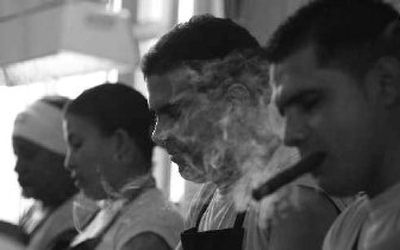
HAVANA — Joey Betancourt’s fingers dart over the long, light-brown tobacco leaf. They nudge loose tobacco inside and wrap and tug, smooth and straighten. A tightly rolled cigar takes shape.
“Looks easy,” said the 32-year-old roller at the Cohiba factory in Havana after using his teeth to tear excess wrapper leaf from the tip. “It’s not.”
Cuba’s ninth annual Habano Festival, which wraps up today, is a celebration of all things cigar — from tobacco seedlings to the smoothness of a freshly lit Churchill.
Washington’s trade embargo against communist Cuba means its cigars are illegal in the United States — but that is good news for some.
“Cubans are special for Americans especially because of the embargo. It’s the forbidden-fruit mentality,” said Raymond Chu, who works at a cigar franchise in Windsor, Canada, just across the border from Detroit.
Many festival participants are from Asia, Europe and the Middle East — though some Americans slipped into Cuba through Canada or Mexico.
“We’re not supposed to be here. That’s one of the reasons we came,” said John, a Nevada native who like many visiting Americans gave only a first name for fear of being fined for violating the U.S. ban on travel to the island.
More than 1,000 fans from over 40 countries puffed on free cigars while visiting tobacco plantations, getting lessons on the history, taste and smell of tobacco and kicking off their shoes during a smoke-clouded late-night party at the beach during the five-day event.
“It’s very exciting,” said Sato Yukio, 58, a university professor from Tokyo.
“It is a long way to come, but it is worth it.”
Founded in 1966 to produce cigars for dignitaries and Cuban leader Fidel Castro, Cohiba is the flagship of 27 premium brands produced by Habanos, equally owned by the Cuban state and Spanish-French tobacco firm Altadis.
Long an avid smoker, the 80-year-old Castro gave up cigars years ago for health reasons and has ceded power to his brother, Raul, while he recovers from intestinal surgery.