
Micron worries pile up ahead of rival’s $10 billion U.S. listing
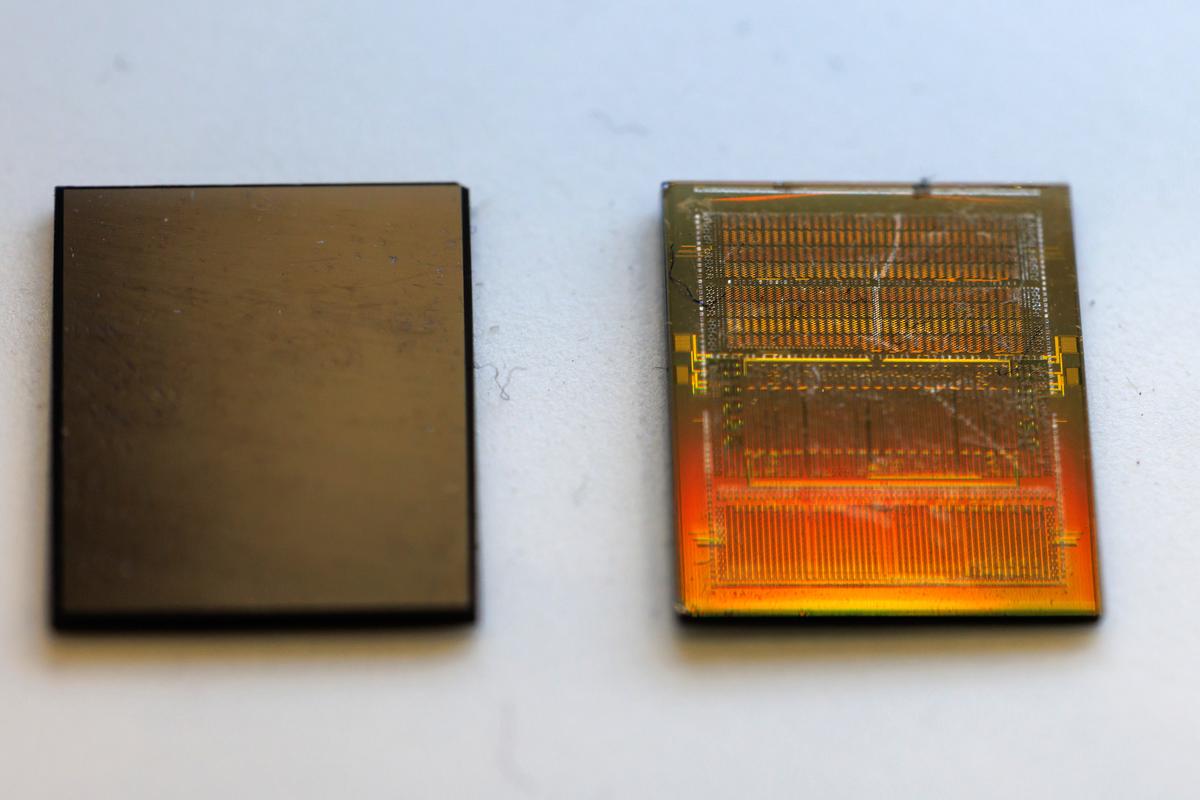
Micron Technology Inc. is having a tough few weeks in the stock market, and the upcoming US listing of South Korean rival SK Hynix Inc. will only add to its challenges.
Shares of Micron, the third largest maker of memory chips in the world, blasted out of the gate to start the year, soaring almost 50% in January for the second best performance in the S&P 500 Index. But lately they’ve been weighed down by concerns about the memory sector and uncertainty in the broader market due to the war in Iran. Despite two big days last week and further gains on Monday, the stock is still down nearly 20% since hitting a high three weeks ago - and March was its worst month in almost four years.
Now, SK Hynix, a key supplier to Nvidia Corp., has filed to list its American depositary receipts this year, a deal that could raise as much as $10 billion. If that pans out, it would be among the biggest New York debuts by a foreign company. It also would end Micron’s status as the only US-listed supplier of dynamic random access memory, or DRAM, chips and give American investors another way to play that part of the artificial intelligence buildout.
“You’ll see a rotation from quick money from Micron to SK Hynix because currently SK Hynix is trading at lower valuations,” said Rob Li, managing partner at the New York-based hedge fund Amont Partners.
Micron shares rose as much as 5.1% on Monday amid a broader rebound in the market on signs of a potential diplomatic push for a ceasefire in the Iran war.
While Micron is big in the US, it trails SK Hynix and Samsung Electronics Co. in the global DRAM market. In the fourth quarter, SK Hynix garnered 57% of the global revenue for high-bandwidth memory - high-end DRAM - more than twice Micron’s share, according to Counterpoint Research.
Still, Micron shares trade at a slight premium to SK Hynix, although both are relatively inexpensive at around four times forward earnings, which is a significant discount to the S&P 500’s multiple of roughly 20. The difference between the two stocks is likely because Micron is the “one DRAM stock listed in the biggest equity market on the planet,” said Ted Mann, a global equities portfolio manager at Ariel Investments in New York.
SK Hynix ADRs becoming available to US retail investors could narrow the valuation gap. It also could give hedge funds a new long-short pair opportunity, according to Kenny Kim, chief executive officer of the Seoul-based hedge fund Meridian One Asset Management.
“Both are memory pure plays, but SK Hynix is the leader in HBMs,” Kim said, referring to high bandwidth memory chips.
That said, any potential pressure on Micron from SK Hynix’s ADRs could turn out to be a short-term issue, particularly since at least part of the weakness in Micron’s stock price is from the broad-based risk-off market sentiment as the war in Iran drags on.
“If people are just maybe looking to diversify in the space a little bit, they might trim some [Micron] holdings just to hold a little wider portfolio, just short term,” said Joe Tigay, a portfolio manager at Equity Armor Investments, which holds Micron shares.
Even with Micron’s recent declines, the shares are up 28% this year, and data storage companies like Sandisk, Western Digital and Seagate Technologies are among the top performers in the S&P 500.
Over time, it’s likely that Micron shares and SK Hynix ADRs will begin to trade in tandem because a US-listing doesn’t change the fundamentals for either company.
“It’s just gonna be how do they perform and are they continuing on their trajectory, yes or no,” Tigay said. “Within one quarter, it’s not gonna have a meaningful impact.”
To other investors, Micron’s stock could actually generate better returns than SK Hynix’s ADRs over the longer term because the US company’s earnings growth should be faster as it catches up globally.
“Micron will likely show a steeper ascent against SK Hynix from now on,” said Jung In Yun, chief executive officer at Fibonacci Asset Management Global, a Singapore-based hedge fund. “There is already so much demand for HBM chips and the market just cannot get enough of them, opening a window for Micron to benefit.”