
Slim’s portfolio gets fatter
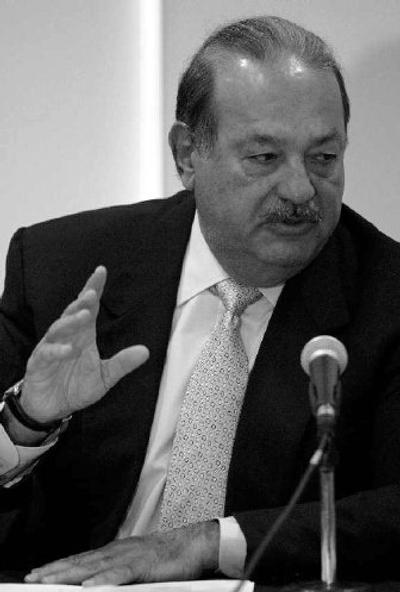
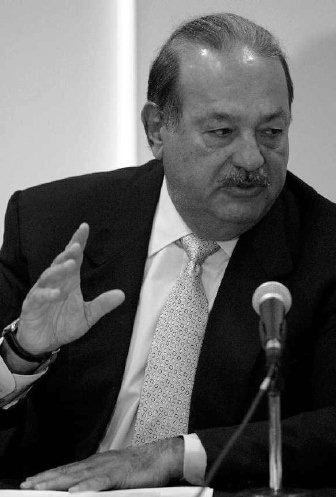
MEXICO CITY — The world’s third-richest man, Carlos Slim, is gaining rapidly on Bill Gates and Warren Buffet with a fortune that grew $19 billion last year — the largest wealth gain in the past decade tracked by Forbes magazine.
It’s also a sign of the wealth gap in Mexico’s monopoly-laden economy.
Since Slim bought the telephone monopoly in a 1991 privatization, he’s used Telmex as a cash cow to build an empire that includes Latin America’s largest mobile phone company; provides banking, brokerage and Internet services; sells insurance and oil industry equipment; and operates retail stores and restaurants.
To many Mexicans, who make Slim richer with nearly every phone call or trip to the mall, his rise shows their businessmen can run world-class companies. He’s widely praised for turning Telmex — once notorious for taking months or years to install a phone line — into a modern, professional operation.
But he also has kept phone rates high in a country where the minimum wage is about 50 cents an hour, and his success inspires anger among Mexicans who resent the concentration of wealth in the hands of the nation’s relatively tiny elite.
“Why should we want a few people to hoard all the wealth, if the majority of Mexicans don’t have enough to eat and 30 million Mexicans live on less than 22 pesos ($2) a day?” thundered former leftist presidential candidate Andres Manuel Lopez Obrador after Slim’s jumped to No. 3 on Forbes’ list of billionaires announced last week.
Now worth an estimated $49 billion, the 67-year-old Slim is the son of a Lebanese father who built a small family fortune from retailing.
Slim’s Telefonos de Mexico SA controls more than 90 percent of the nation’s fixed phone lines and made $15.9 billion in 2006; his America Movil SA controls about 70 percent of cell phone service in Mexico and made $21.6 billion.
Diners at Slim’s ubiquitous Sanborns restaurants can use Slim’s wireless service to connect to Slim’s Internet provider and check their holdings through Slim’s brokerage, part of Slim’s Grupo Financiero Inbursa group. Banking online, they can pay bills to Slim’s car insurance company or credit cards for Slim’s retail stores, among them Sears Mexico and the Mixup record store chain.
It’s an advantage that is not unusual in Mexico, where businesses from beer brewing to television to cement are concentrated in a few hands. As a result, Mexicans pay more than other, wealthier nations for services such as electricity, phones and bank fees.
New President Felipe Calderon has promised to battle monopolistic practices, but past efforts to do that have been thwarted by Mexico’s entrenched elite.
Slim is on track to overtake the two leading Americans on the billionaires list, particularly since Buffet ($52 billion), who made his money running the Berkshire Hathaway Inc. investment fund, and Gates ($56 billion), who founded Microsoft Corp., are more focused these days on giving their fortunes away.
Slim was reportedly ready to announce new philanthropy of his own. Telmex already sponsors a foundation that supports education and social programs in Mexico, and the billionaire’s investments in Mexico City’s downtown led to urban renewal in the central zone.
Slim told local media last year that he planned to give between $2.5 billion and $4 billion of his fortune to charitable foundations.
But he is still expanding an increasingly diversified empire that now involves his three sons, and he doesn’t appear ready to focus on philanthropy.
“Wealth must be seen as a responsibility, not as a privilege. The responsibility is to create more wealth,” Slim said in 2005. “It’s like having an orchard; you have to give away the fruit, but not the trees.”
Slim’s critics say he could do more for Mexicans by lowering consumer prices than by making charity donations.
A 2005 report by the Organization for Economic Cooperation and Development found Mexico’s phone rates among the highest in the 30-member group of developed nations, though Telmex questions the study’s methodology.