
U.S., Iran still not on speaking terms
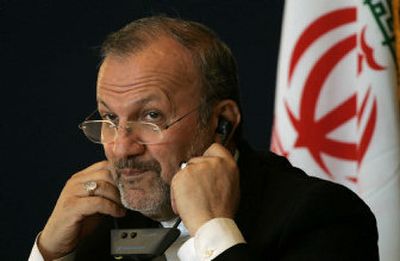
SHARM EL-SHEIK, Egypt – If this was supposed to be the spring thaw in the chilly relationship between Iran and the United States, it was a short season.
The top diplomats from both nations circled one another for two days during the international conference here, but passed up what would have been the first high-level, face-to-face talks since the United States broke off relations over the 1979 Iran hostage crisis.
Both the U.S. and Iran had sounded interested, even eager, to improve on nearly three decades of name-calling and accusations. U.S. diplomats had pointed to the seaside conference about Iraq’s future as a possible opening, and Iran’s hard-line president welcomed talks.
In the end, neither Secretary of State Condoleezza Rice nor Iranian Foreign Minister Manouchehr Mottaki wanted to make the first move. The only direct U.S.-Iran contact came in a casual chat between the U.S. ambassador to Iraq, Ryan Crocker, and Iran’s deputy foreign minister, Abbas Araghchi.
“You can ask him why he didn’t make an effort,” Rice told reporters Friday. “I’m not given to chasing anyone.”
Neither side had expressly asked for a meeting, although conference host Egypt worked hard to throw the chief diplomats together at a series of cozy meals. The hope, diplomats watching the drama said, was that one party might accidentally on purpose chat up the other.
Mottaki, speaking Friday as Rice left Sharm el-Sheik, said there was no time during the conference to meet her. He said planning and political will on both sides was needed for a substantive meeting.
“It should be clear what we are trying to get from the meeting, what are we going to discuss,” he said. “Such meetings should not be something theatrical. They should be substantive.”
The White House expressed no disappointment at the missed opportunity.
Bush had asked Rice to talk with the Syrians – as she did – because the government of Iraqi Prime Minister Nouri al-Maliki had requested it, White House spokeswoman Dana Perino said. The president didn’t ask her to talk to the Iranians.
“If the opportunity would have presented itself to meet with the Iranians as well, I think that the secretary would have been pleased to talk with them,” she said. “It didn’t.”
Crocker, the U.S. ambassador to Iraq, and David Satterfield, the U.S.-Iraq coordinator, did have a three-minute chat with Iran’s deputy foreign minister, Abbas Araghchi, and talked about Iraq, according to Crocker, who played down the conference hall encounter.