
White House trims economic forecast
WASHINGTON – The deteriorating housing market forced the White House to lower its projection for economic growth next year and raise its forecast for unemployment. Inflation was expected to moderate.
The new forecast came as the Commerce Department reported Thursday that the economy barreled ahead in the summer at a 4.9 percent growth rate, the strongest showing in four years.
That impressive performance, however, wasn’t expected to last through the current quarter, given the strains of the housing slump and credit crunch – problems likely to weigh on individuals and businesses alike.
Under the administration’s new forecast, the gross domestic product, or GDP, will grow by 2.7 percent next year. Its old projection called for a stronger, 3.1 percent increase.
“The housing market decline has been more significant than we expected,” said Edward Lazear, chairman of the White House Council of Economic Advisers.
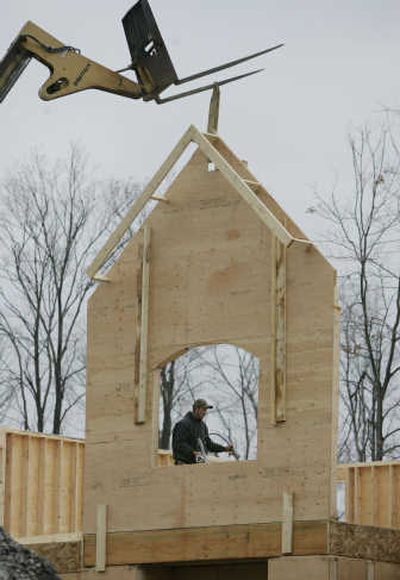
In the third quarter alone, builders slashed investment in housing projects by 19.7 percent, on an annualized basis, the biggest cut in a year. That lopped over a full percentage point off GDP from July through September.
Lazear said he expects the drag from housing on the economy to continue “at least through the first half of 2008.” He also noted that the credit situation seems to have gotten “a bit worse again” in the last few weeks.
GDP, the value of all goods and services produced in the United States, is the best measure of the country’s economic health.
Federal Reserve officials and other economists have warned that the economy is in for a rough patch.
The big worry is that consumers and businesses will cut back on spending and investing, dealing a blow to economic growth. The odds of a recession have grown this year. Still, the Bush administration, Fed officials and many economists remain hopeful the country will weather the financial storm without falling into recession.
With economic growth slowing, the unemployment rate is projected to move up to 4.9 percent next year. That’s up from a previous forecast of a 4.7 percent jobless rate but still would be considered fairly low by historical standards. The unemployment rate last year dipped to 4.6 percent, a six-year low.
Inflation, however, should improve. The White House expects consumer prices to increase by 2.1 percent next year, a moderation from a previous forecast of a 2.5 percent rise. That’s encouraging news as oil prices have marched past $92 a barrel.
In other economic news, the number of new people signing up for jobless benefits last week jumped sharply, suggesting that employment conditions are softening. The Labor Department said new applications filed for unemployment insurance mushroomed by 23,000 to 352,000.