
Rising food prices unlikely to let up soon
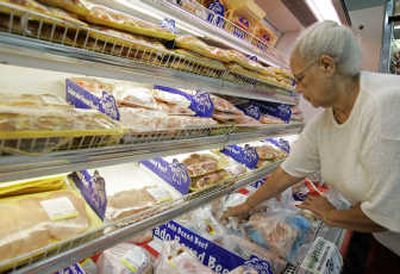
NEW YORK – This morning, your bowl of cereal and milk probably cost you 49 cents. Last year, it was 44 cents. By next year, it could be 56 cents. It’s enough to make you cry in your cornflakes.
The forces behind the rise in food prices – China’s economic boom, a growing biofuels industry and a weak U.S. dollar – are global and not letting up anytime soon. Grocery receipts are bulging because the raw ingredients, packaging and fuel that go into the price of foodstuffs cost more than they have in decades.
It’s the worst bout of food inflation since 1990, but not yet worrisome to the economy, said John Lonski, chief economist of Moody’s Investor Service. While high food prices can cut into consumers’ discretionary spending, the 4 percent rate of food inflation is still far below the crippling double-digit levels of the 1970s.
Still, consumers anxious for relief in the checkout line may have to keep waiting.
Andrea Williams, 32, can track the rise in prices of the food she buys for herself, her husband and their three children by looking back at the receipts she says she meticulously saves.
“In 2004, I bought a gallon of milk, it was $1.63,” Williams said before heading into a Wal-Mart in Savoy, Ill., about 140 miles south of Chicago.
A gallon of milk cost nearly $3 last month in her area.
A couple of years ago, Williams would spend about $250 a month on one big grocery trip. Now she says she’s spending $250 every two weeks.
It’s possible to trace the jump in food costs to the commodities markets, where the price of agriculture products and energy have reached multidecade highs this year. Crude oil, which helps dictate the price of gasoline and plastic packaging, hit an all-time peak in September. Wheat prices also climbed to a record.
The run-up in commodity prices has as much to do with short-term supply and demand in each market as with long-term shifts in who produces and consumes those products.
China is the juggernaut. Rapid growth there – and in Brazil, Russia, India and other developing nations – has led to massive demand for raw materials, including energy to run factories and cars, metals to build infrastructure and beans and grains to feed livestock and people.