
Fuzzy reception
Opinions mixed on digital TV conversion
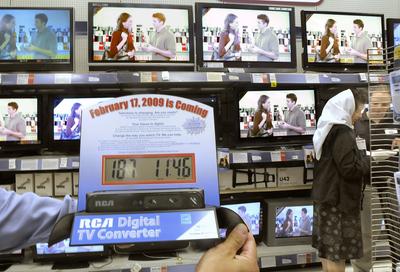
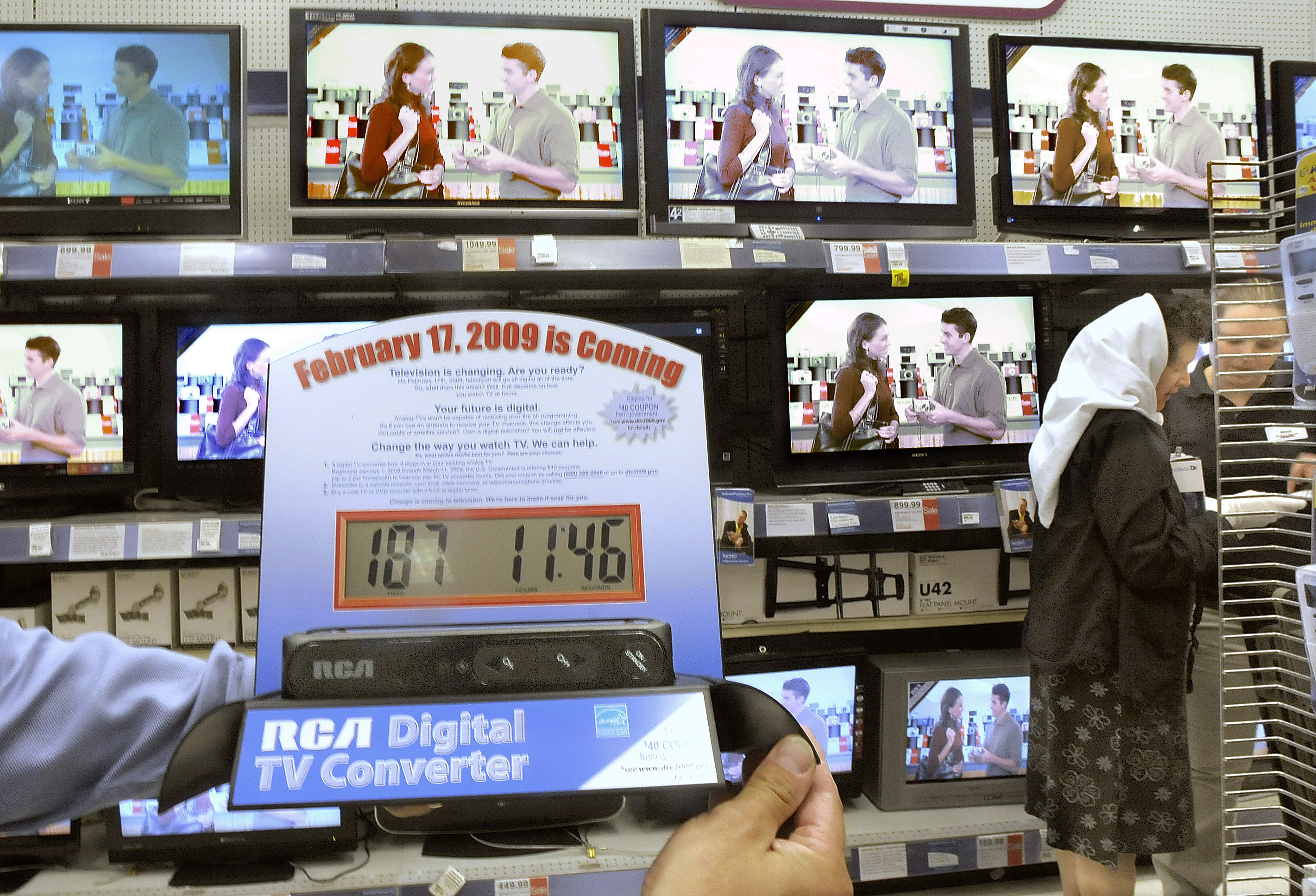
Jerry Smith has seen the TV ads and read about the conversion to all-digital TV next February. He’s not happy about it, for a number of reasons.
The 62-year-old retired railroad worker, a resident of Spokane, is an avid Comcast cable subscriber. That means his living room TV will have no troubles after Feb. 17, the last day for regular “analog” TV to be sent over the air.
But Smith has two other non-cable TVs in his home and he must buy a converter box – from $40 on up – for each set in order for them to receive digital TV signals come Feb. 18.
“What bothers me is that it looks like something the big companies are doing to us. We’re already paying through the nose for TV,” he said.
Like many other TV viewers, Smith isn’t sure what he’ll do with his non-cable sets.
With exactly six months left before the mandated change to all-digital TV signals, many residents within the four-state television area served by Spokane stations who need to make a change have been slow to take steps in that direction.
From data provided by the National Telecommunications and Information Administration, viewers in the 29 ZIP codes in Spokane County have requested about 24,000 federal coupons that can save $40 when buying a digital converter box. But only 9,500 of those coupons have been cashed in, said the NTIA, an agency of the U.S. Department of Commerce. The coupons expire 90 days after being issued.
In Kootenai County, about 12,400 converter coupons have been sent out, and a little more than 4,800 have been redeemed, the NTIA reported.
Those numbers don’t reflect buyers of digital converters who never asked for a discount coupon.
So who are the people who need to do something?
Anyone who doesn’t subscribe to a large cable system or a satellite service and who relies on over-the-air broadcast signals will be affected. The exception is viewers who have a newer model TV and use either a digital tuner or a digital antenna to watch programs.
The Nielsen Co., which conducts TV and media surveys, estimates the total Spokane TV market has roughly 65,000 homes that belong to the over-the-air segment. And another undetermined number of people affected are those, like Smith, who have one TV connected to cable or satellite, but second and third TVs that rely on over-the-air antennas.
Confused and unprepared
John Souza, director of technology for KREM-TV in Spokane, said he has discovered a large number of people are confused and unprepared for the digital transition.
“The biggest issue is they don’t understand how they get their TV signal,” Souza said. Many only know that a cable from the wall goes to their TV set, he said.
In May KREM did a signal test, sending “snow” into the analog channel for KREM viewers for about 10 seconds. The station told viewers if their sets had snow on the screen during the test, they needed to do something by February.
A large number called in. But in that group were some viewers who reported they had high-definition digital TVs but still saw snow. Souza and the KREM staff learned that many of those viewers were watching KREM’s analog signal on Channel 2, instead of on the 2.1 channel that is specifically for those with HD or digital-ready TVs. On cable they would have been watching Channel 2 instead of Channel 102.
“This is a very confusing process,” Souza said. “Everyone’s situation is a little different. There’s no cookie-cutter answers you can give people.”
Like other stations, KREM plans to conduct several community digital TV presentations over the next six months, with the next one in Nespelem on Wednesday.
Those meetings show viewers what it takes to set up a digital converter, how to tune a high-definition (HD) TV for over-the-air programs, and what other equipment they might need.
Doug Miles, production manager at KHQ-TV, said that station also plans to air a half-hour special later this year explaining how people can prepare for the change.
Digital signals sharp
People who have switched already to digital tuners on their TVs have noticed the superior quality of digital signals, Souza said.
“With analog TV, and if you live on a fringe area, your set might have ghost patterns and the screen might look fuzzy,” he said.
With digital TV, the picture is either 100 percent clear or nothing. When it comes in, the digital signal produces a sharp and detailed image that is far superior to what people got before, Souza said.
Another reason for the conversion is that transmitting digitally takes up less bandwidth than analog transmissions. The result is that stations can deliver more channels in the same amount of spectrum as they used for one analog channel. People with a digital converter box watching Spokane’s KSPS-TV, the public television affiliate, will find three digital PBS channels where they only had one before.
In addition to KSPS, the other main affiliates in Spokane broadcasting local shows in high definition are KXLY and KHQ. KREM and its sister station, KSKN, won’t begin producing HD newscasts and local programs until sometime in 2009, Souza said. All four stations air network shows in high definition, and KREM has been airing digital newscasts for several years.
In six months, the stations will expect to do something truly simple to cap a long and sometimes confusing process.
“All we’ll do, really, is pull the plug on the analog transmitter,” said Tim Anderson, chief engineer at KXLY-TV. “That’s it. We’re already transmitting everything else in HD. There’s nothing else that will be required.”