
Tips may help improve tax status
So many tax breaks, so little time.
With almost a month left in the year, you still might have an opportunity to make financial moves to improve your 2008 tax situation or prepare for savings in 2009, especially with several new rules on the books. Here are nine tips geared to individuals:
•Beware buying mutual funds this time of year.
Many funds distribute capital gains and dividend payments in November and December, and they’re taxable (unless you’re buying in an IRA, 401(k) plan or other sheltered account). It’s best not to buy until after a fund’s record date. If you buy on or before, you’d get the tax bill but would not have shared in the profits on which the payments are based.
•Lock in losses by selling beaten-down stocks, mutual funds and the like.
You can use losses to offset capital gains. If your losses exceed gains, you can deduct up to $3,000 yearly against ordinary income and carry unused amounts to future years.
•Lock in various deductible expenses before year-end.
Possibilities include charity donations, medical expenses and higher-education expenses. While the general rule is to accelerate deductions, it mainly pertains to people who itemize and aren’t subject to the Alternative Minimum Tax.
•Defer income until next year if you can.
To the extent you have control over when you receive revenue – as with billings for a small business – it can make sense to delay for a few weeks into 2009. The same strategy also applies if you expect to receive a bonus and can request that your employer defer it. Then again, it’s hard to imagine anyone getting bonus income in such a weak economy.
•Consider an unusual break for property taxes.
For people who itemize, property taxes had been and remain deductible. But taxpayers who normally take the standard deduction also can deduct property taxes paid for 2008, up to $500 (singles) or $1,000 (joint filers).
•Consider other optional deductions extended by federal tax legislation this year.
The list includes the ability to deduct sales taxes instead of state and local income taxes, as well as a deduction for up to $250 in unreimbursed classroom costs incurred by teachers.
Also, people over age 70 1/2 can again make a tax-free distribution from a retirement plan to a charity and avoid paying taxes on the withdrawal.
•Put cash into an IRA.
You can contribute to a traditional or Roth IRA for 2008 until next April, but doing so now might make sense simply because stock and bond prices are so depressed. Based on your income and retirement-plan coverage at work, you might be able to deduct contributions to a traditional IRA. You don’t get that with a Roth, but you would get tax-free treatment on withdrawals.
•Delay energy-efficient home improvements until next year.
Congress recently extended two credits. One, a 10 percent credit for energy-efficient items such as insulated windows and skylights, was extended for 2009 only. The second, a 30 percent credit to install solar electric, hot water and fuel-cell equipment, imposes a $2,000 limit for 2008. But there’s no limit for solar-electric property after 2008.
Thus, the first credit can’t be taken this year anyway, and the second is worth more next year on solar-electric equipment, reports tax researcher Thomson Reuters.
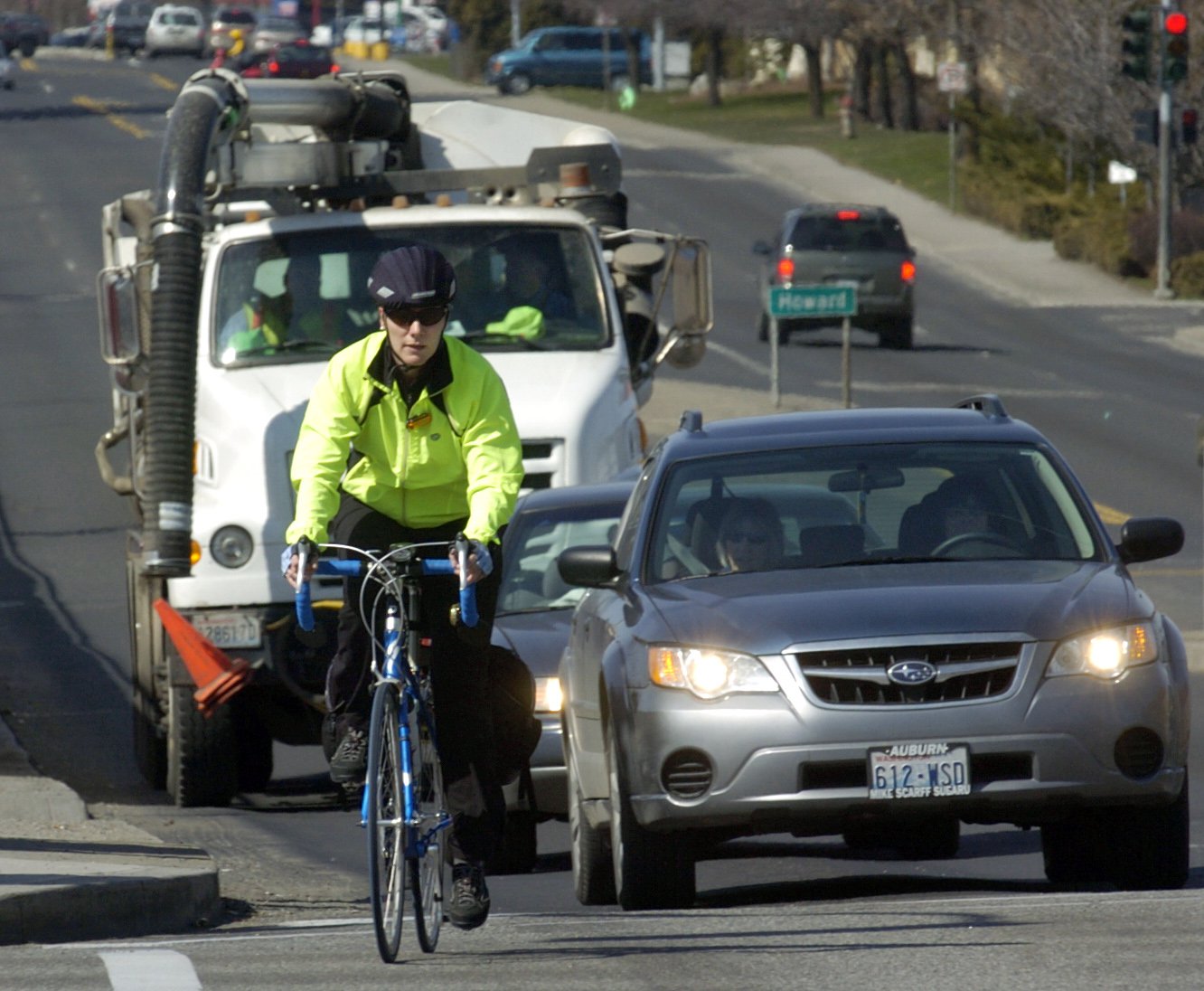
•Buy a bike and start riding it to work.
This tip doesn’t help for the remainder of 2008 but does provide a modest benefit, starting in January, for anyone who commutes to work on a bike.
As before, employer-provided perks such as subsidized parking, transit passes and vanpool services can be excluded from income as a nontaxable fringe benefit.
Starting next year, bicycle fringe benefits also will qualify, up to $20 a month. Tax researcher CCH Inc. reports such benefits can include employer-provided help to buy, improve, store or repair a bike used for regular commuting.