
In family economics, kids often come first

It’s a tough economy out there, even for a kid. And many parents are wondering how to broach the subject.
Should they shield their children from the hard times and spend like there’s no tomorrow? Or is it better to share the reality that more families – often their own – simply can’t have it all, even at Christmas?
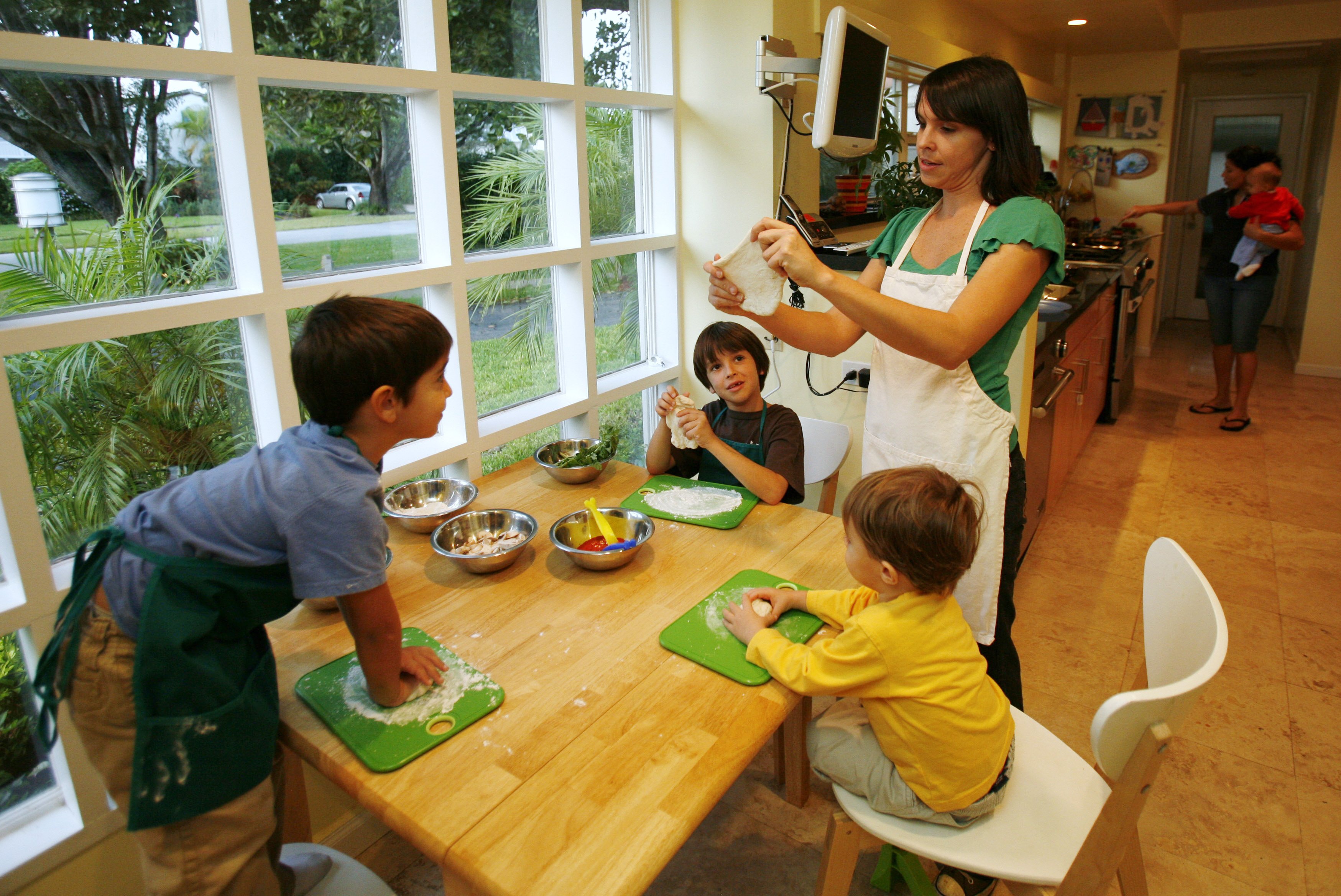
“I’ve explained the situation, and I’ve also avoided it,” says Mimi Chacin, a mother and business owner in the Miami area whose husband lost his job in advertising.
The family is doing OK. The children’s cooking classes that Chacin teaches have remained full so far – a sign, she says, that many parents are still willing to spend on some extras for their kids.
But in their own household, she and her husband are having to cut back – on holiday travel, for instance.
“I find myself not wanting to put them under that stress, but also sitting down and explaining that things aren’t easy for anybody right now,” Chacin says of her sons, ages 9 and 4.
Rita Cortese, who owns part of a chain of teen-oriented secondhand clothing shops, has been hearing more of these conversations among parents and children in recent months, especially over big-ticket purchases. While most items in the store are in the $5 to $7 range, a pair of designer jeans could run $25.
“The parents will say, ‘You can’t have the jeans and the sweater. Pick one,’ ” said Cortese, whose store is just outside Philadelphia.
Cortese chose the store because she thought it’d be fairly recession-proof – and so far it’s doing well. She’s had more customers in search of “gently used” clothing to save money, and more teens are bringing in clothing to trade for a discount.
Emily Collings, an 18-year-old college freshman from Washington Township, N.J., who works at the store, says she lives at home and also has had more frank conversations about money with her parents.
“We always talk about it,” Collings says. “And they’ve told me that it’s not going to be so easy for me to say, ‘Mom, I’m going out tonight. Can I have $20?’ ”
Retailers that focus on teens and children – Abercrombie & Fitch Co., American Eagle Outfitters Inc. and The Children’s Place – reported a drop in sales in November compared with the same month last year. Department stores also reported lower sales for the month.
Some retailers are stocking up on items for teens and children – the idea being that, if parents are going to spend money, it’ll be on their kids.
J.C. Penney Co. is putting a special focus on its juniors department, says John Tighe, a company vice president who oversees that portion of the business.
“We consider the teen an influencer within the family,” Tighe says, referring to market research showing that teens, at least in better times, have been able to persuade their parents to make purchases of all kinds.
Indeed, Some businesses that provide goods and services for children report an increase in profits. Lisa Jacobson, the chief executive of Inspirica, a tutoring company that caters to wealthier families, says she was surprised when she found that September was her best month in 25 years.
“It seemed very odd to me,” she said. But when she spoke to parents, she found that, in this economy, many were more focused than ever on their children doing well in school.
“I really do think that, overall, it’s the last thing people drop,” she says of the money parents spend on their children.
Spending choices depend somewhat on the age of the child, says Michal Ann Strahilevitz, a professor of marketing and consumer behavior at Golden Gate University in San Francisco. But especially as children get older, she thinks it’s important for parents to talk openly about what their families can and can’t afford – and to make it a life lesson, of sorts.
“Money is not the best way to show love to children,” Strahilevitz said. “So if you need to cut back on spending, think about other nonmonetary ways to make the holidays special for you and your family.”