
Showy shrubs
This weeks’ featured plant has so much going for it, the name is probably the only tricky part. Even though it looks like it should be pronounced “Cotton Easter,” the correct pronunciation is “Ko-TOE-nee-as-ter.”
Cotoneasters are a group of about 50 different shrubs that include low groundcovers and shrubs that grow as high as 20 feet. Native to Western China, they can be evergreen, semi-evergreen or deciduous. There are many varieties that will thrive in the Inland Northwest, which is in USDA zone 5. This means they can tolerate temperatures down to 20 below zero.
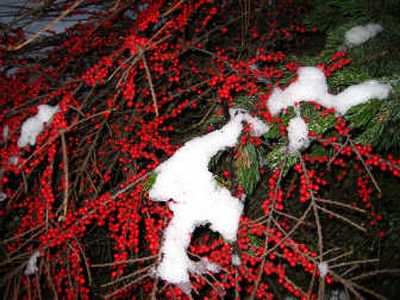
These shrubs have alternate, dark green leaves and rose, pink or white flowers in the spring. The flowers look like miniature double roses perhaps because cotoneasters are members of the rose family. Even though the flowers are small, the sheer number of blossoms makes this shrub a delightful addition to the garden. Bees absolutely love these flowers which develop into fruits that are reminiscent of tiny red apples. As you can see by the photograph, the berries will persist into the winter, providing welcome splashes of color.
Cotoneasters prefer a moist, well-drained soil but can tolerate drought conditions and windy locations. If planted on slopes, they will help control erosion. They grow vigorously and are very low maintenance. Taller shrubs look best if left unpruned so you can enjoy the gracefully-arching branches. Medium-sized shrubs should have some of the oldest growth pruned out each year. Low-growing cotoneasters should be allowed plenty of room. Don’t plant them right next to a pathway because if you have to continually prune branches out of the way, it will detract from their natural appearance.
Some of the varieties that will grow here include creeping cotoneaster (C. adpressus), cranberry cotoneaster (C. apiculatus), spreading cotoneaster (C. divaricatus), rock cotoneaster (C. horizontalis) and many-flowered cotoneaster (C. multiflorus).