
Sweet on the vines
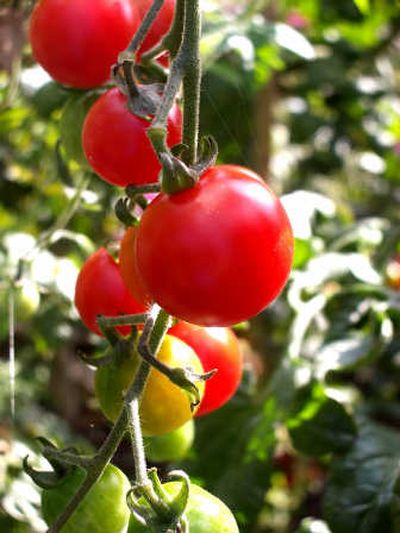
The last two warm-season crops that are great for your vegetable garden are tomatoes and peppers. Not only are they related, but they also have similar growing requirements. Both are members of the nightshade family. They love the heat so I always cover their beds with red plastic mulch to increase the soil temperature. To avoid frost damage, transplants should not be set out in the garden until late May or early June.
When choosing tomato varieties, be sure to select those that need no more than 80 days to mature. This information can be found on the seedling’s plant label and refers to how long it takes the plant to produce mature fruit once it is set out in the garden.
Some reliable short-season varieties are Goliath hybrid, early girl, glacier, Oregon spring and Siberia. My all-time favorite cherry tomato is sun gold, but yellow pear and super sweet 100 also are tasty.
Tomato cultivars are either determinate or indeterminate, which refers to how they grow and produce. Determinates have a short, bushy growth habit and stop setting fruit once the tips of the vine flower. Indeterminates make up about 75 percent of the cultivars and can grow from 6 feet to as much as 20 feet high in areas with long seasons. They will produce all summer long, but should be pruned back a few weeks before it frosts so the plants ripen the fruit.
At planting time, remove the lowest pair of leaves from the seedling, cut an “x” into the plastic mulch and plant the seedling deeply – just below the leaves – to encourage root growth along the stem. Space the plants about 2 feet apart.
Provide good support for the plants by using heavy-duty tomato cages, spiral supports or tomato ladders. In addition to using cages made from field fence, I’m trying out the spiral supports this year.
The most common tomato pest is the tomato hornworm. The adult is the sphinx or hawk moth. If you notice something munching on the leaves, pick off the worms or spray Bt – Bacillus thuringiensis, bacteria that kill the larvae but are safe for humans.
One of the most common problems gardeners see on both tomatoes and peppers is blossom end rot, a sunken, blackened area at the base of the developing fruit where the blossom was. The most common causes are a calcium deficiency in the fruit, uneven soil moisture or too much nitrogen in the soil. If you have been watering regularly and haven’t over-fertilized, try adding high-calcium lime to the soil.
At the end of the season, there are several methods to get the last of the tomatoes to ripen. Because the plants have shallow roots, you can shock them by taking a knife and cutting into the soil through the roots about a foot away from the plant’s main stem. Another way to shock the plant is to withhold water. The last two methods involve picking the green tomatoes and storing them in a single layer between sheets of newspaper, or uprooting and hanging the whole plant in a dark location like a basement or shed.
Peppers are easy to grow and require 50 to 75 days to reach maturity. Seed packets recommend spacing the plants 18 inches apart in rows that are 36 inches apart, but in my raised beds, I space them about 8 inches apart in all directions.
Bell pepper cultivars include California wonder and golden bell. Other types include jalapeño, cayenne, Anaheim and Hungarian.