
China honors earthquake victims

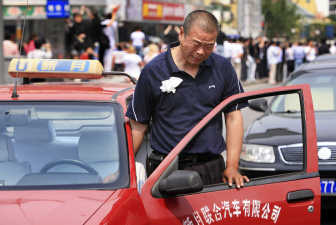
BEIJING – For three minutes, this very busy nation of 1.3 billion people Monday stopped shopping, producing, eating, talking and driving.
Instead, they stood still, heads bowed in mourning in commemoration for victims of last week’s earthquake. The memorial began at 2:28 p.m., exactly one week after the deadly tremor. Many said it was the biggest display of mourning in China since the death of Mao Zedong in 1976.
With each passing day since the quake struck, there is more to grieve. The Chinese government announced Monday that more than 200 rescue workers had perished over the last two days, mainly because of landslides set off by aftershocks.
Fears of more aftershocks were fueled by a report from three provincial earthquake centers that a strong tremor between 6 to 7 in magnitude would strike over the next 24 hours.
The confirmed death toll from last week’s magnitude 7.9 earthquake was raised Monday to more than 34,000 and was expected to climb to 50,000. More than 4 million people are homeless and 245,000 injured.
To mark the country’s largest natural disaster in more than 30 years, the Chinese government declared a three-day mourning period beginning Sunday. Movie theaters were closed. Television stations canceled most entertainment programs, and movie networks such as HBO and Cinemax were blacked out. The Olympic torch relay was suspended until Wednesday. Flags flew at half-staff.
From Beijing’s Tiananmen Square to Shanghai’s Bund to the far-flung villages where rescue workers were still trying to dig out the living from the rubble, everything simply came to a pause. It was an amazing sight in a country that on a normal Monday afternoon would be a hive of activity. Trains stopped on their tracks. Cars on the huge ring roads encircling Beijing stopped. Drivers in unison leaned on their horns so that a giant siren seemed to be shrieking.
People stood up inside buses and trains. Office workers stood on the sidewalks, students at their desks and on playgrounds. Police officers cradled their caps in their arms as they stood at attention. Many wept openly.
“We are so willing to share the suffering of the people of Sichuan, but except for donating this is the only thing we can do,” said Zhou Shuyang, a 22-year-old student who joined thousands at Tiananmen Square.