
Rising gasoline prices: behind the numbers

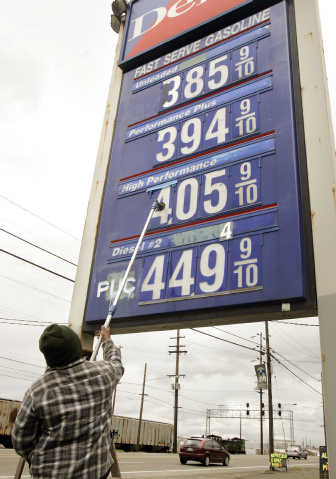
HAVERTOWN, Pa. – Steve Kehler spends most of his time working on cars or managing paperwork at the auto repair shop and gas station he runs in this Philadelphia suburb.
Unless an overnight gas shipment forces him to play another round of pricing roulette: Should he raise prices to keep up with pressure from his wholesaler? Or will that kill sales?
“It’s not an exact science,” he said.
Earlier this week, Kehler’s wholesale price jumped by 4 cents a gallon. The price is set by Sunoco Inc., from whom he leases his gas station and is contractually obligated to buy.
Shipments arrive overnight, whenever a remote sensor tells Sunoco that Kehler’s tanks are low. The wholesale increase means Kehler will have to raise pump prices soon – if he wants a shot at breaking even on gas sales.
That decision – the type of pricing dilemma gas station managers face daily – is not as much of a no-brainer as you might think. If a station raises its prices before its competitors, it may lose sales. But the longer station managers wait – with wholesale prices rising – the more money they lose. And sometimes they have no choice but to cut prices to keep cash flowing in.
In the end, Kehler decides to wait 24 hours before raising his prices by the 4 cents a gallon his wholesale prices already have risen.
Eighty-eight miles west, in the quaint south-central Pennsylvania river town of Marietta, Kelly Bosley spends more time worrying about the coffee bar and sandwich counter than gasoline sales at the Rutter’s Farm Store she manages.
Unless the Sheetz gas station across the street changes its prices. When Sheetz raises its prices above Rutter’s, Bosley’s pumps are often swamped. When Sheetz drops its prices, Bosley’s pumps empty just as abruptly.
A change in Sheetz’s prices typically triggers a call to headquarters. As a company-employed manager, Bosley has to wait for a go-ahead from headquarters to raise prices.
She takes a drive every morning to assess prices at two other stations, which she calls in to Rutter’s main office.
Like many gas retailers, Kehler has accepted the fact he’s not going to make money selling gasoline. He hopes the pumps will drive people to the moneymaking side of his business – auto repair.
At many other stations, it’s the convenience store that rules the roost. Gas is seen as a loss leader.
“We’re all reluctant to hit that $4 mark,” said Kehler. Already this year, Kehler says demand for his gasoline has dropped by about 27,000 gallons a month.
When the time comes, Kehler says he may hold prices steady at $3.999 a gallon for days and accept a steadily shrinking profit margin rather than be the first station in the area to post $4 a gallon for regular gas.
“You don’t want to price yourself out of the market,” he said.