
Browsers beware
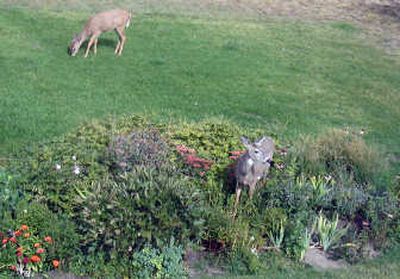
Sometimes I wonder why I enjoy gardening so much. Between the deer, pocket gophers, quail, cottontail rabbits and the occasional moose, gardening is a challenge. Because other gardeners also face these challenges, let’s discuss techniques for dealing with critters in the garden. Today, we’ll focus on deer and birds.
Deer will eat just about anything. Some of their favorite plants are arborvitaes, roses, hostas and tulips. The most successful deterrents are those that offend their keen sense of smell, although we often have to mix things up because deer get used to some repellents.
A simple repellent can be made by adding a dozen beaten eggs to a gallon of water in a sprayer. Make sure the sprayer doesn’t have any chemical residues in it if you will be spraying edible plants. Spray this mixture on the plants you want to protect. The reason this works is because deer don’t like the sulfur smell eggs give off. Any time it rains, you will need to spray again.
Bars of smelly deodorant soap such as Irish Spring also make good repellents. I place the bars in old knee-high stockings and hang them from the branches of our fruit trees. Garden centers carry a wide variety of commercially-produced repellents. Brand names include Ropel, Deer Off and Not Tonight Deer. Not all products can be used on edible crops so always read the label first.
One clever gadget is the Scarecrow motion-activated sprinkler. Attached to a hose, these sprinklers shoot a stream of water whenever something crosses the sensor’s path. I’ve heard it works well, but don’t forget to turn it off before heading into the garden or you’ll get a big surprise, which is certain to amuse local wildlife and your neighbors.
Another approach involves placing loose sheets of chicken wire on the ground in front of plants they especially like. Deer don’t like to step on any surface that feels unstable to them. Just make sure you don’t trip yourself with it. If you are growing vegetable crops they like to eat, such as carrots, cover the plants with netting or chicken wire.
Fencing deer out of your garden is another option but a fence needs to be about 8 feet tall. Anything shorter is merely a speed bump for them. Solid fences work well because deer don’t like to jump over them if they can’t see what’s on the other side. Many companies sell deer fencing, which is a heavy-duty, 8-foot-high plastic mesh. This can be added to an existing fence or attached to tall posts.
The main problem we encounter with birds is their penchant for nibbling on lettuce and any tender seed sprouts they find. There are a lot of quail on our property and while we enjoy watching them, we get frustrated by their attitude that the garden was planted solely for them.
Having a cat or dog in your yard is one solution but if local birds still think your garden is their personal salad bar, the best solution is to cover the plants with netting or chicken wire. We keep our salad greens under netting for the entire season and we temporarily cover any seedlings that need a head start – like beans and corn – for two to three weeks until they are sturdy enough to fend for themselves. It’s frustrating to have to do this but it helps us all get along in peace.
Next week, we’ll tackle insects and pocket gophers.