
GM adjusting work force

DETROIT – General Motors Corp. will furlough entire shifts of workers at some truck factories and may move them to nearby car plants as it restructures to adjust to a rapidly changing U.S. market brought on by $4-a-gallon gasoline.
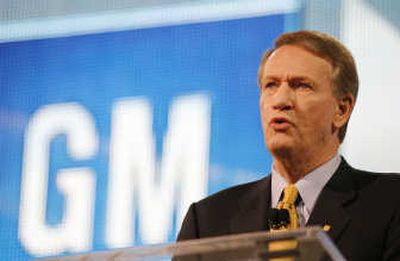
GM Chairman and Chief Executive Rick Wagoner and top managers are finalizing additional changes and likely will announce details at the automaker’s annual meeting Tuesday in Wilmington, Del., two people familiar with the plan said. The people requested anonymity because the plan is not finished.
One said production cuts were part of the plan. Neither would give details.
Key to the plan are the 19,000 hourly workers who signed up to leave the company by July 1 through buyouts and early retirement. GM on Thursday announced the number of takers in the latest round of offers, which amounts to a quarter of the company’s U.S. hourly work force.
The world’s largest automaker expects to replace some of the workers at a new entry level wage of about $14 an hour, about half the rate of current production workers. The new wage rate for as many as 16,000 non-assembly workers is part of the national contract negotiated with the United Auto Workers last year.
“This attrition program gives us an opportunity to restructure our U.S. work force through the entry-level wage and benefit structure for new hourly employees,” GM North America President Troy Clarke said in a statement Thursday.
Already GM has announced that it will accelerate indefinite layoffs of one shift each at the Pontiac and Flint pickup assembly plants. The layoffs were to begin July 14 because of slow sales of the plants’ products, the Chevrolet Silverado and GMC Sierra pickups.
Workers laid off at those plants could be moved to a car assembly factory in nearby Orion Township, where GM is negotiating with the UAW to add a third shift, said Mike Dunn, bargaining chairman of UAW Local 5960 at the Orion plant.
The Orion plant near Pontiac makes the Chevrolet Malibu and Pontiac G6 midsize cars, both of which are selling well as consumers shift from trucks and sport utility vehicles to smaller cars and crossovers. Malibu sales were up 37 percent in the first four months of this year, while G6 sales were up 22 percent.
Dunn said the additional shift could bring 1,100 jobs to the plant, which currently has 2,780 hourly workers on two shifts.
“We haven’t got anything final,” he said. “We’re always looking to bring work in. We’re hoping before the year’s out that we can accomplish this goal.”
GM has relocated about 175 workers from other factories to the Orion facility in the past few weeks, Dunn said.
It was unclear Thursday if any other pickup or SUV factories would be targeted to lose shifts or even be closed. GM spokesman Tom Wilkinson would not comment.
Cobalt sales were up 17 percent through April, while G5 sales were down slightly. Silverado pickup sales were down 21 percent in first four months of the year.
Lehman Brothers auto analyst Brian Johnson predicted GM will have to cut North American production by 16 percent this year because of weak sales of trucks and SUVs. Despite minimal truck production recently due to a strike at parts maker American Axle and Manufacturing Holdings Inc., GM still had a 125-day supply of pickups and a 139-day supply of SUVs at the end of April, Johnson said. A 60-day supply is considered ideal in the industry.
“GM’s inventories of large trucks have grown to worrying levels, and we expect GM to plan large production cuts over the remainder of the year,” he wrote Thursday in a note to investors.
GM offered buyouts to all 74,000 of its U.S. hourly workers in February. The company never said how many it hoped would leave.
Under the program, retirement-eligible workers were offered financial incentives to retire with full pension and benefits, while workers who were within four years of their 30th anniversary with GM were allowed to retire early and get reduced pay until their benefits kicked in. Workers could also take up to $140,000 to leave the company with no ties.
GM wouldn’t say how many workers took early retirement and how many took buyouts, nor would it state the cost to the company.