
Entertainment takes a hit

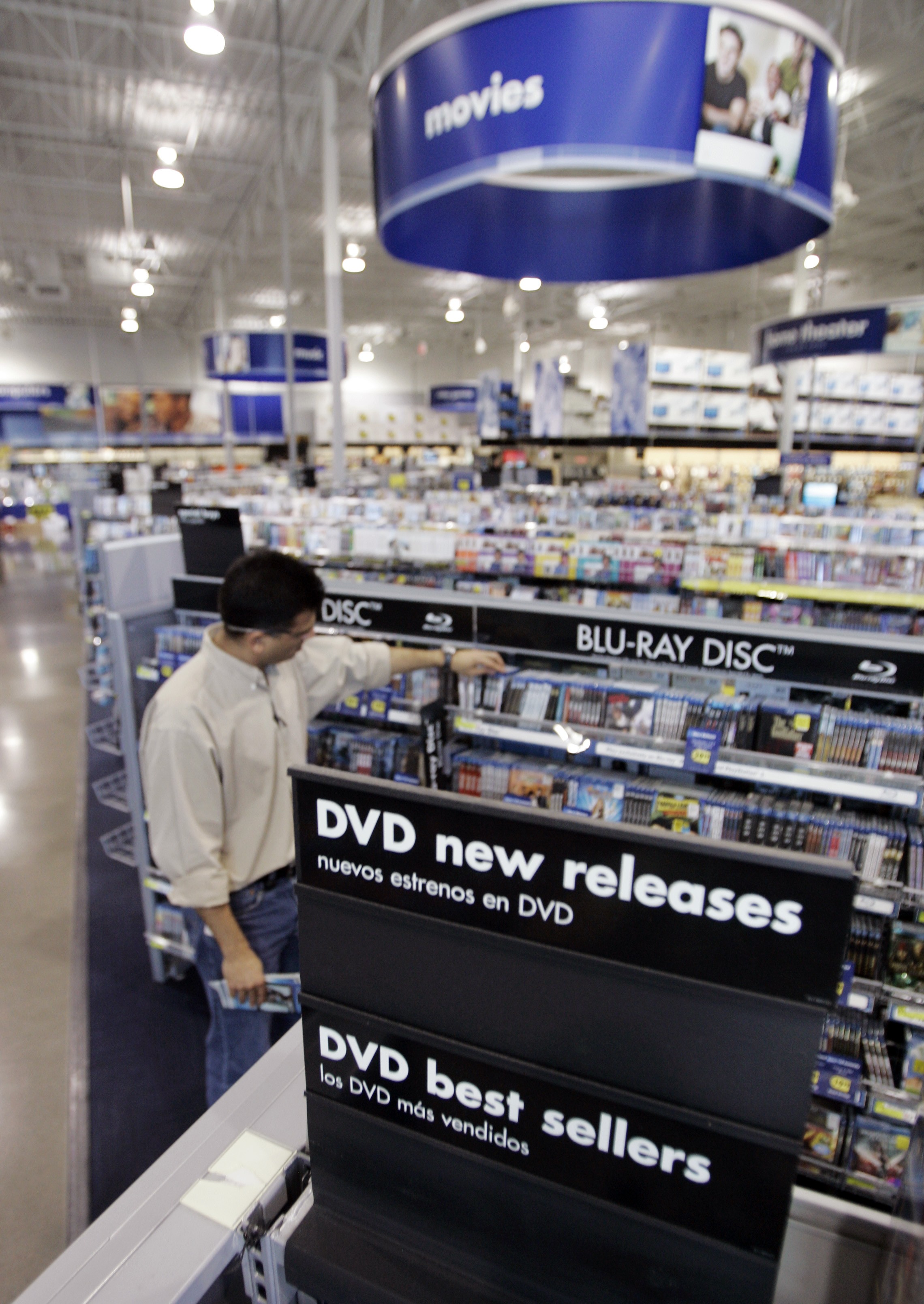
LOS ANGELES — When Paul Hodges lost his job as a newspaper librarian this summer, he cut back on junk food, canceled his Netflix subscription, went back to his old DVDs and tried to stop buying new ones.
“I had to scale back like everyone,” said Hodges, a 35-year-old homeowner in Coral Springs, Fla. “It forced me to prioritize things.”
In past downturns, Hollywood earned a reputation for being “recession-proof” as U.S. consumers’ movie spending kept growing steadily. This time, the industry is coming off three years of nearly flat spending, and there are cracks in its armor: Home video sales slipped this month as consumer confidence fell again amid rising unemployment and a crashing stock market.
But studios — which profit more from distributing a movie on DVD than they do from its theatrical release — are faring better than other companies dependent on discretionary spending. And many Hollywood executives remain optimistic.
“The bottom hasn’t fallen out of it,” said Steve Feldstein, a vice president at Twentieth Century Fox Home Entertainment, owned by News Corp. “Historically, home entertainment has withstood economic downturns. Most folks would rather watch a movie than watch the stock market.”
Several of the six major studios’ parent companies have been buffeted this year by a variety of factors, most notably lower ad spending. The drop has squeezed profits in television and publishing at such conglomerates as The Walt Disney Co., which owns ABC and ESPN; at News Corp., which owns newspapers, two dozen TV stations and Twentieth Century Fox; and at Time Warner Inc., which owns AOL, Time Inc. magazines and Warner Bros. At Disney, for example, a consumer slowdown could hurt the merchandise business and crimp attendance at theme parks and resorts, and its stock fell Tuesday when securities analysts noted this.
Even though the ad decline hasn’t cut parent companies’ profits so significantly that studios must give up the cash they’re used to living on, Wall Street has punished the parent companies with a typical drop around 30 percent, a bit more than the S&P 500 has lost so far in the current downturn. But many other companies that rely on discretionary spending have seen their stock drop much further — by half or more — in the last six weeks.
There are signs of caution at studios.
This month, NBC Universal, a subsidiary of General Electric Co., announced it will cut its spending next year about $500 million, or 3 percent, to stay ahead of the downturn. At Paramount Pictures, a Viacom Inc. unit, the wide release of two movies has been pushed until January to delay spending on marketing, and the studio plans to make six fewer movies a year going forward.
Earlier this year, Warner Bros. cut production by 19 films a year, after eliminating its Picturehouse and Warner Independent labels and absorbing New Line Cinema — a clear move to cut costs and focus in-house spending on the movies known as “tent poles” for their all-inclusive appeal.
But the vast empires of media conglomerates actually help insulate Hollywood from the credit crunch. Cable networks, TV stations and theme parks generate billions in free cash flows to help fund new movies — boom, bust or fail.
The lingering worry is that the famously resilient consumer will not buy as many videos through the holidays.
“They’ll still be buying content, whether it’s music or DVDs, but my guess is … they’ll be a little more selective,” said Russ Crupnick, a digital media analyst for NPD Group. “That’s where the economy is going to be hit.”