
Committed to fair trade
Kim Harmson hopes her shop, Kizuri, encourages consumers to become more responsible
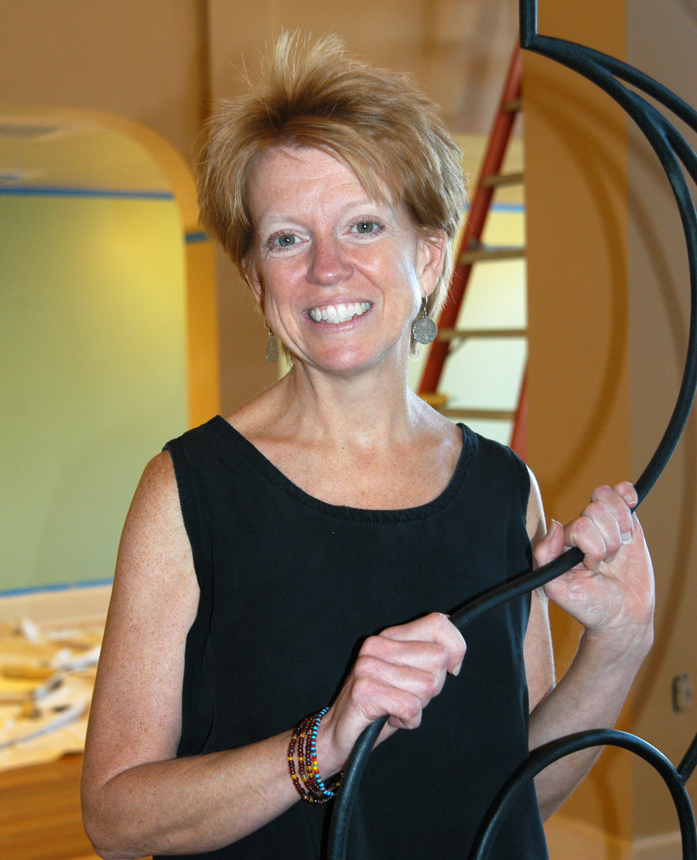
Kim Harmson recently set aside her reticence about shopping to go on a wholesale shopping spree for fair-trade, earth-friendly, locally made merchandise to stock her new store at 35 W. Main Ave., which she hopes to have open sometime next week.
“I’ve been shopping for gifts for friends,” she said, as one way to motivate herself.
Running a retail store was far from what the educator ever expected to do. But when she learned that the Global Folk Art fair-trade shop at that location was closing in May, her commitment to fair trade led her to decide to open a for-profit store.
She is calling the shop “Kizuri,” which means “good” in Swahili, because she said that “shopping at Kizuri is good for the planet and good for the people.”
For Harmson, fair trade is social justice at its best. So her goal is not to ask people to increase their consumption, but to become more responsible consumers.
“If people would shop fair trade first, it would make a major impact on the world,” she said, “because part of fair-trade shopping is to learn the stories of those who produce the products.”
Harmson grew up in Chicago and did college studies in Michigan, Chicago and the Northwest. She came West with her husband, Jeff, when she was 23.
“We left Chicago with our bikes on the back of our car, intending to live in Seattle where I would continue in school,” she said. “We stopped in Spokane for lunch and decided to camp for three days to explore the area.”
They continued to Seattle and biked down the coast to San Diego and east to Albuquerque. Unencumbered and unemployed, they considered where they wanted to live and finally settled in Spokane in 1980.
When her children were young, she was an early childhood educator, and then spent 10 years as an education consultant. She also worked part time in customer service at Ganesh Himal, a fair-trade wholesaler in Spokane.
When she heard Global Folk Arts was closing, Harmson proposed the idea of a for-profit shop to Jim Sheehan, who offers space in the Community Building to nonprofits. She said Kizuri would operate with community involvement, would educate people and would give 7.5 percent of profits back to the community each year.
Global Folk Art’s nonprofit status will be transferred to the Northwest Fair Trade Resources Network, she said.
Needing money to start the store, she asked members of the community for low-interest, eight-year loans. Nine investors are providing a financial base for the venture.
“At first, I felt a sense of ownership. Now I feel I’m the orchestrator, and Kizuri belongs to everyone,” said Harmson, who attended a Lutheran church in childhood and has attended various churches over the years.
She now nurtures her spirituality through meditation, friends, time in nature and her commitment to social justice and equality.
To shape her children, Harmson volunteered with them at Global Folk Art when they were in grade school. Now young adults, they are excited about her decision to open Kizuri.
“Our mission is to run a successful business to accomplish our vision of having a community-inspired store that practices the values of fair trade, and social justice, economic and environmental sustainability, fostering good relationships with producers, vendors, customers and the community,” she said.
Part of building those relationships is to tell the stories of producers and the difference fair trade makes in their lives.
She will tell them verbally, and also have photos and descriptions by the products. For example, Harmson purchased bead necklaces and batik bags from young women who were once beggars on the street. By taking small loans, they can now carry on their traditional cultural work and provide a living for themselves and their children.
During the summer, Harmson met two women from Nepal who belong to the Association of Craft Producers, which she knew about through Ganesh Himal. They started with 90 workers and how have more than 1,200.
These producers, primarily impoverished women, have come from difficult life situations. The Association for Craft Producers trains them to value themselves and their work. Now they have respect in their families and communities, and they earn enough that they can pay for their children, both boys and girls, to go to good schools. Some have earned graduate degrees.
“It’s not charity. It’s about people working hard and competing in the economy,” Harmson said.
She is inspired by Palestinian and Israeli women collaborating to create candles she will sell. The Palestinian women begin the process and then send the candles across the border for Israeli women to finish.
“It’s an example of peace,” she said.
In the Spokane area, there are five fair-trade wholesalers supplying handicrafts and clothing from Nepal, Mexico, Chile, Guatemala and Nicaragua. Harmson is buying from them and some local artists and crafts people.
She will offer a selection of clothing made from sustainable materials, such as organic cotton, hemp and bamboo, expressing her concern about conditions under which clothing is produced.
As she makes her pre-opening purchases, Harmson said she is thinking about both functionality and beauty of items, keeping in mind that some shoppers want to buy consumable goods, such as fair-trade organic chocolate and coffee.
The merchandise will also include jewelry, indigenous art, practical housewares, handcrafted pottery, soaps, lotions and children’s toys.
“I will listen to consumers,” she said. “I want it to be a community-inspired store.”