
Scrutiny lacking in BP oil spill claims
Open records laws don’t apply to fund

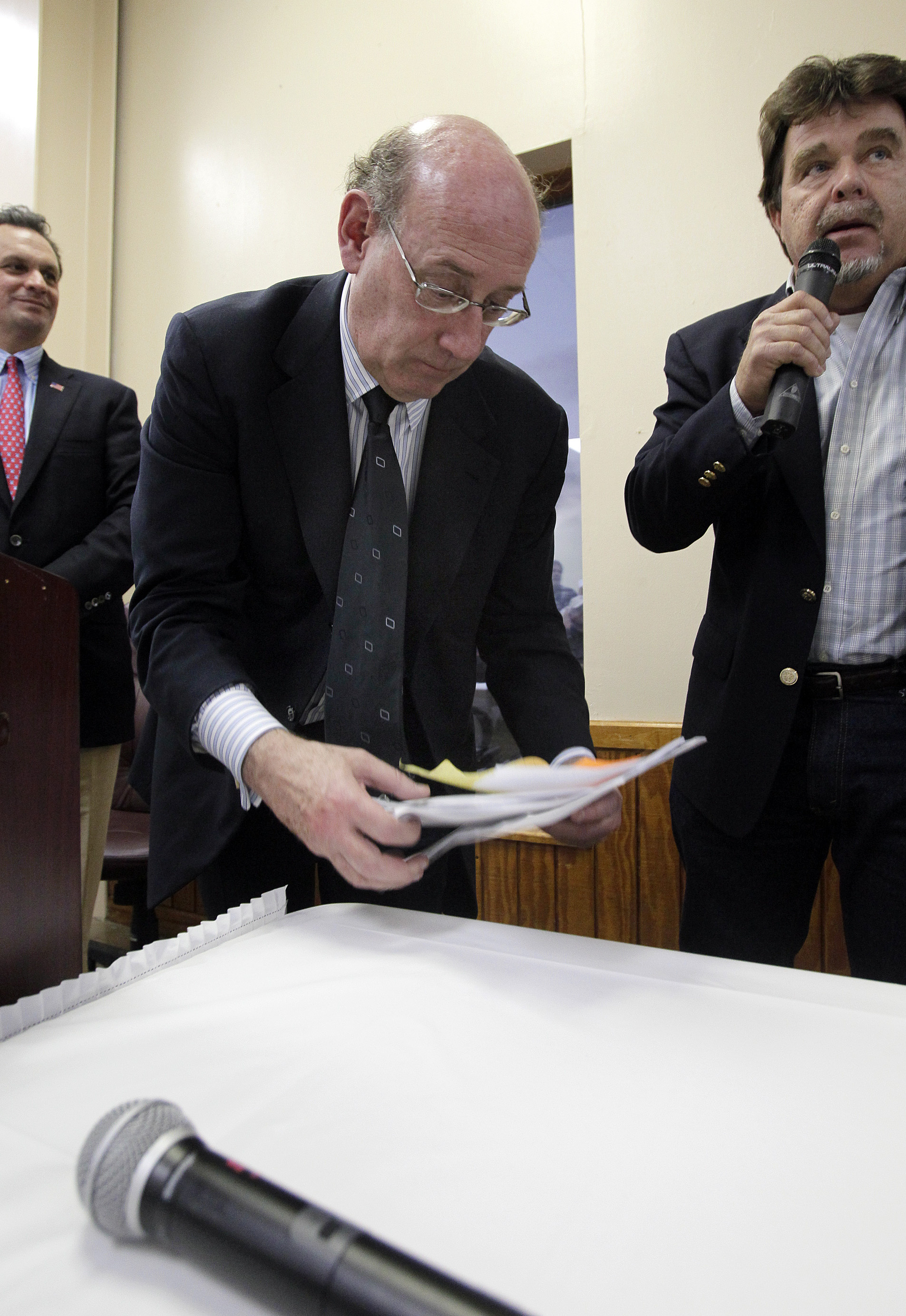
NEW ORLEANS – President Barack Obama vowed during a White House speech last June that the $20 billion he helped coax out of BP for an oil spill compensation fund would take care of victims “as quickly, as fairly and as transparently as possible.”
Eight months later, that’s not how things look to many people along the Gulf Coast.
Tens of thousands of fishermen, oyster shuckers, business owners, hotel operators and hairdressers still await payment. Many others whose claims have been turned down question the evenhandedness. And without the data to determine who is right, attorneys general and members of Congress question the openness.
An Associated Press review that included interviews with legal experts, government officials and more than 300 Gulf residents found a process beset by red tape and delay, and at the center of it all a fund administrator whose ties to BP have raised questions about his independence.
Now, the dissatisfaction has reached a fever pitch: Lawmakers in Washington are demanding the White House step in, the Louisiana governor and others want a federal judge to intervene, and the people most affected by the Deepwater Horizon disaster are threatening to line the courthouse steps if they don’t get the changes they seek from administrator Kenneth Feinberg.
“A lot of promises were made by Feinberg and President Obama that this would be a very open process, and I just don’t feel that’s the case,” said Rep. Steve Scalise, a Louisiana Republican.
Feinberg, the Washington lawyer who runs the fund and was lauded for his work overseeing the compensation fund for 9/11 victims, has insisted he is being fair.
He has acknowledged that the system is clogged by the sheer volume of oil spill claims, along with inflated or outlandish requests. Among them: One person filed a claim for the entire $20 billion, while another asked for $10 billion; a boat captain sought reimbursement for lost income for himself and four deckhands, but it turns out he didn’t have any deckhands; and a fisherman claimed he lost a month on the water, but his boat had a hole in it and was dry-docked even before the spill.
“Overall, I think the program has worked well,” Feinberg told the AP. “I think the program has been fairly transparent.”
The fund and Feinberg’s agency, the Gulf Coast Claims Facility, were an extraordinary response to an extraordinary situation. The normal course in an oil spill is for the responsible party – in this case BP – to pay claims directly.
BP was doing that until August, when it turned over the process to Feinberg as part of the president’s promise that payments would now be “administered by an impartial, independent third party.”
So far, nearly 490,000 claims have been filed, and roughly half have been turned down. The fund has handed out $3.4 billion to 169,000 claimants. Nearly all the money dispensed so far has been in the form of either emergency payments for short-term losses or one-time checks handed out in exchange for a promise not to sue.
To date only two final settlements for long-term losses – including a $10 million payment to a BP associate the fund refuses to identify – have been paid out.
While the government helped force BP’s hand to set up the fund, it did not include a mechanism to oversee Feinberg’s operations, which are not subject to state or federal open records laws. Citing confidentiality requirements, Feinberg refused requests by the AP for information about who is getting the money, broken down not by name or address but by county, occupation, and amounts requested versus amounts granted.
“I have to strike a very careful balance between the public’s right to know and the confidentiality of data submitted to the GCCF,” Feinberg said.
Earlier this month, a federal judge in New Orleans ordered Feinberg to stop saying he is independent of the oil giant, writing that the administrator is “acting for and on behalf of BP.” Until last month, Feinberg’s firm was receiving $850,000 a month from BP, and it is now negotiating a new fee package with the company.
Lawmakers from both parties are up in arms, and the Justice Department has urged Feinberg to speed up payments, reminding him in a recent letter that he is not there to save BP money.
Hundreds of angry fishermen and business owners have flooded the Gulf Coast Claims Facility’s website over the last two weeks with complaints. One Alabama fisherman says he faces bankruptcy because of the perception that his catches are not safe to eat. A Louisiana business lost everything and suggests the process is lining the pockets of lawyers and accountants at the expense of spill victims.
According to Feinberg, claims were rejected because they were ineligible, lacked documentation or were fraudulent. By Feinberg’s own count, fraudulent claims make up only 1.5 percent of the total filed.
About 188,000 people have decided to give up their right to sue BP in exchange for final payments. Some opted for one-time checks of up to $25,000. Others – 97,000 – are waiting on much bigger checks based on proof of losses.
Many who have received emergency payments that are meant to compensate them for six months of lost revenue until a final settlement is offered say the money falls short. Thousands more have yet to receive any money.
“They’re just trying to stall us, hold us off until our bills pile up and we have to accept anything,” said Alabama shrimper Robert Barbour.