
Husband recounts path to terrorism counts
From quiet life to prison cell, a radical change
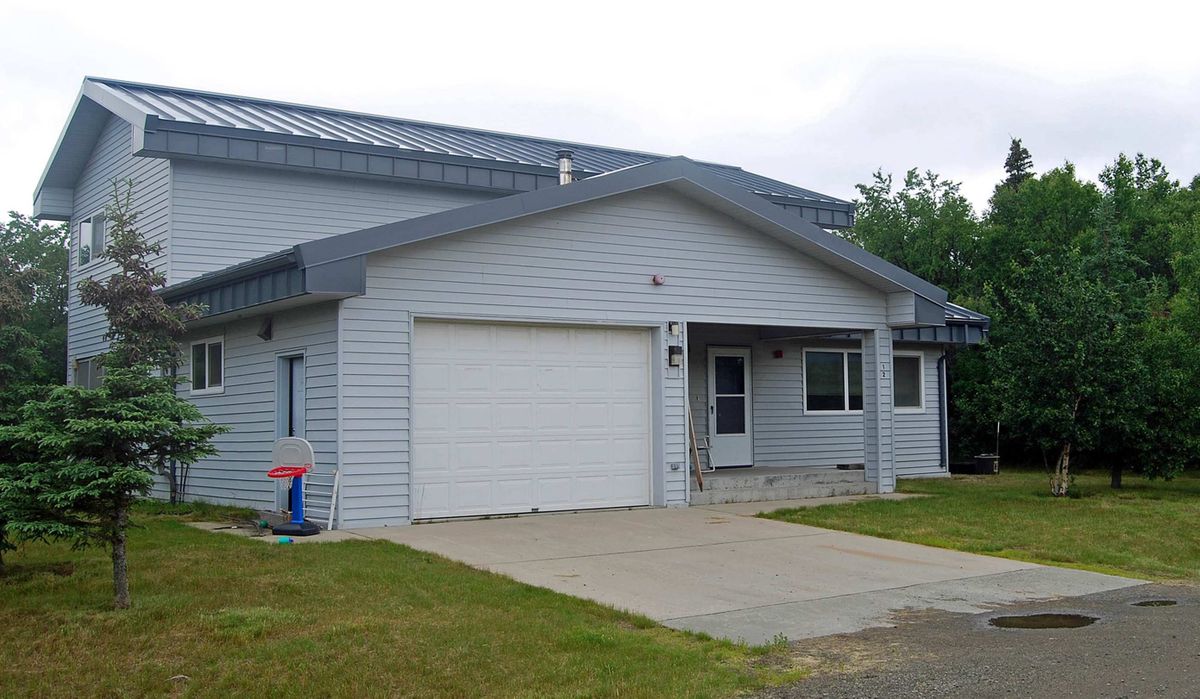
FAIRTON, N.J. – A little more than a year ago, he was a weather forecaster at a remote outpost in King Salmon, Alaska, population 442. He and his wife – he with his close-trimmed red beard and shy smile, she with her rosebud cheeks and sweet English accent – lived in a two-story frame house strewn with toys. They were popular dinner companions and regulars at community theater productions.
Now, Paul Rockwood Jr. is a convicted terrorist, serving eight years in a federal prison. His wife, Nadia, is exiled on probation in England after her own criminal conviction. Since their arrest in 2010 – accused by the FBI of drafting and delivering a list of targets for terrorist attacks – friends and neighbors have been left in confusion, wondering how the nice young couple could have turned into the terrorists next door.
The possible answer, provided in Rockwood’s first interview since his arrest, opens a window into one man’s uncertain spiritual journey and radicalization after the Sept. 11 attacks. It also offers a glimpse of the government’s increasingly deep dragnet for suspected domestic terrorists.
To federal authorities, Rockwood, 36, is a man who turned from hard-partying bartender and ex-Navy seaman to Muslim militant committed to killing fellow Americans.
To Rockwood, the plot involving targeted assassinations and bombs was a “pure fantasy” created by a government agent he thought was his friend – a common refrain in the nation’s burgeoning number of “home grown” terrorism plots prosecuted since the Sept. 11 attacks.
Rockwood concedes he drew up a list of people. He thought they should be punished.
“But … it was all talk,” Rockwood said from a small interview room at the correctional facility in New Jersey he has called home since July 2010.
By his account Sept. 11 stunned and repelled Rockwood and his wife, both raised Catholic and living in Virginia. Rockwood had recently gotten a job as a contractor with the National Weather Service, hoping to eventually land a full civil service position and a more stable future.
“A week later, I was flying back from New Mexico and I was telling my co-workers, ‘I’m not getting on the plane if there’s Arab or Muslim people on the plane,’ ” he said. “But as time went on, I started needing to know why somebody would kill themselves, flying a plane into a building.”
Rockwood was taking medication for anxiety and Meniere’s syndrome, an affliction of the inner ear that causes vertigo, headaches and nausea. He was also trying to cut back on his partying and had taken a comparative religion class to try to quiet his mind.
He started studying Islam online.
“I was struck by how similar the beliefs in Islam were to Christianity, and at the same time, I guess also the differences made sense to me – it was a straighter path,” he said.
Rockwood said he also felt he was beginning to understand what had driven the Sept. 11 hijackers. “These people felt that they had been under attack,” he said. “They kind of saw it as a self-defense response. It was like you’d be impressed if an American soldier jumps on a grenade to save his buddies – it takes a lot of courage to give up your life like that.”
In December, three months after the attacks, Rockwood took the shehada, the Muslim affirmation of faith, and not long after began attending the radical Dar al-Arqam mosque in Falls Church, Va.
Here, Rockwood was exposed to the teachings of Anwar al-Awlaki, a Yemeni American engineer whose entreaties to U.S. Muslims to engage in jihad made him one of the most influential voices of violent, radical Islam in the West. Al-Awlaki was killed in September in a U.S. missile strike in Yemen.
In 2009, Rockwood traveled to Cairo, hoping to find a way that he and Nadia could move there and enroll their young son in an international madrasa. Nadia, though, didn’t want to live in Egypt. So Rockwood did his best to settle into life in King Salmon, relishing the occasional chance to debate politics and the war in Iraq.
His boss, he feels sure, noticed he was listening to al-Awlaki sermons and using his personal laptop to visit websites such as Revolution Muslim, which praised Nidal Malik Hasan’s deadly 2009 shooting rampage at Fort Hood, Texas.
By that time, Rockwood was back on prescription meds to counter a flare-up of his Meniere’s syndrome. He was lonely and thinking again about moving to Egypt.
“I was depressed about everything. I was upset. I wanted to leave the country, but at the same time, I wanted to change the country. I was confused. I’m still confused. I guess to compare it, I’m kind of sympathetic about how the Japanese-Americans must have felt in World War II,” he said.
That was when one of the leaders at the mosque in Anchorage asked if he wouldn’t like to meet a potential convert. The gentleman was a state trooper, he was told, and wanted to learn more about the religion.
They met and became, Rockwood thought, fast friends. “Every time I came to Anchorage we would go to the mosque, go out to dinner, he’d ask me for help in how to recite the Quran, how to fast. He actually became a Muslim. He took the shehada. He said the words,” Rockwood said, a little incredulously.
“Our conversations for months and months had nothing to do with politics or jihad and the wars. But slowly over time, that was all he wanted to talk about,” Rockwood said. “He’d bring up certain things or ask me certain questions to try to get me riled up. Things like atrocities that were committed during the war. Abu Ghraib, the villages, the rapes. Basically, we’d both share our outrage and ask, what should be done about this? Who should be doing something about this?”
The discussions – often carried out at an expensive hotel where the trooper paid to put up Rockwood in a room – began to grow deadly serious.
“We decided to assassinate certain people. We had these conversations. I’m not going to deny it,” Rockwood said. “I told him that I’d kept news articles with the names of people that were involved in the atrocities and stuff. He said, ‘Great, get me a list of names.’ … He said he was going to give me $8,000 (to get started on the plan).”
But at the same time, Rockwood and his wife had been talking about moving to England – his Meniere’s syndrome had become devastating, and the National Health Service there would provide free treatment.
“I knew I was never going to do anything. I knew I was going to go to England and not come back. But I needed the money. It’s not a redeeming quality, but I was using him for my own purposes. I didn’t realize at the time that he was using me, too.”
It all came to a head on the eve of their intended departure when Rockwood talked on the phone with the trooper, who said from Anchorage that he needed the list of names. Nadia was going to Anchorage, so Rockwood gave her the list. When she arrived, she met the trooper at Wal-Mart – and was filmed by the FBI handing over the envelope.
Prosecutors say there was plenty of evidence that Rockwood not only knew what he was getting into but also took measurable steps to carry out the plan.
“The suggestion that this was planted in his mind is just false. … He researched the means to select targets, and his looking for people to kill and how to kill them was well before law enforcement got involved,” Karen Loeffler, U.S. attorney in Alaska, said in an interview.
Rockwood’s research on the intended victims also included names of family members and addresses, she said.
After the charges came to light, King Salmon was in shock. Surely not Nadia and Paul, people said.
“It all seems very dubious to me, and very set up,” said Rebecca Hamon, a friend who occasionally hears from Nadia.
“I feel like what Nadia and Paul signed was very much them being held over the barrel because … their top priority was to get her to a place where she could safely have her baby,” Hamon said.