
‘Riverdance’ marks two decades with anniversary tour
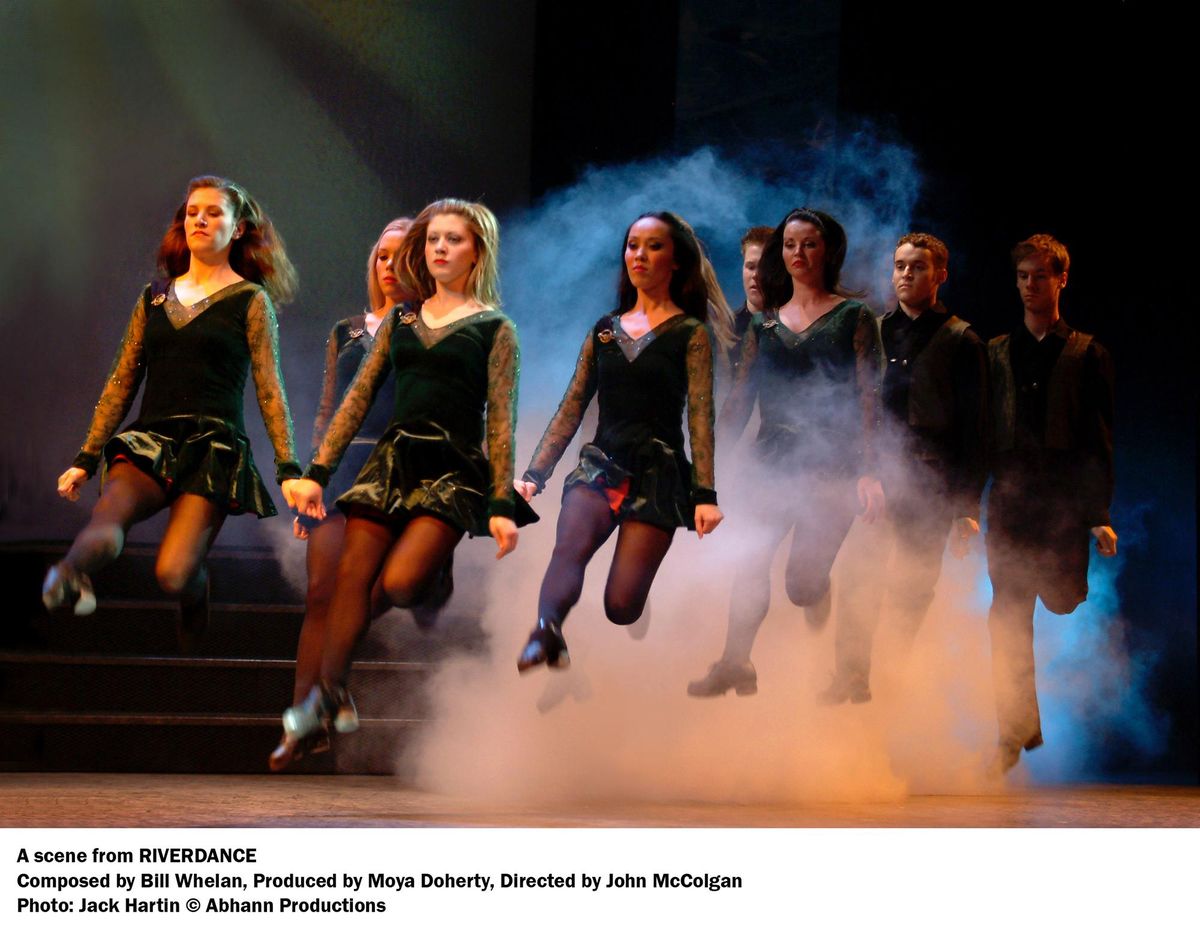
Back in 2008, when “Riverdance” last step-danced its way into Spokane, the troupe was in the midst of a three-year “farewell tour.” A five-show run at the INB Performing Arts Center that year sold out weeks before opening night.
Now, 21 years after “Riverdance” first made a splash during the 1994 Eurovision Song Contest, and two decades from sold-out runs in London and Dublin, the Irish dance show is returning to the INB next week on its 20th anniversary tour.
Of course, “Riverdance” never really went away. In one form or another, it’s been bringing not just Irish step, but Russian, flamenco and tap dancing to stages around the world.
Jason O’Neill, one of the lead dancers, has been with the company for five years, on and off. He was part of a “Riverdance” U.S. and Canadian tour in 2012, and was in the offshoot show “Heartbeat of Home.”
The opportunity to be a part of “the original Irish dancing show” was too good to pass up, said the 29-year-old from Belfast, Northern Ireland.
For anyone who’s seen “Riverdance,” next week’s show at the INB will feel comfortable.
“It’s the show that everyone loves,” O’Neill said by phone from a recent tour stop in Calgary. That said, the costumes and lighting have been updated, and there’s a new number in the second half, called “Anna Livia,” which O’Neill described as a “powerful” female a capella number. “I think it just strikes a chord with where the show is going and how dancing has changed over the years.”
So how has Irish dancing changed over the years?
“It’s like anything. It evolves, then it comes back again. It’s a cycle. It’s become more athletic, I think,” said O’Neill, who started dancing at age 5 and trained at various schools in Belfast. “Again, before ‘Riverdance,’ there was no professional Irish dancing. It was just a hobby. People didn’t spend eight shows a week dancing, or seven days week practicing for hours on end.”
The dancers, therefore, behave more like athletes, eating right and taking care of their bodies. That doesn’t mean, however, they never head to a nearby pub for a little recreational dancing.
“Oh, that still happens,” O’Neill said.
It does mean near daily rigorous training, O’Neill said.
“It’s a mixed bag. It’s very natural, because we’ve been doing this all our lives. At the same time, it’s a very technical dance form,” he said. “You never stop learning. … We have this thing called rotations where we map out the show. That’s very easy going. Other days they’ll take us in early and we’ll have our heavy shoes on, and we’ll be hitting the numbers as hard as we can.”
Those “heavy shoes” are the signature of Irish line dancing. Unlike tap shoes, which have metal plates installed on the ball of the foot and the heel, these are made fiberglass. “When you put those bad boys on,” O’Neill said, “you know you’re in trouble.”
There are 12 dancers who perform the tap, Russian and flamenco styles. The Irish troupe features 24 dancers – one of them, Julia Gats, is a Seattle native who attended Gonzaga University. O’Neill said she’s offered to play tour guide to the troupe when they’re in town starting next week.
The fact that there are Americans among the cast, O’Neill said, is a testament to the show’s popularity and influence.
“When it was out 20 years ago, they were all from Dublin,” he said. “Now 20 years later, everyone’s from all over the world. Obviously I’m from Ireland, but there are two girls from America, there are people from Australia, Canada, England, Scotland. There’s no limits. If you want to join the show and you’re good enough, you can be in regardless of where you’re from.”