
The SpIFF-y Experience: Spokane International Film Festival’s shorts shine and documentaries hit strong emotional chords
As the Spokane International Film Festival wraps up its 22nd year, the importance of gathering together to view movies as an audience becomes clearer than ever before. The films and shorts at this years’ festival gave us a glimpse into the minds of so many artists and creators projecting their thoughts, fears, victories, defeats and perspectives for everyone to enjoy.
While I have been to many SpIFF events in the past few years, this was the first time I attempted to go to as many screenings as possible, especially the shorts. I saw tales of blind rock climbers, of transgender teens fighting for the same rights we’re all entitled to and of a marmot uprising.
But it’s one thing to watch these stories on your television or your phone. It’s another thing entirely to see it with an audience who enhances your emotional experience. All of that made this SpIFF one of the greatest cinema experiences of my life.
Here are some highlights:
On opening night, the Garland Theater was filled to the brim with filmmakers, actors, documentary subjects and cinephiles alike all of them excited to see what Spokane filmmakers created with the Best of the Northwest shorts.
The fan favorite seemed to be “Tea Cops” by Caden Butera, which had the audience laughing as a pair of bumbling police officers cartoonishly find clues to the insane Teapot Killer. The short, made for last year’s 50-Hour Slam, is reminiscent of the “Police Squad!” television series or “The Naked Gun” movies where the cops take everything too literally, like instead of taking a clue back to the laboratory, they hand it to a nearby Labrador retriever. The comedic timing is swift and potent like a skilled boxer.
The other standout short was “Influenced” by Julie Bruns about a young woman live-streaming her Christmas dinner while everyone in her chat says that the necklace her boyfriend gave her looks exactly like the necklace of a woman who was reported missing. It has the suspense of a great thriller mixed with the honest and refreshing reactions of the chatroom.
Following those shorts was the premiere of “Quiet Explosions: Healing the Brain” by Jerri Sher. The film details the lives of nearly a dozen people, including veterans and athletes, dealing with traumatic brain injuries, as well as the doctors treating these types of injuries. One of the people interviewed is Spokane resident Mark Rypien and his family about how his life turned around after treatment for his concussions. The film is an uplifting look at the advancements in medicine giving these heroes another chance at life, as well as what we can do to help those struggling with invisible injuries.
Of all the documentaries, the one that stands out is Alison Reid’s “The Woman Who Loves Giraffes.” It is the story of Dr. Anne Innis Dagg, who traveled to Africa in 1956 as a teenager to study her favorite animal. Nearly everything in this documentary surprised me, like how Dagg was one of the first to study the behavior and biology of any animal even before Jane Goodall would study chimpanzees. The documentary shares Dagg’s love for nature and exploration without shying away from the harsh reality of any university wanting to give a female professor tenure in the 1960s.
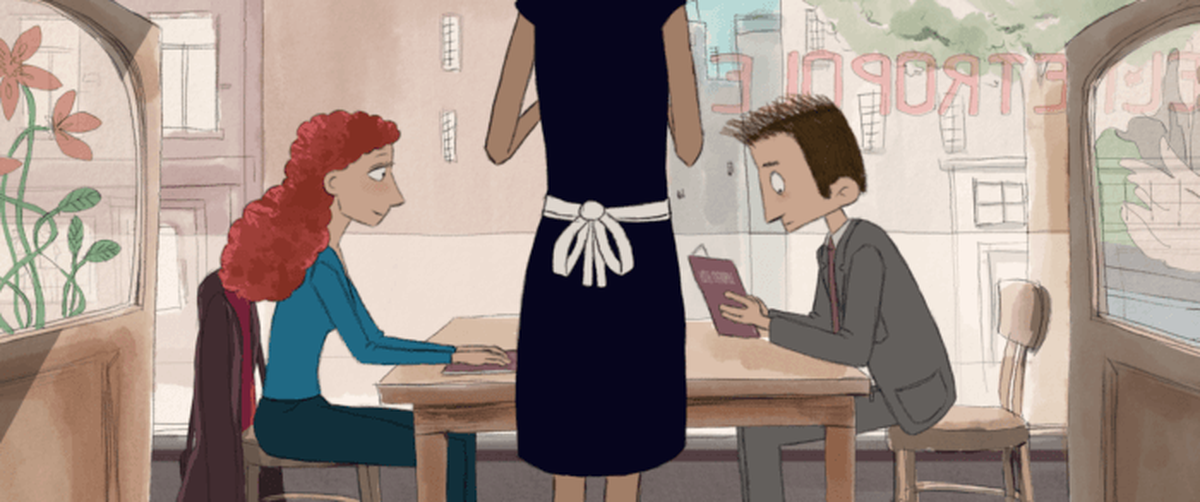
The best short of SpIFF came from the Animation Showcase, Floor Adam’s “Mind My Mind.” It’s a colorfully animated tale about a young man with Asperger’s syndrome and his struggles with socializing and connecting with others. The film is told in a similar style to Pixar’s “Inside Out,” only instead of the varying emotions, it is one overworked and frantic little guy who has to run this guy’s brain on his own. He gets easily overwhelmed by looking at every detail and has to take the time to associate people’s facial expressions with a reference chart and read from scripts in social situations. As chaotic and odd as that sounds, that is an accurate description of what autism is like, which I can personally attest to.
The night with the most perspectives was certainly LGTBQIA+ night, with heartwarming shorts like “Misdirection” by Carly Usdin about a college student who has a crush on her roommate and recently learned about her OCD and copes by learning magic. Following that was Michael Barnett’s “Changing the Game,” a chronicle of the hardships transgender teens must endure to find their identity despite many systems not allowing them those opportunities.
One of the best experiences of the festival was David W. King’s “Burgers, Fries and Family Ties” at the Movie and Dinner theater in Airway Heights. The documentary is a humble and local depiction of Marcia Richwine Moen, the face and heart of the famous Burgerville restaurant in Polson, Montana. What really sold it was Marcia standing in front of the packed theater and holding back tears after her life’s work had been lovingly documented.
It warms my heart to see so many sellout crowds savoring these films about real, hard-working individuals who see the world as a place that can grow. SpIFF is everything a local movie lover could ask for in a film festival.