
Then and Now: Post Street Bridge
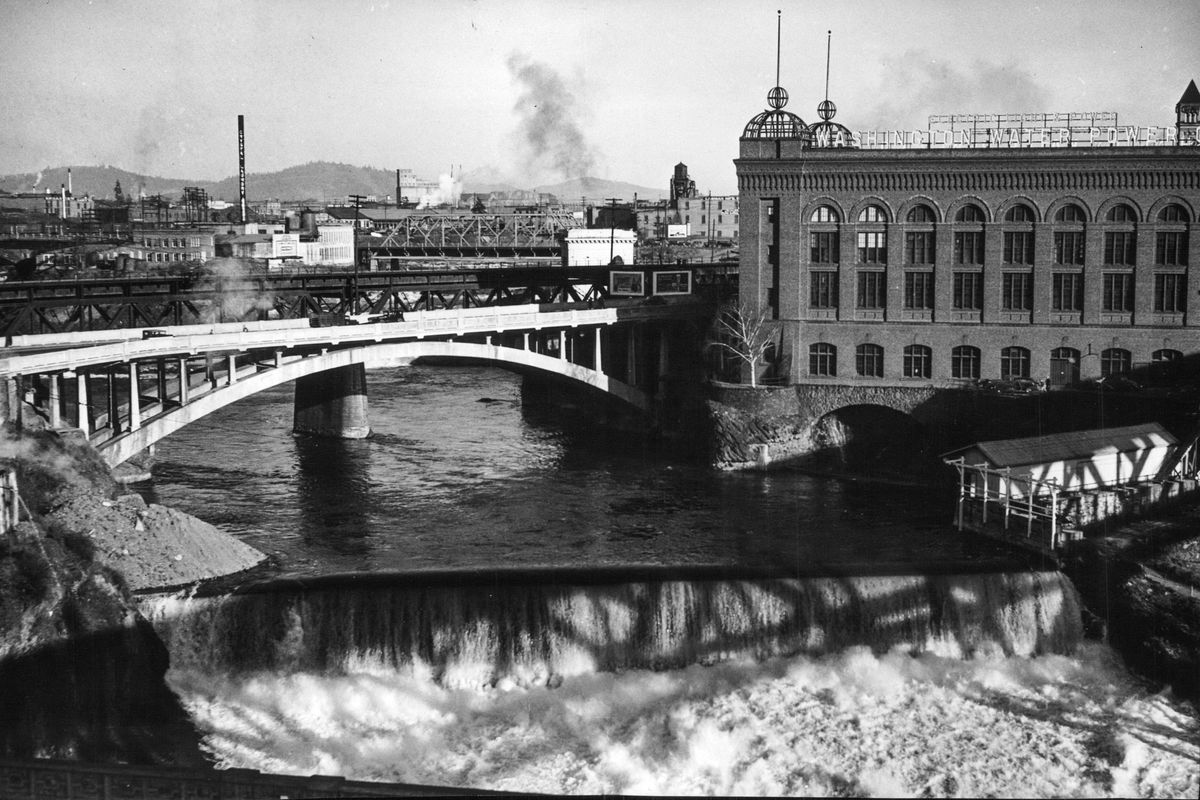
The first Post Street bridge was a wooden structure built around 1884 and operated as a toll bridge. That bridge was taken down around 1893 and replaced with a steel bridge that could carry streetcars.
That early bridge probably carried the first automobile across the river. Spokane’s first car owner, Frederick Oliver Berg, had founded F.O. Berg, a maker of tents and awnings supplied to railroad construction crews and the survivors of the city’s great fire of 1889. He had purchased a steam-powered car in 1899.
The steel bridge was replaced with a reinforced steel-and-concrete span in 1917. During that construction, wooden forms and concrete slid off the bank into the water, taking 25-30 workers with it. Two were killed immediately, and a third died later.
Once opened, the concrete bridge would serve for almost two decades, during which automotive traffic was building with each passing year. And streetcars were on their way out.
So in 1935, the city approved a plan to widen the two-lane bridge to 40 feet, allowing for two lanes in each direction, plus sidewalks on each side. The cost was estimated at $50,000 with funding from the Washington state highway department and federal funds.
In the mid-1990s, many of Spokane’s oldest bridges were found to be in poor condition, or “structurally inadequate,” in engineering jargon. The Post Street span was on that list, and plans were made to reduce traffic over the bridge.
In 2013, it was limited to one-way traffic. In 2019, the span was closed to motor vehicle traffic until it could be rebuilt or replaced. The bridge closed to all traffic in 2020.
Initial estimates put the cost for a new bridge over $18 million, and the decision was made to try to rebuild and reuse the 1917 concrete arches for a new bridge. Costs skyrocketed in early bids, with blame going to issues with international steel tariffs and other labor and material costs. Current estimates are near $26 million to complete the structure.
An important 54-inch sewer main also crossed the bridge, carrying sewage from downtown Spokane. In May 2023, the 70-year-old sewer main was replaced with a 60-inch pipe, now more concealed within the arch structure of the bridge.