Year-round farmers market Scale House Market offers shoppers fresh, local products and vendors new business opportunities
For business owner and chef Samantha Gimlin, the journey to bringing high quality Italian food products to the region began with communal dinners with her neighbors.
This group would purchase items from Italy – olive oil, wines, wheels of cheese – and share them with each other. With those shared ingredients, they would create dishes that everyone got to enjoy. Those in the group often went home with extra olive oil or cheese to use in their own kitchens.
Over time, the group decided to make these specially ordered items available to the community and began working towards opening an Italian store in town. But the pandemic quickly brought that work to a halt.
After things started to reopen, Gimlin took a moment to re-evaluate the plan and decided to focus on olive oil.
“The olive oil was the big foundation of everything that we do and what I do as a trained Tuscan chef,” she said. “So I started bringing in olive oils from various regions, and then having pop-up events, sometimes inside of another business, and sometimes holiday or seasonal events.”
Gimlin briefly had a regular location downtown, but after they stopped hosting the event Gimlin would participate in, she began looking for a new home.
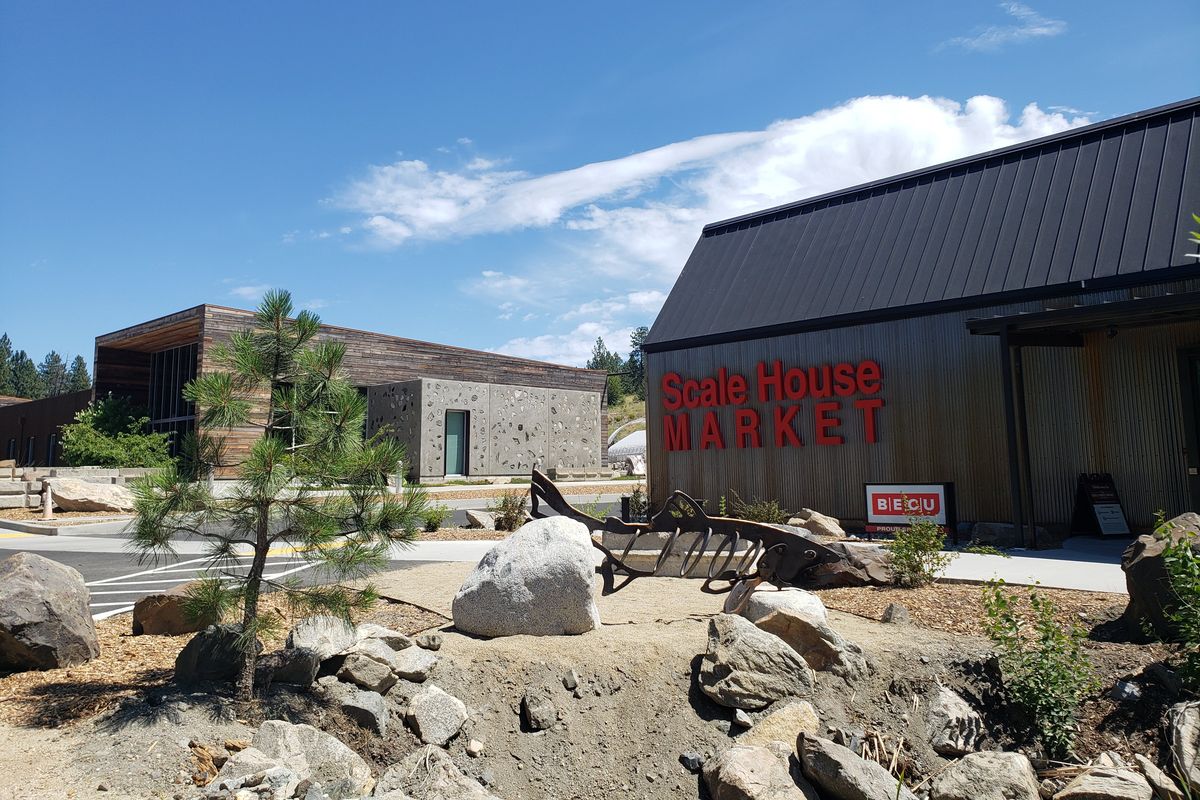
Enter: Scale House Market, the area’s first year-round farmers market. The market opened two months ago, but the idea has been around for much longer.
Scale House Market co-directors Brittany Tyler and Rachael Gewock have been friends for 30 years and, as Tyler tells it, used to carry around notebooks in which they would write business ideas.
Fast forward to 2019, when the pair began working with farmers, food producers and farmers markets. After the pandemic hit, they noticed negative changes in the food system and the sustainability of that system and brought the USDA’s Farmers to Families Food Box to the region.
“The goal with that through the pandemic especially was to source from our local farmers and food producers to be able to take the product that was no longer able to get to market or get to restaurants or get to hospitality groups and get that out to people who, all of a sudden, were incredibly food insecure,” Tyler said.
After farmers markets were able to reopen and the food box program ended, Tyler and Gewock saw many were still struggling with food insecurity. They also realized how badly farmers and food producers had been hurt by the pandemic and the importance of having access to markets.
Tyler, Gewock and a couple friends formed Four Roots, with the goal of supporting local farmers and addressing food insecurity. The group began working with the Spokane Conservation District and their program Vets on the Farm, which helps veterans transition back to civilian life through work in agriculture, farming, ranching and other conservation-based fields.
With produce from that program, Four Roots teamed up with the WSDA and its We Feed WA Food Box program to distribute food boxes to those in Eastern Washington. After the program ended in June, Four Roots, now with insight into things like transportation and cold storage, were looking to do even more to help.
“We are growing so much food here in Eastern Washington,” Tyler said. “At the same time, we export over 89% of what we produce here. The food is leaving the local area, and at the same time we have local communities going hungry. That was a huge problem. And we said, ‘Well, how do we fix this? What are the needs? What do we have, and what do we not have?’ “
Four Roots connected with Vicki Carter, the director of the Spokane Conservation District, and began discussing ways to create sustainability in the local food program. The group recognized the area’s market culture, but also realized that for some farmers, stepping away from their farm to spend most of the day at a market while also keeping food at safe temperatures from the farm to the market and back wasn’t always feasible.
There began the rumblings for what would become Scale House Market, an indoor, year-round market where farmers and food producers could spend time at their booths, like Gimlin was during her interview with The Spokesman-Review, or simply drop off produce or products.
The market works more like a traditional store than a market during which you pay each vendor individually. At Scale House, you pick up what you need from as many booths as you’d like to visit then take it all to a cashier, who rings up your purchases. You can also grab a coffee and take a break in the market’s atrium.
Scale House features more than 65 vendors selling food, art and home and wellness products. In the mercantile, some vendors have booths, while others rent out shelving units for their products. There is refrigeration inside to keep meat, fruits and vegetables fresh. Outside, there is space for more stalls during the outdoor market, held Wednesdays, Fridays and Saturdays.
Gimlin applied to be a vendor and was accepted. Her shop is called La Dispensa di TerraTerra, or the pantry of TerraTerra, the brand name Gimlin uses for things in her “Italian world.”
Almost as soon as the market opened, Gimlin had customers asking if she sold things like pasta and sauces, so she quickly expanded beyond olive oil. Gimlin’s biggest concern was that she is an Italian product specialist who also wants to support local businesses. With no Italian market in town, how could she bring in that local component?
Her solution goes back to the name La Dispensa.
“All these wonderful products in here are made locally or grown locally, primarily, but I see myself as the pantry that ties everything together,” she said. “If you’re going to be getting fresh fish or fresh meat or fresh produce, you still need other ingredients to build the recipe with, and so that’s really how I fit in here.”
Gimlin is continuing to research regional products that match well with the Italian profile of her business. She carries olive oils from a Willamette Valley-based company called Durant and has ordered solar-evaporated sea salt from the San Juan Sea Salt Company and mountain honey from the Cascades.
She plans to add dried beans and a variety of flours to her shop.
“I always say it’s OK to open a jar, just know what jars to open,” she said. “That’s where I come in here is I’ve done a lot of leg work into finding the jar that’s going to wow a guest who comes over to your home, is going to wow your family, but it’s going to be super convenient for you to have available when you need to.”
On top of the vending space, Scale House Market is also a place of education. After realizing that some food box recipients didn’t know how to cook with certain ingredients in the box, the Four Roots team started including tips and recipes.
At Scale House, they want to offer similar classes and workshops to “really bring people in and make them a part of the food system,” Tyler said.
The Scale House team wants to help educate farmers and food producers, as well.
“If we’re going to educate the community, that’s going to give our farmers an opportunity to scale up,” she said. “But if we’re going to give our farmers an opportunity to expand their business, we want them to do that in a sustainable way, which means small business support. Nobody in farming gets into farming because they love spreadsheets and those administrative pieces.”
Scale House teamed up with the Washington Small Business Development Center to connect certified business advisers with vendors. There is a lot of flexibility in how vendors can sell, which Tyler hopes means the vendors can grow their business in a way and at a pace that suits them, whether they downsize from a brick and mortar to a couple of booths at Scale House or vice versa.
For Gimlin, it’s the latter.
“For me, the next building block is a store,” she said. “This building is an incubator. They want to provide opportunities for people to take off.”
Scale House Market is located at 4422 E. Eighth Ave. in Spokane Valley. For more information, visit thescalehousemarket.com.