
Huckleberry season is here. Here’s what you need to know.
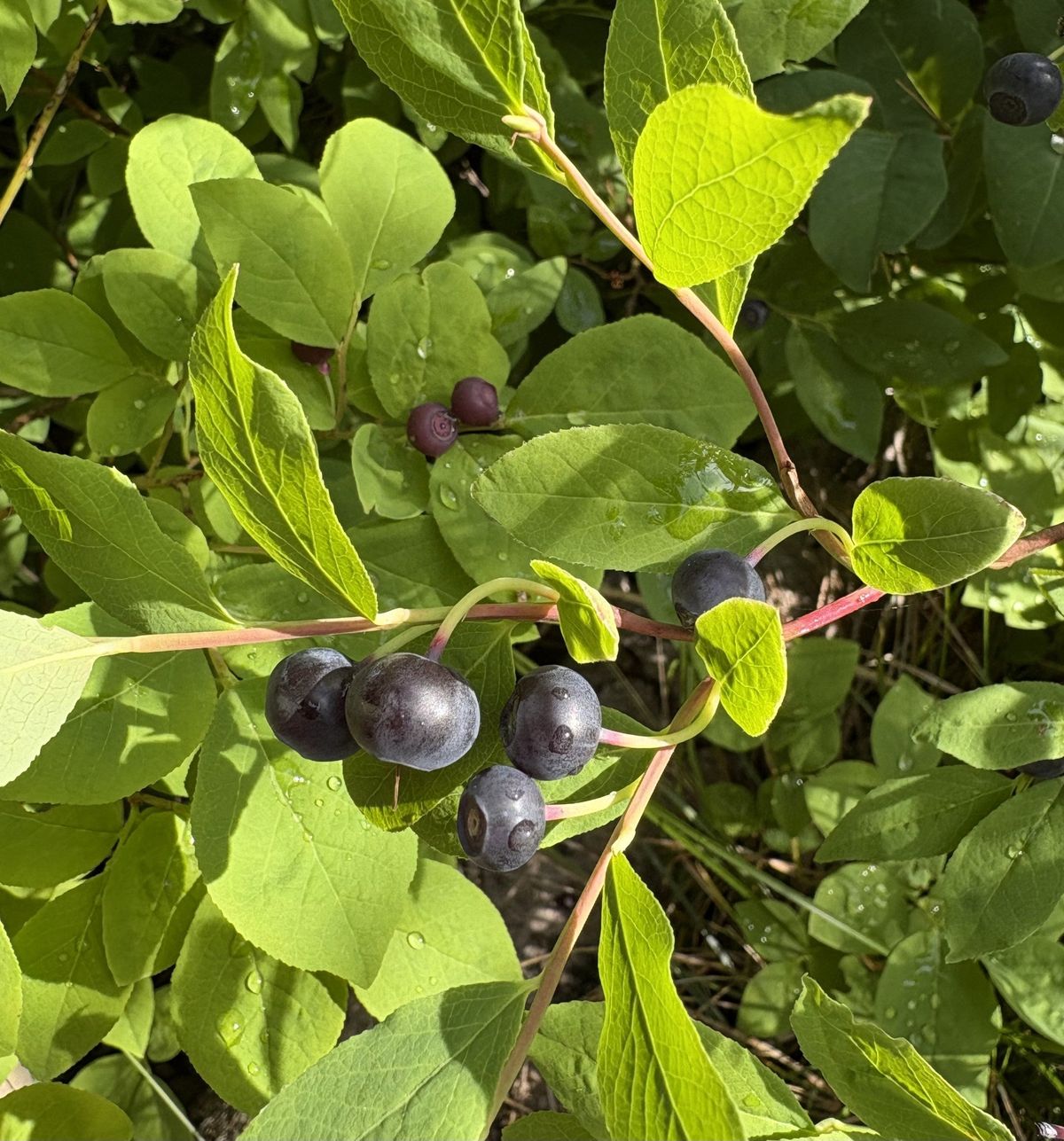
It’s huckleberry season and, by many accounts, it’s a great one. Some report picking rates of a gallon and a half per hour – something I’ve never come close to. If you haven’t had a chance to pick any yet, don’t worry – there are still lots of berries out there.
Where? Well first, a brief huckleberry primer.
Depending on your information source, there between 11 and 15 species of huckleberry in the Northwest. All “true” huckleberries are in the genus Vaccinium, part of the heath family (Ericaceae). Worldwide, there are approximately 400 species of Vaccinium, of which 25 or so are native to North America. They favor acidic soils and often grow at higher altitudes (with major exceptions in the PNW) and can thrive in settings from full sun to mostly shade. People may refer to them as blueberries, bilberries, whortleberries and other names, even just sticking to English. But around here, they’re huckleberries.
Our most common variants are V. deliciosum (Cascade huckleberry), V. membranaceum (mountain, or black , huckleberry) and perhaps a couple of others, including the red huckleberry (V. parvifolium). They’re all tasty and not easily confused with berries that would cause you trouble. They can range widely in size and in color and appearance, from red to almost black and dull/dusty to glossy. Some fruit singly, some in clumps, some on top of the leaves and others hidden under the leaves. You may find all these the same day.
If you’ve never picked, try to connect with a knowledgeable friend. You may quickly find out how good a friend they are. A good friend will share some tips; a great friend will share a spot or two where they’ve had success; a true friend will invite you along. My wife, unlike me, will share detailed directions, not just to friends but to total strangers. When this happens, I grit my teeth and chime in with something helpful like “Was that the spot just past the rattlesnake nest?”
We are greatly blessed with public lands that provide huckleberry -picking opportunities. Also, state park and national forest staff in our region are knowledgeable and helpful.
Prime areas include the Colville and Idaho Panhandle National Forests, as well as Mount Spokane State Park. Megan Bush, a spokesperson for the Colville National Forest, agreed that this year is a “bumper crop” for huckleberries. When visitors stop in or call at the forest or district offices, staff will share where they’ve seen berries or heard of good picking.
The same is true in the Idaho Panhandle National Forest. The Priest Lake District is probably the best known for huckleberries, though opportunities abound across the huge areas encompassed by these forests. Sawyer Treadaway, an injured wildland firefighter who was working on temporary light duty at the district ranger office, said huckleberry picking is “full on” currently and “really big” in the district. That office even offers maps of “picking corridors” to help visitors, along with personal advice.
Similarly, Mount Spokane State Park staff help direct visitors to likely spots (and will sell you a required Discover Pass if you don’t already have one.) Check the hours of any of the agency offices before stopping by.
A few rules are important to keep in mind. You can gather up to two gallons of berries a day for personal use on Washington park lands. The Colville National Forest allows up to three gallons of berries each season for personal use. Similarly, the Idaho Panhandle National Forest allows picking for personal use only. On all these lands, the use of rakes is prohibited and no commercial picking is allowed.
Some private lands also offer huckleberry opportunities. Inland Empire Paper issues access permits and allows picking, with restrictions. Schweitzer Mountain is a favored destination, and offers a shuttle, maps, and refreshments (see schweitzer.com/things-to-do/activities/huckleberry-picking.)
Lookout Pass Ski Area, on the Idaho-Montana border, also welcomes pickers. Lift rides are available Fridays, Saturdays and Sundays through mid-September, according to the ski area’s website.
Speaking of Montana … well, worlds of huckleberries await. Check with public land managers.
Before you head out, what else do you need? A container, and while many will just use a bowl, a cleaned plastic milk jug, cut with an extra opening, is very handy. Attach the jug via the handle (and twine or carabiner) to your belt or pants loop, and you’ll have both hands ready.
Since you’re headed to the woods on a hike, let someone know where you’re going and prepare with at least some of the “essentials”: water, proper clothing, snacks, emergency whistle, smart phone, possibly insect repellent, sunscreen and yes, bear spray. The biggest animal hazard might be a pesky deer fly or a stinging insect, like the hornets whose nest I accidentally swatted while focused on picking. The berries were worth it.
Huckleberrying provides other benefits: exercise, other sights/creatures, smells and, hopefully, camaraderie.
That leads us to berry-picking etiquette. Huckleberry manners suggest that when we encounter others, a simple hello or other greeting is appropriate, and importantly, that we not pick too close. What’s too close? We should avoid the same “patch” someone else is in. I don’t think I would pick within 30 yards of someone already picking and typically go beyond earshot.
Whether you end up with just a few berries to put on your ice cream or cereal, or have enough to freeze or make jam with, their wild taste will bring back fond memories of time in the woods. You may even get enough to share with “huckleberry worthy” friends, in a wintertime dessert.