
James Lovell, Space-Age hero who commanded Apollo 13, dies at 97
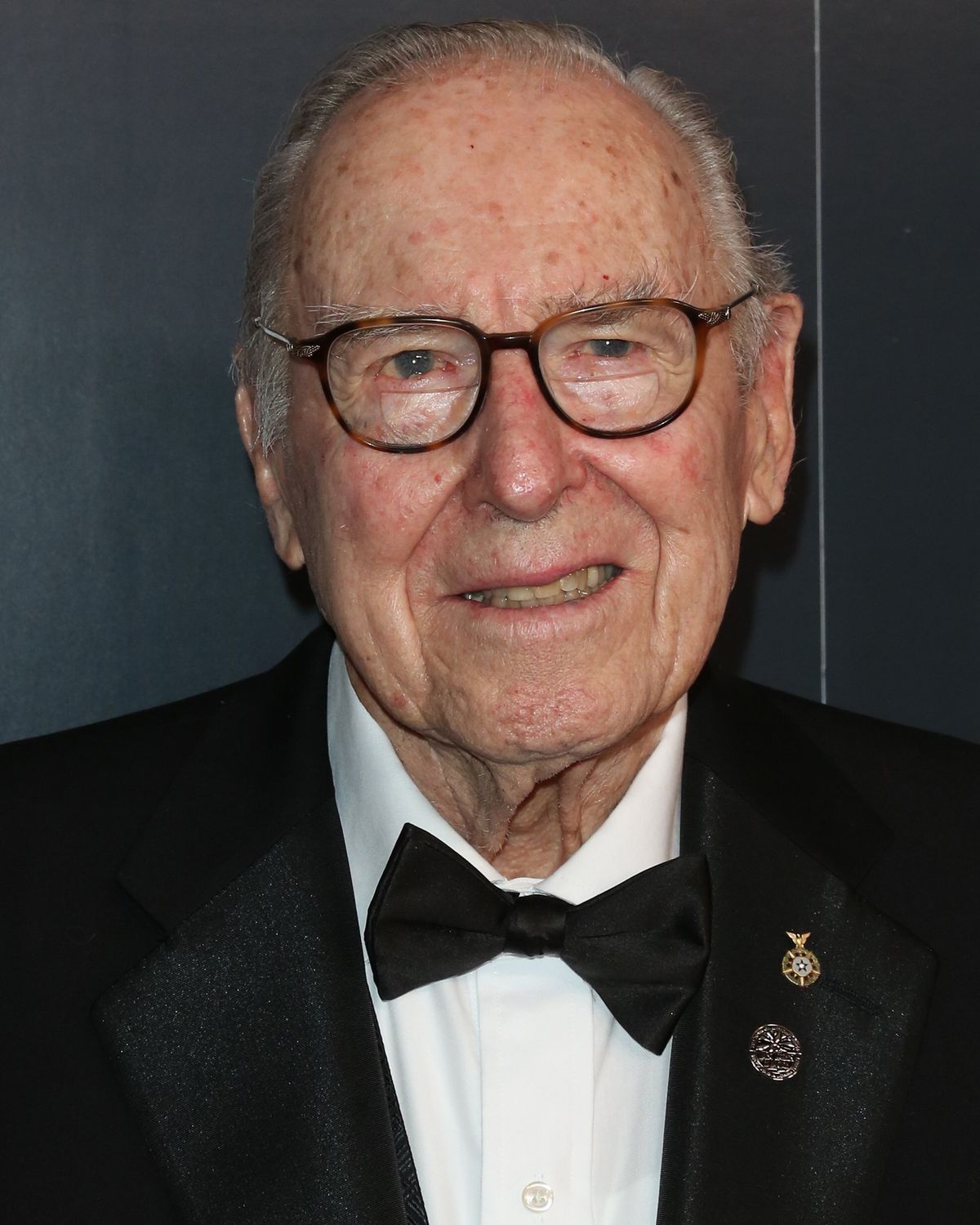
James Lovell, the pioneering U.S. astronaut whose two dramatic missions to the moon included Apollo 13, the nearly disastrous trip that captivated the world and decades later inspired a triumphant Hollywood blockbuster, died in Lake Forest, Illinois, the National Aeronautics Administration announced. He was 97.
He died on Thursday in Lake Forest, Illinois, the National Aeronautics and Space Administration announced, without citing a cause.
A member of NASA’s second astronaut class, Lovell made history repeatedly during the heyday of the U.S. space program, notching the first rendezvous with a crewed spacecraft; the longest American spaceflight of the 1960s, in Gemini 7; and the first lunar mission, the Apollo 8 orbital journey that captured the iconic image of a blue-and-white Earth suspended against lonely, black emptiness.
His two trips during the Gemini program and two more in Apollo capsules made him the first person to fly into space on four separate occasions and the first to fly twice to the moon. His 29-plus days in space were the most of any American until the shuttle began roaring into low Earth orbit in the 1980s.
The most-riveting moments of Lovell’s astronaut career came during the Apollo 13 accident, a four-day drama that unspooled while NASA worked feverishly to bring the three-man crew home and a global audience pondered the awful prospect that they might be stranded on a one-way trip.
The Apollo 13 mission “was a disappointment, it was a failure,” Lovell said in a 2002 interview with Charlie Rose. “But in some aspects it was really a triumph of the ability of people, the ground-control people working with the flight crew, to get an almost certain catastrophe back to a successful recovery.”
Acting NASA Administrator Sean Duffy, in announcing Lovell’s death, said his “character and steadfast courage” helped the U.S. turn “a potential tragedy into a success from which we learned an enormous amount.”
When Lovell, Jack Swigert and Fred Haise lifted off on April 11, 1970, their Apollo 13 mission was to achieve the third landing on the moon, touching down near the Fra Mauro crater. Lovell, as mission commander, and Haise were to descend to the moon’s surface while Swigert remained in orbit.
Two days and 200,000 miles into their voyage, the astronauts heard an explosion. All three initially believed their spacecraft had been struck by a meteor, Lovell and co-author Jeffrey Kluger wrote in “Lost Moon,” their 1994 book. that was the basis for the movie Apollo 13 the next year.
After several minutes of trying to diagnose the problem, Lovell pressed his nose to the side window and noticed “a thin, white, gassy cloud surrounding his craft, crystallizing on contact with space, and forming an iridescent halo that extended tenuously for miles in all directions.”
“We are venting something into space,” Lovell reported to Mission Control in Houston.
One oxygen tank in the Apollo’s service module had exploded; Lovell’s observation meant the second one was leaking. Oxygen was needed to produce water, fuel, and air they needed to breathe.
They called off the moon landing, but the astronauts faced steep odds to get back alive.
The three men crawled into their two-man lunar module, named Aquarius. Instead of landing on the moon, it would serve as their lifeboat, with its own small supply of oxygen and electrical power. They huddled in the cold as nonessential systems were shut down. The crippled spacecraft orbited the moon once, speeding them on a trajectory to a splashdown in the Pacific Ocean. That lunar flyby gave Lovell, and his crew mates, another milestone: No other humans had even been farther from Earth.
Lovell shed 14 pounds during the grueling mission, while Swigert and Haise lost a combined 17.5 pounds.
Movie rights to Lovell’s book were acquired by Brian Glazer and Ron Howard. “Apollo 13” won two Academy Awards, for film editing and sound, and was nominated for seven others, including best picture. Tom Hanks played Lovell, and Kathleen Quinlan earned an Oscar nod as best supporting actress for portraying Lovell’s wife, Marilyn.
Lovell himself had a cameo in the movie, playing the Navy captain who welcomes the astronauts aboard the recovery ship.
Swigert died of cancer in December 1982, eight weeks after winning election to the House of Representatives and eight days before he would have taken office. Haise, 91, is now the last living member of the Apollo 13 crew.
James Arthur Lovell Jr. was born on March 25, 1928, in Cleveland, the only child of James and Blanch Lovell. Before he entered high school, his father died in an automobile accident, and his mother moved them to Milwaukee.
While in high school there, Lovell met his future wife, who was then Marilyn Gerlach. They had four children together. She died in August 2023, after 71 years of marriage.
Lovell studied engineering for two years at the University of Wisconsin as part of a Navy recruitment program, then won admission to the U.S. Naval Academy, where he earned a bachelor’s degree in 1952.
He trained as an aircraft-carrier pilot and became a test pilot. NASA selected him in 1962 as an astronaut in its second class, nicknamed the “Next Nine,” which also included Neil Armstrong.
On Gemini 7, Lovell’s first trip to space, he and Frank Borman spent two weeks in orbit in December 1965. They proved NASA’s capability to rendezvous two spacecraft by closing to just 1 foot away from Gemini 6, operated by Wally Schirra and Tom Stafford.
Eleven months later, Lovell commanded the final pre-Apollo mission, Gemini 12, during which Edwin “Buzz” Aldrin took three spacewalks, totaling 51/2 hours.
Apollo 8, in December 1968, transfixed the world as Lovell, Borman and William Anders became the first humans to see the far side of the moon, which is always turned away from Earth. They traveled 235,000 miles to about 69 miles from the moon’s surface, orbiting it 10 times.
In a live telecast to Earth – where it was Christmas Eve in the U.S., Christmas day in other parts of the world – Lovell said, “The vast loneliness is awe-inspiring and it makes you realize just what you have back there on Earth.”
Nine months before the adventure of Apollo 13, Lovell was Armstrong’s backup for Apollo 11, the historic lunar landing that made Armstrong the first human being ever to set foot on the moon.
He retired from NASA and the Navy, as a captain, in 1973.
He spent the bulk of his post-NASA years working in the telecommunications industry but kept a toehold in public life as an occasional commercial pitchman. He did a promotional appearance for the Boy Scouts, appeared alongside Aldrin in an ET-themed insurance spot, joined Aldrin and astronaut Sally Ride in another for Louis Vuitton, and plugged Tang – the powdered drink whose sales popped after NASA used it on 1960s spaceflights.