
Interfaith collaboration powers Spokane’s response to family homelessness
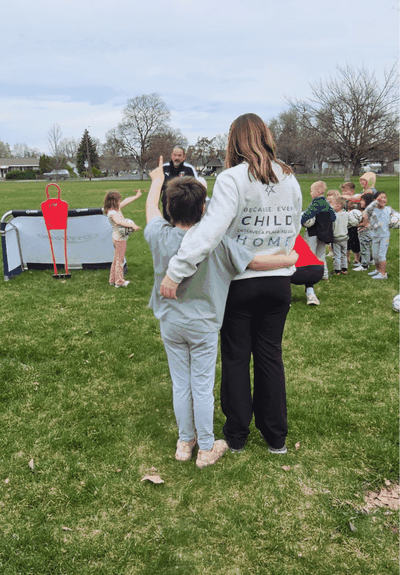
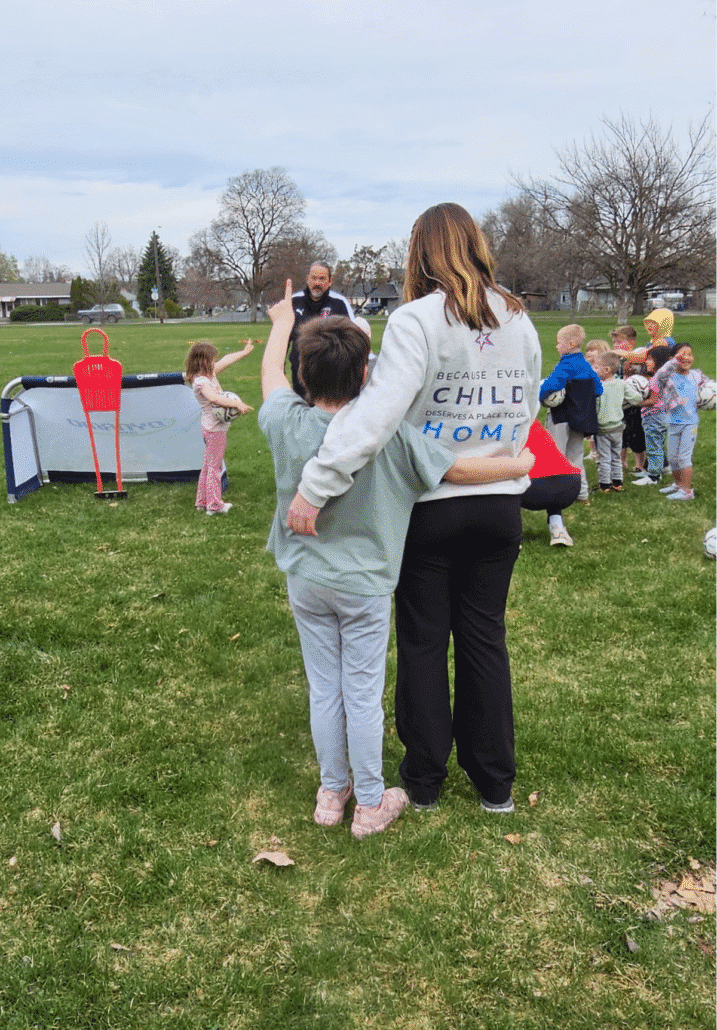
Like spokes supporting a wheel, faith organizations are essential to keep local homeless organizations operating.
“We feel like we were birthed out of congregations,” Family Promise of Spokane CEO Joe Ader said.
More than 80% of congregations in the United States take part in a social or human service activity that is intended to help people outside their congregation, according to a 2016 study by professors at Duke University. Housing and food were two of the top three needs that the congregations addressed, the study found.
Although Family Promise is a secular nonprofit, it was started as a coalition of congregations working to address family homelessness and has grown to include foundational faith-based partnerships that provide financial, volunteer and housing support.
Homelessness is about more than just loss of housing, Ader said – it’s also a loss of relationships and an inability to lean on others for shelter and support.
“That’s the one thing that the congregations do really really well,” Ader said. “We want to see them wrap around our families.”
Housing support
First, though, is addressing homeless people’s base need: housing.
Some churches have begun to evaluate extra property they own and consider turning it into low-income housing to address some of the need.
Over the next 20 years, Washington will need almost 650,000 new affordable homes for low-income households, according to the Washington Low Income Housing Alliance.
Bethany Presbyterian Church, a congregation of 40, is working to build 22 low-income apartments with 11 dedicated to a mix of Family Promise and Thrive International families, according to project team member and Choir Director Sharon Smith.
In addition to two apartment buildings, the site will also feature a building that will serve as Bethany Presbyterian Church’s sanctuary and as a community space for movies, potluck dinners and more.
The housing project won’t just provide a roof over people’s heads, Smith said – it’s also about intentionally building community.
“The whole concept is that, in blending people that are American citizens with people from other places, that there is a ready source of information, of connection, that can be built, and we intend to be intentional about building community,” Smith said.
For families that are moving from homelessness to their first stable home in a while, Smith said that’s “a huge leap.”
“They need people to envelop them in love, and care, and not just for a check,” Smith said. “We would like them to feel as though they’re comfortably involved in a community that cares for who they are.”
Other churches have also been examining how to use their excess space, Ader said, with some of them pitching the idea of housing dedicated to Family Promise of Spokane families.
Providing bodies
Volunteers have also been filtering to Family Promise of Spokane from local congregations, and St. Luke Lutheran Church has taken the lead with a program designed to pipe volunteers directly to work Family Promise of Spokane needs done.
“Servants on standby,” Ader called them.
The program started because St. Luke was “looking for a way to get more involved with the Spokane community,” Love Thy Neighbor Coordinator Stefanie Reinke said.
The program works in a flexible way to address whatever Family Promise’s needs might be. Reinke coordinates monthly events to build community at Family Promise, helps meet food and furniture donation needs by coordinating church members and generally acts as a liaison between the church and the homeless organization.
The volunteers from St. Luke do a variety of projects – beautification, trunk or treat events, barbecues, Christmas cookies, specific donations of needed food and more.
“They’re basically on call,” Family Promise of Spokane Marketing and Communication Manager Gwyn Griffith said. “Whenever we need volunteers, or a special project comes up, they’re our first stop.”
The church also helps identify and meet needs that may not be addressed by other organizations – like the need for furniture when families are moving into their own homes. Reinke said she is on-site a lot, attending staff meetings and getting a peek into behind-the-scenes so she can see what needs might be lurking.
The close connection between Family Promise of Spokane and St. Luke is what allows the needs to be addressed, Ader said.
The partnership is really just “walking alongside them in their everyday life and shelter experience and assessing what are their needs, that they may not even be aware of,” Reinke said.
Each of the events usually takes about eight to 10 volunteers, plus people to donate the supplies, Reinke said. The volunteers often gain insight and fulfillment from the experience, Reinke added.
“It really opened their eyes to the very real situations that people can get into that can lead them into homelessness,” Reinke added. “It brings a very personal touch to it.”
Serial volunteer Kason Reinke, 17, said, “volunteering with some of our community’s most vulnerable is my way of living out my faith.”
The model with St. Luke’s has worked so well that Ader said Family Promise is talking with a few other congregations on what a similar set up looks like.
The study by Duke University professors found that the most common way that congregations provide support for social services is through a small volunteer base that frequently engages in volunteering with other congregations and community organizations, much like the partnership with St. Luke and Family Promise of Spokane.
“I think it’s really exciting for us, as well as the congregations as a whole, to say ‘we’re all in,’” Ader said.
Informal partnerships
Not all the partnerships are formal; some spring up through one-on-one human connections that provide wrap-around support for Family Promise families.
Around 2018, a pastor at the Rock Church started volunteering with Family Promise of Spokane, Ader said.
The summer the pastor was volunteering, Family Promise took in a family with three children and a baby on the way.
“Dad stayed in the car for over an hour when the wife and kids came in,” Ader said. “We would later find out that he was considering leaving his family.”
The father was depressed because his family was in a terrible situation he couldn’t solve, Ader said. But, with bedtime at Family Promise hitting at 9:30 p.m., that left plenty of time for the parents to lay next to each other in the dark and just talk. The shelter “saved their marriage,” Ader said.
While the family was at the shelter, they connected with the Rock Church pastor. Although the dad wasn’t sure about going to the church, Ader said, he liked the pastor, so he decided to try it out.
“So he went, and then became a believer at the church,” Ader said. “His wife started coming, and then the kids, and the whole family became engaged in that congregation.”
Beyond just inviting the family into the congregation, Rock Church supported the family practically. In the fall, the dad found out he had a brain tumor and had to go to Seattle for treatment, only he wasn’t sure how he would get there or who would watch the kids while the parents were gone, according to Ader.
“They were definitely in crisis and definitely at risk of homelessness again,” Ader said. “Because he got connected into this faith congregation, the church wrapped around them and took care of all those things.”
“It was the church that made it so they didn’t experience homelessness again,” Ader added.
Rotating church shelters
Faith-based organizations are so essential to addressing homelessness that, without them, Family Promise as a whole likely wouldn’t be around.
In 1995, Family Promise’s founder Karen Olson came to Spokane and gave a presentation about the mission at Manito United Methodist Church. Back then, the organization was called the National Interfaith Hospitality Network.
One of the attendees “caught the vision,” Ader said, and partnerships with interdenominational congregations sprung up to address family homelessness in the city.
Originally, Spokane’s Interfaith Hospitality Network operated off a network of 11 churches that hosted an average of four families each month, according to Family Promise of Spokane. The churches provided food, shelter space and volunteers in what was called the congregational rotational shelter model, Ader said.
The program grew and expanded.
“We’ve had hundreds of congregations across Spokane County involved in housing families in church buildings and volunteering through that program,” Ader said.
One of the original churches was St. Mary Catholic Parish, which provided not only bedding and meals but also activities like hockey games, according to former program coordinator Theresa Goatz.
During the week-long hosting of up to four families, Goatz said it usually took at least 30 volunteers to pull off, either from St. Mary or nearby churches of different denominations and faiths.
Whitworth Church was another one of the first shelters for Family Promise of Spokane guests. Usually, the church needed 10 to 25 people to help host the families every night, according to Griffith, who used to be in charge of the partnership.
Some of the volunteers were “champions” of Family Promise, Griffith said.
“I knew who I could call on to just always spend the night, or make food, or hang out with kiddos,” she added.
In Spokane, the congregational shelter model remained until COVID-19 hit. Family Promise of the Palouse and Family Promise of North Idaho still use the model.
For Family Promise of Spokane, it was hard on the families to keep moving from place to place every week, Griffith said, so the organization decided to move to a congregate shelter on Mission Street with scattered sites throughout Spokane.
Supporting the homeless, uniting the faiths
Providing homeless organizations like Family Promise of Spokane with financial, volunteer or physical support is a unifying trend among many denominations and faiths.
“Everyone can agree kids should have a place to call home and kids should not be sleeping on the street,” Griffith said. “Regardless if people were volunteering because they believe in Jesus Christ or have a Muslim community, it didn’t matter – what mattered was that we were caring for the kids in the community.”
Griffith herself moved from working with Whitworth Church to working at Family Promise because of a belief in caring for the homeless.
“I have never seen what I believe Jesus has called us to do more vivaciously on display than when I’ve been working at Family Promise,” Griffith said. “It wasn’t until I left the church that I really saw what I believe my faith to be.”
For many religious institutions, volunteering and supporting people in homelessness is a way to express their faith, not to push their faith.
“We’re not there to push our views or religious beliefs,” Reinke said. “That’s not what this program is about. It’s about showing Jesus’ love.”
For many faith communities, helping the homeless seems like a no-brainer.
“We just believe that it’s our calling to welcome the stranger and to welcome those in need,” Smith said. “End of story.”
For Christian congregations, Ader said the message of helping the homeless should be especially relevant.
“You workshop a God that was born a homeless child,” Ader said. “If Christ was born in Spokane today, this is where the family would come.”
This story was generously funded by a grant from Humanities Washington, written in partnership with FāVS News, a nonprofit newsroom covering faith and values in the Inland Northwest.