
Roberta Flack, popular song stylist of the 1970s, dies at 88
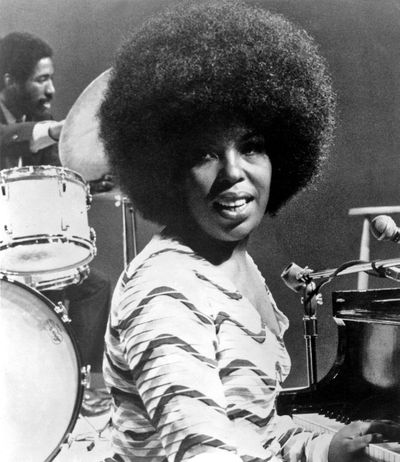
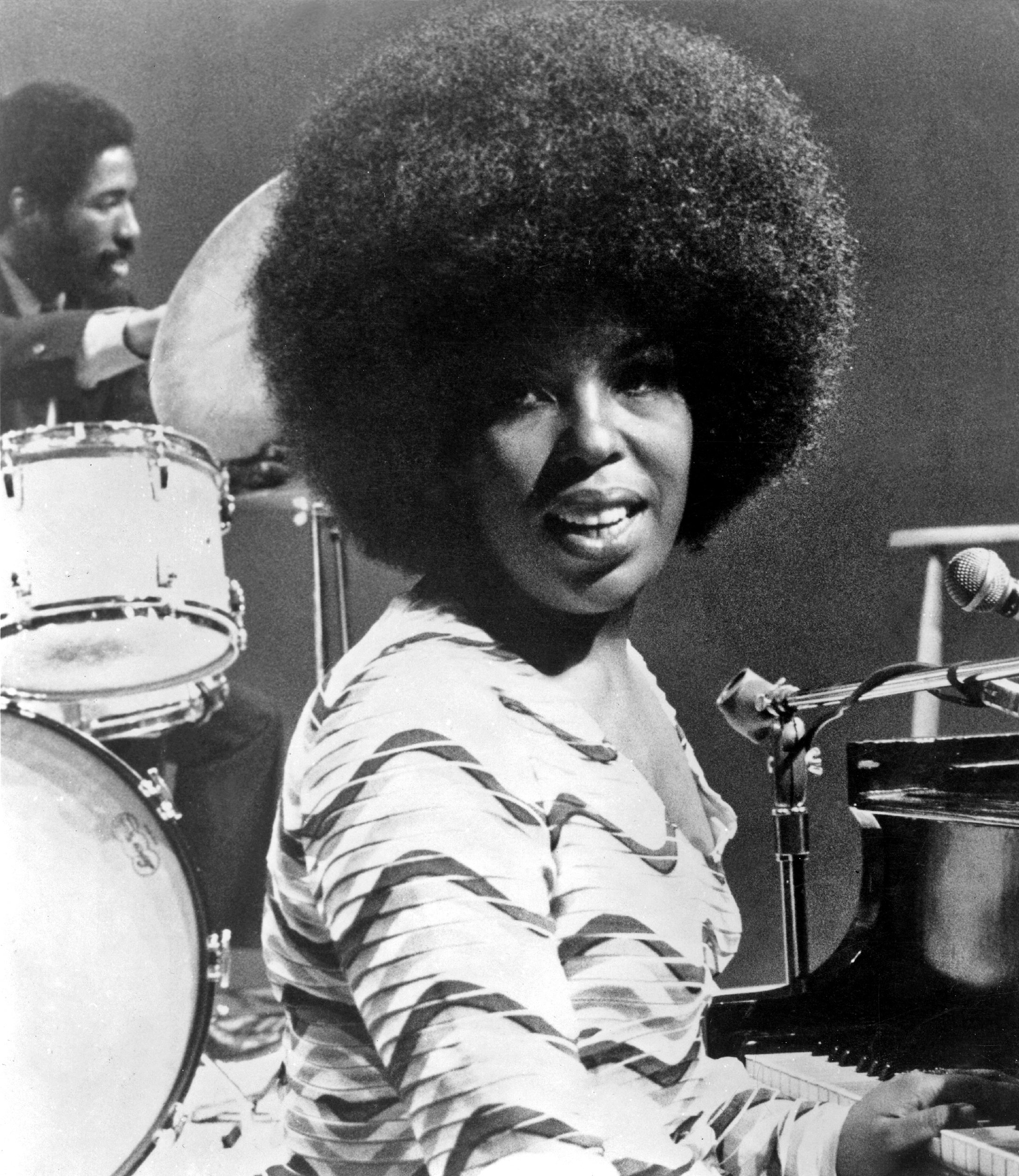
Roberta Flack, a classically trained pianist who taught in the D.C. school system before launching a singing career that made her one of the most popular performers of the 1970s, with such No. 1 hits as “The First Time Ever I Saw Your Face” and “Killing Me Softly With His Song,” died Feb. 24 at her home in New York City. She was 88.
The cause was complications from amyotrophic lateral sclerosis, often called Lou Gehrig’s disease, said her publicist Elaine Schock.
Ms. Flack was content to teach music and to accompany other vocalists on piano before she was cajoled into singing Christmas carols while appearing at a Washington nightclub in the 1960s. She eventually decided to concentrate on a music career, and her quiet, emotionally searching style soon won a growing number of fans.
Her 1969 debut album, “First Take,” contained “The First Time Ever I Saw Your Face,” which she had taught years earlier to some of her choral students at Washington’s Banneker Junior High (now a high school). She released two more albums, “Chapter Two” and “Quiet Fire,” in 1970 and 1971, respectively, and was seemingly content with a niche following.
When Clint Eastwood was preparing to direct “Play Misty for Me,” his moody 1971 thriller about a DJ pursued by a stalker, he heard “The First Time Ever I Saw Your Face” on the radio. Eastwood called Ms. Flack and asked if he could use the song for a key scene in the film.
“He was so sincere,” Ms. Flack later told Britain’s Daily Telegraph newspaper, and “he wanted it just how it sounds. ‘Isn’t it too slow?’ I asked. He replied, ‘No, just like that, all of it.’ And he played all five minutes and 22 seconds of it. I thought, if he’s willing to do that, I must be doing something right.”
The film’s success led Ms. Flack’s record label, Atlantic, to release “First Time” as a single. The song, written by British folk singer Ewan MacColl in 1957, had been recorded several times before, but it was Ms. Flack’s version that became a sensation.
“First Time” spent six weeks at No. 1 on Billboard’s Hot 100 chart in 1972, three years after it was recorded. At the Grammy ceremonies, it won Song of the Year and Record of the Year and made Ms. Flack a star.
Her slow, deliberate recording didn’t easily fit in any of the prevailing musical styles of the time.
“I didn’t try to be a soul singer, a jazz singer, a blues singer – no category,” Ms. Flack told the Guardian. “My music is my expression of what I feel and believe in a moment.”
With “First Time,” she found a musical sweet spot that touched on elements of jazz, pop music, classical and folk. The lyrics seemed to float, as if driven by the clarity and conviction of her voice:
The first time ever I saw your face
I thought the sun rose in your eyes
And the moon and the stars were the gifts you gave
To the dark and the endless skies
In 1972, soon after “First Time” began to climb the charts, Ms. Flack had a second hit record, the breezy, soft-soul tune “Where Is the Love?,” performed with Donny Hathaway. They won a Grammy for best vocal duo.
Riding a surge in popularity, Ms. Flack released another single, “Killing Me Softly With His Song,” in 1973.
The song, almost as ethereal as “The First Time Ever I Saw Your Face,” is about the effect a singer has on a young listener: “Strumming my pain with his fingers / Singing my life with his words / Killing me softly with his song.”
(A dispute about the origin of the tune, which is credited to songwriters Charles Fox and Norman Gimbel, has swirled since the early 1970s. Singer-songwriter Lori Lieberman, who was managed by Fox and Gimbel, first recorded “Killing Me Softly” in 1972. She has maintained that she developed the song’s concept and jotted lyrics on a napkin after seeing a performance by Don McLean.)
In any case, Ms. Flack’s recording of “Killing Me Softly” held the No. 1 spot on the Billboard pop chart for five weeks in 1973 and went on to win Grammys for Record of the Year and Best Pop Vocal Performance. She was the first person to win back-to-back Record of the Year honors.
Ms. Flack charted another No. 1 hit in 1974 with the frothy “Feel Like Makin’ Love,” then embarked on worldwide tours and settled in New York, where she lived next door to John Lennon and Yoko Ono in the Dakota apartment building.
She continued to record duets with Hathaway, including the 1978 hit “The Closer I Get to You,” until his death by suicide in 1979. She later formed a vocal duo with Peabo Bryson and appeared, at different times, with such artists as Quincy Jones, Burt Bacharach, Miles Davis, Judy Collins and Michael Jackson. She wrote songs with poet and novelist Maya Angelou. A generation of younger singers, ranging from Whitney Houston to Anita Baker, Sade and Lady Gaga, drew heavily on her approach.
“I am a person who has managed to last because I have chosen to stay true to my own ideals and principles, and true to my own experience,” Ms. Flack told the Washington Post in 1989. “I am a Black person who sings the way I do. I am not a Black person who sounds anything like Aretha Franklin or anything like Chaka Khan. I know what I am, and I don’t want to, and I shouldn’t have to, change in order to be who I am.”
- – -
Practicing six hours a day
Roberta Cleopatra Flack was born in Black Mountain, North Carolina, on Feb. 10, 1937, and grew up in Arlington, Virginia.
Her father was a draftsman for the federal government, and her mother was a school cook. Both parents played the piano, and Ms. Flack began on the instrument at a young age. She practiced six hours a day, studying with a Black woman, Hazel Harrison, who had trained in Europe.
“I was a good student because I didn’t do anything else,” Ms. Flack told Ebony magazine in 1971. “I weighed over 200 pounds. All I did was play the piano and eat all day, and I did them at the same time. And study and go to church. That was all I did.”
She won a scholarship to Howard University, studying piano and vocal music and conducting choirs on the side before graduating in 1958. When she received a practice-teaching assignment at Alice Deal Junior High in Northwest Washington, “I was one of the first Negroes inside that building except for the cooks and janitors,” she told the Post in 1968. She later taught at Banneker and other schools. During those years, she accompanied singers on piano and gradually began to sing in public herself, modeling her style in part on the balladry of her favorite singer, Frank Sinatra. She began by performing Christmas songs during the holiday season.
“I’m singing and I’m playing and suddenly everyone stops and I’m out there by myself,” she recalled to the Post in 1989. “And because I’m a performer I just kept singing and at the end they applauded and said, ‘Sing another one.’”
Over the years, she established a charitable foundation and supported efforts to support urban education and to combat HIV/AIDS. She retired from singing after a stroke in 2018, then two years later received a Grammy Award for lifetime achievement.
“When I was a child in Arlington, Virginia,” Ms. Flack recalled in 1988, “six hours a day, and on Sundays, when everybody else was out playing, I was practicing. I had no idea it would come to anything, yet I never felt I was wasting my time. Not one second.”