Mariners legendary lefty Randy Johnson to have number retired in Seattle
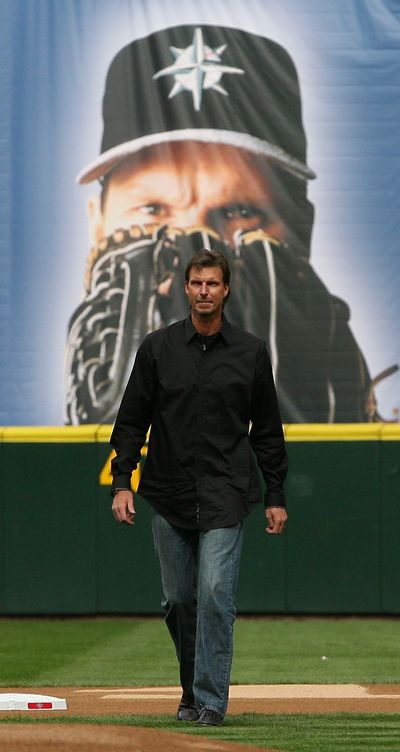

SEATTLE – Right away, Randy Johnson had to get something off his chest.
The Mariners arranged a Zoom call Monday morning with the Big Unit shortly after the team announced it would retire his No. 51 during the 2026 season, another occasion to honor perhaps the greatest left-hander pitcher of all-time.
But first, Johnson needed some closure . He needed Mariners fans to hear his side of his controversial departure from Seattle in 1998.
“After I left Seattle – I was traded; I didn’t walk away, and I think that is something that I hear from fans still occasionally,” Johnson said in his opening remarks. “For whatever reason, the ownership then didn’t make this (number retirement) happen (sooner). And so I suppose I was a little disappointed.”
In July 1998, the Mariners traded Johnson, then 34 years old and less than two years removed from back surgery, to Houston for three minor-leaguers virtually no one in Seattle had ever heard of, a deal universally panned at the time.
Johnson was set to be a free agent after ’98, and the Mariners front office had been up front with Johnson the previous offseason – they had no intention of offering him a new contract.
“I remember the day very well, sitting in the (dugout) doorway of the Kingdome and Lou Piniella coming up and saying, ‘You’ve been traded,’ ” Johnson said. “It would have been great if he’d said, ‘Hey, we’ve got a contract extension for you; you’re going to stay here for two more years with an option’ or whatever. Anything to keep me there.”
The perception from Mariners fans that Johnson wanted out of Seattle, or that he had intentionally tanked in the early part of ’98, has always bothered him.
“Every fifth day, I gave everything that I had. I really did,” said Johnson, now 61. “I worked extremely hard. I just recently had a knee replacement. I’ve had three back surgeries. I’ve got a torn left rotator cuff. I’m pretty beat up. But I would do it all over again. You know, I left everything on the mound in the Kingdome.”
In 10 seasons with the Mariners, Johnson blossomed into one of the game’s best and most intimidating pitchers. He threw the first no-hitter in club history on June 2, 1990 – 35 years ago Monday – and he became Seattle’s first AL Cy Young winner in 1995.
He went on to sign a four-year, $53-million deal with the Arizona Diamondbacks before the 1999 season, then won four straight NL Cy Young awards and was named the World Series MVP in 2001.
He was inducted into the Mariners’ Hall of Fame in 2012, along with his longtime catcher, Dan Wilson. Johnson was inducted into the Baseball Hall of Fame as a Diamondback in 2015, the same year his 51 was retired in Arizona.
In 22 MLB seasons, Johnson finished with 4,875 strikeouts, No. 2 all-time behind Nolan Ryan’s 5,714. And among Seattle pitchers who have thrown at least 1,000 innings, Johnson’s 3.42 ERA is tied with Felix Hernandez for the best mark in club history.
Johnson’s 51 will be the fifth number retired by the Mariners, joining fellow Hall of Famers Ken Griffey Jr. (24), Edgar Martinez (11) and Ichiro (51). As with all MLB teams, the Mariners have also retired Hall of Famer Jackie Robinson’s 42.
51 x 2
Before the start of the 2001 season, Ichiro reached out to Johnson to seek permission to wear No. 51 with the Mariners.
Johnson was a little surprised at the request, but had no issue with the Mariners’ new right fielder from Japan wearing his old number.
“He had written a nice letter asking if he could wear the No. 51, knowing that I had wore it for the 10 years,” Johnson said. “And I had no problem – wear it and enjoy it. And then he went on to have a Hall of Fame year, obviously.”
Ichiro was voted into the Baseball Hall of Fame in January, and he explained the significance of the number and the connection with Johnson.
“When I first got the No. 51, I knew that No. 51 was a special number,” Ichiro said at a January news conference. “I knew it was a special number to the organization and I knew that it was a special number to the fans here in Seattle. Obviously, I wanted to make sure No. 51 was (done) justice, make sure that 51 wasn’t going to be embarrassed. And I felt like if No. 51 was just an average player, I wouldn’t do Randy Johnson justice. I knew (what it meant) for that number to keep going and for that, I took very seriously. I needed to do well to make sure I performed well in that number. I remember feeling that pressure when I got that number.”
When the Mariners recently approached Johnson about retiring his number, he said the only stipulation was he didn’t want to overshadow Ichiro’s Hall of Fame year.
“I’m extremely excited and proud and honored that this ownership has been working on this behind the scenes for a little while,” Johnson said. “And I know the significance of Ichiro and his accomplishments … because he deserves to have his own day.”
The Mariners previously announced that they will retire Ichiro’s No. 51 during a ceremony at T-Mobile Park on Aug. 9.
The ceremony date for Johnson’s number retirement will be determined after the MLB finalizing the 2026 schedule.
Two blockbusters
Johnson was involved in perhaps the two greatest trades in Mariners history.
On May 25, 1989, the Mariners sent left-handed ace Mark Langston to the Montreal Expos for three pitchers: right-handers Gene Harris and Brian Holman, and Johnson.
“I wasn’t even the best pitcher that was coming from Montreal,” Johnson said Monday. “Brian Holman was probably the better pitcher of the three of us, and Gene Harris was the best athlete out of the three of us. It took me a long time to develop into the pitcher that I was.”
Johnson broke through during his age-29 season in 1993, going 19-8 with 3.24 ERA and the first of his six 300-plus strikeout seasons.
When he won his first Cy Young in ’95, he was 18-2 with a 2.48 ERA, and the Mariners, incredibly, went 27-3 in his 30 starts. He pitched a complete game – against Langston – in the ’95 tiebreaker victory over the Angels that sent the Mariners to their first playoff appearance and helped save baseball in Seattle.
“Obviously, ’95 was the pinnacle,” Johnson said. “It was pretty magical for all the players on that team, how we gelled together and played so well.”
On July 31, 1998, the Mariners shipped Johnson to Houston for Freddy Garcia, Carlos Guillen and John Halama, all three of whom would become key figures on Seattle’s playoff teams in 2000 and ’01.
Garcia (18.6), Guillen (9.1) and Halama (5.4) would go on to produce a combined 33.1 WAR for the Mariners.
Johnson would go on to greater glory in Arizona.