
Federal government looks to scale back environmental protections after North Idaho couple’s case
The federal Environmental Protection Agency has proposed a new rule that would drastically reduce the number of wetlands protected by federal environmental regulations.
State officials in Idaho and Washington, meanwhile, say while they continue to review the potential impact of the rule if fully implemented, they remain committed to protecting their land from pollution.
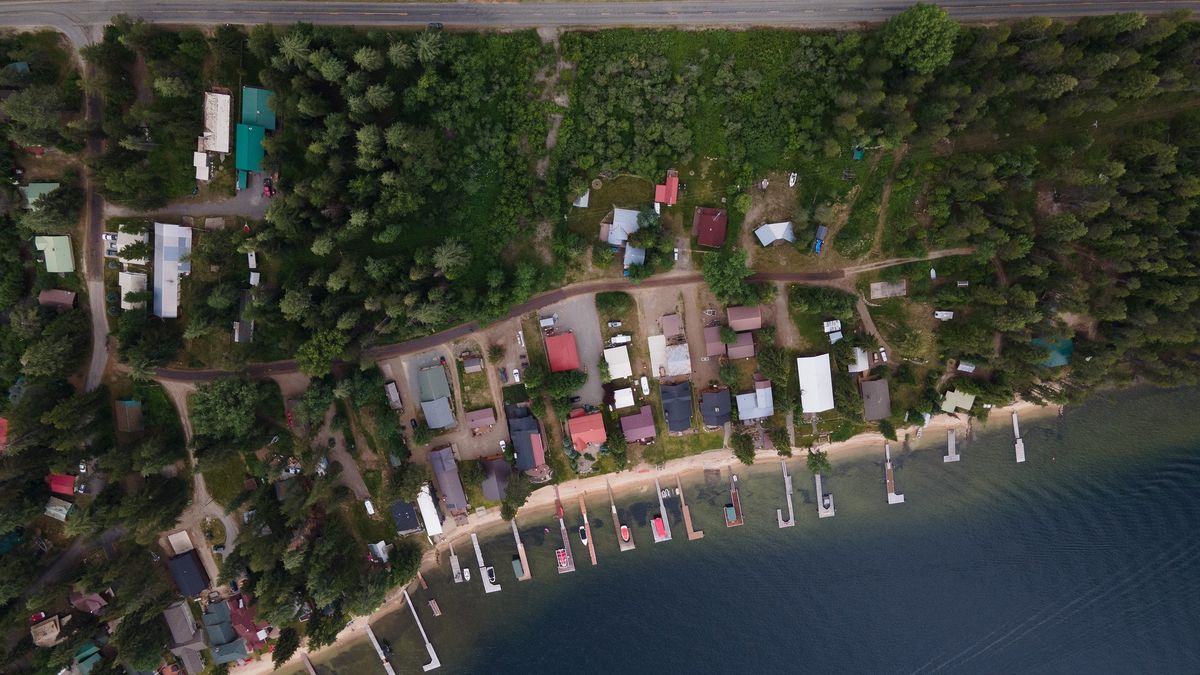
The new rule comes after the Supreme Court sided with a North Idaho couple who were told they would need to obtain a costly federal permit to build a new home on the shores of Priest Lake. In its 2023 ruling, the court found the EPA had overstepped its regulatory authority over the “waters of the United States,” which are protected from pollution by the Clean Water Act of 1972.
The court found that wetlands are protected by the Clean Water Act only if they have a “significant nexus” to regulated waters.
The EPA says the new rule complies with this finding. If finalized, the rule would limit federal regulation to “relatively permanent, standing or continuously flowing bodies of water,” including streams, oceans, rivers, lakes, and wetlands that are “connected and indistinguishable” from such bodies of water.
“When it comes to the definition of ‘waters of the United States,’ EPA has an important responsibility to protect water resources while setting clear and practical rules of the road that accelerate economic growth and opportunity,” EPA Administrator Lee Zeldin said in a statement Monday.
Zeldin added that Democrats have “weaponized the definition of navigable waters to seize more power from American farmers, landowners, entrepreneurs, and families” for decades.
If approved, Zeldin said the rule would protect navigable waters from pollution while advancing “cooperative federalism by empowering states.”
According to the Natural Resources Defense Council, if finalized, the change may strip federal protections from up to 55 million acres of wetlands, or about 85% of wetlands in the country.
Environmental groups have argued the new rule would roll back decades of progress in reducing pollutants in the environment.
Kelly Hunter Foster, senior attorney for the Waterkeeper Alliance, said in a statement that the rule “continues to prioritize corporate interests by compromising the already weakened protections for thousands of water bodies across the country.”
Manufacturing groups, meanwhile, contend the rule would provide clarity on which waterways are protected.
“Manufacturers thank EPA Administrator Lee Zeldin for listening to the concerns of our industry and revising the definition of the Waters of the United States rule to bring certainty and predictability,” said National Association of Manufacturers President and CEO Jay Timmons in a statement.
However, it remains unclear what impact the change could have on state regulations.
Nick Schofield, a spokesperson for the Idaho Department of Environmental Quality, said Wednesday that the agency is in the “preliminary stages of reviewing the proposal and assessing how it aligns” with the state’s existing programs and rules.
“At this point, it’s too early to determine what the potential implications may be for wetlands in the state or for state-managed lands,” Schofield said. “Once we have a clearer understanding of the proposal and its practical effects, we’ll be able to provide more information.”
Schofield added the agency takes “its mission to protect human health and the quality of Idaho’s air, land, and water very seriously and believes fully in our vision where the quality of our environment enhances healthy living and supports thriving communities.”
Curt Hart, a spokesperson for the Washington Department of Ecology, said Tuesday that state law has provided protections over wetlands and streams for decades, laws that would not be impacted by the new rule.
“The draft rule proposed Monday by the Trump Administration removes federal protections for many wetlands and streams, but it does not minimize these state protections,” Hart said.
While the agency continues to review the proposed rule and its potential impact, Hart said wetlands are protected by a collection of state laws, including the 1945 Water Pollution Control Act, the 1972 Shoreline Management Act and the 1990 Growth Management Act.
“Wetlands are critical for reducing flooding, recharging drinking water aquifers, protecting water quality, and providing habitat necessary for the survival of salmon, migratory birds and other species,” Hart said.