
Steptoe Butte reopens with its ‘sweeping views’ after yearlong repaving project
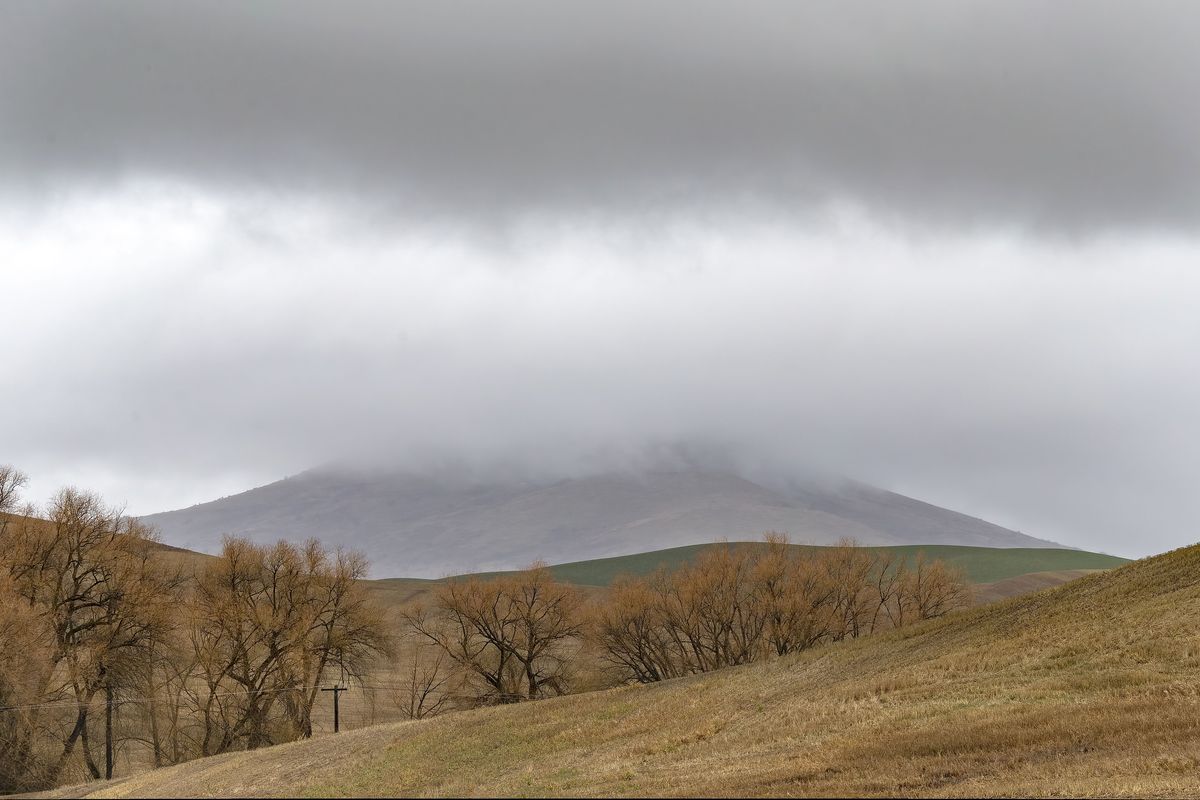
Hang gliders, photographers and naturalists rejoice – Colfax’s Steptoe Butte officially reopened in late February sporting 4 miles of freshly repaved road winding through the largest Palouse prairie remnants.
The state park had been closed for about a year after flooding washed the butte’s lone road out of commission, Washington State Parks spokeswoman Sarah Fronk said. The repair, which included improvements to culverts to prevent future floods, cost $3.4 million in capital and state paving funds.
Besides flood mitigation, Fronk said the project was also intended to improve visitor experience.
“Prior to their repaving project, that road was really, really bumpy,” she said. “You’ll see it’s a really nice, smooth experience now, and you might actually enjoy the drive up to the summit.”
Characterized by loose soil blown into rolling hill formations, the Palouse prairie is a critically endangered ecosystem that people travel from across the country to visit, state parks resource steward Andrew Fielding said. A quintessential look at the Eastern Washington landscape, Steptoe Butte is a particularly popular destination for its clear views of surrounding farmlands and distant mountain ranges.
Hang gliding registration forms can be found at the peak, and Fronk said elementary schools take students on field trips to the park each year.
“As you drive up the butte, you’ll circle through the north side that has all the trees on it,” Fielding said. “And then you’ll circle around and come into the drier side, which is more grasses.”
The native soils, grasses and wildflowers found at Steptoe once dominated the Southeastern Washington landscape, and still house a number of Palouse-dependent organisms – including the Giant Palouse earthworm, once thought to be extinct.
Steptoe also has historically been of spiritual and cultural importance to multiple Native American tribes, who have long called it “Se-empteeta” or “E-omoshtoss,” according to the Washington State Parks website.
The name “Steptoe” is in reference to United States Army Colonel Edward Steptoe, who led U.S. troops in the 1858 Battle of Pine Creek. Native Americans won the battle, triggering what many today consider to have been a “search and destroy” mission by Steptoe’s superior, Colonel George Wright, as retribution. Suffering major losses during Wright’s Battle of Four Lakes and Battle of Spokane Plains, Inland Northwest tribes were largely forced into unfavorable treaties that marked a turning point for the white takeover of the region.
The butte would go on to house a hotel at its summit in 1888 and a homestead at its base in 1893. Former federal investigator Dave Benscoter would go on to discover in 2014 long-lost apple varieties planted by the settlers in what is now a picnic area along the repaved road.
The rolling prairie slowly turned into rolling farmland as years passed, growers taking advantage of the fertile land, Fielding said. Whitman County has historically topped the national list for most wheat production by county. Today, less than 1% of the native Palouse prairie remains.
Steptoe Butte, though, became a state park in 1946 with the help of local philanthropist Virgil McCroskey, and a National Natural Landmark in 1966, the parks website said. Fielding said that Whitman County has taken extra measures to protect what is left of the prairie, being the only county in the state to protect it under a Critical Area Ordinance.
“Usually critical ordinance protects typical stuff – stuff along the waterways and things like that,” he said. “And so for an ecosystem to be protected under the critical ordinance – I guess it just demonstrates how seriously the protection of that is taken in Whitman County.”
Steptoe Butte is open to the public year round, from 8 a.m. until dusk, for those who wish to catch a glimpse into the natural past. A Discover Pass is required for parking, and there are two public outhouses at the base of the butte.
“Definitely bring a picnic to be able to enjoy there at the bottom,” Fronk advises prospective visitors. “You drive up to the summit and – really, you go there for the view from the very top. You get just sweeping views, and it’s really incredible up there.”
The online version of this article has been updated to correct the spelling of Andrew Fielding’s name.