
Forty years on, climbing the Seven Summits still a rare and impressive feat

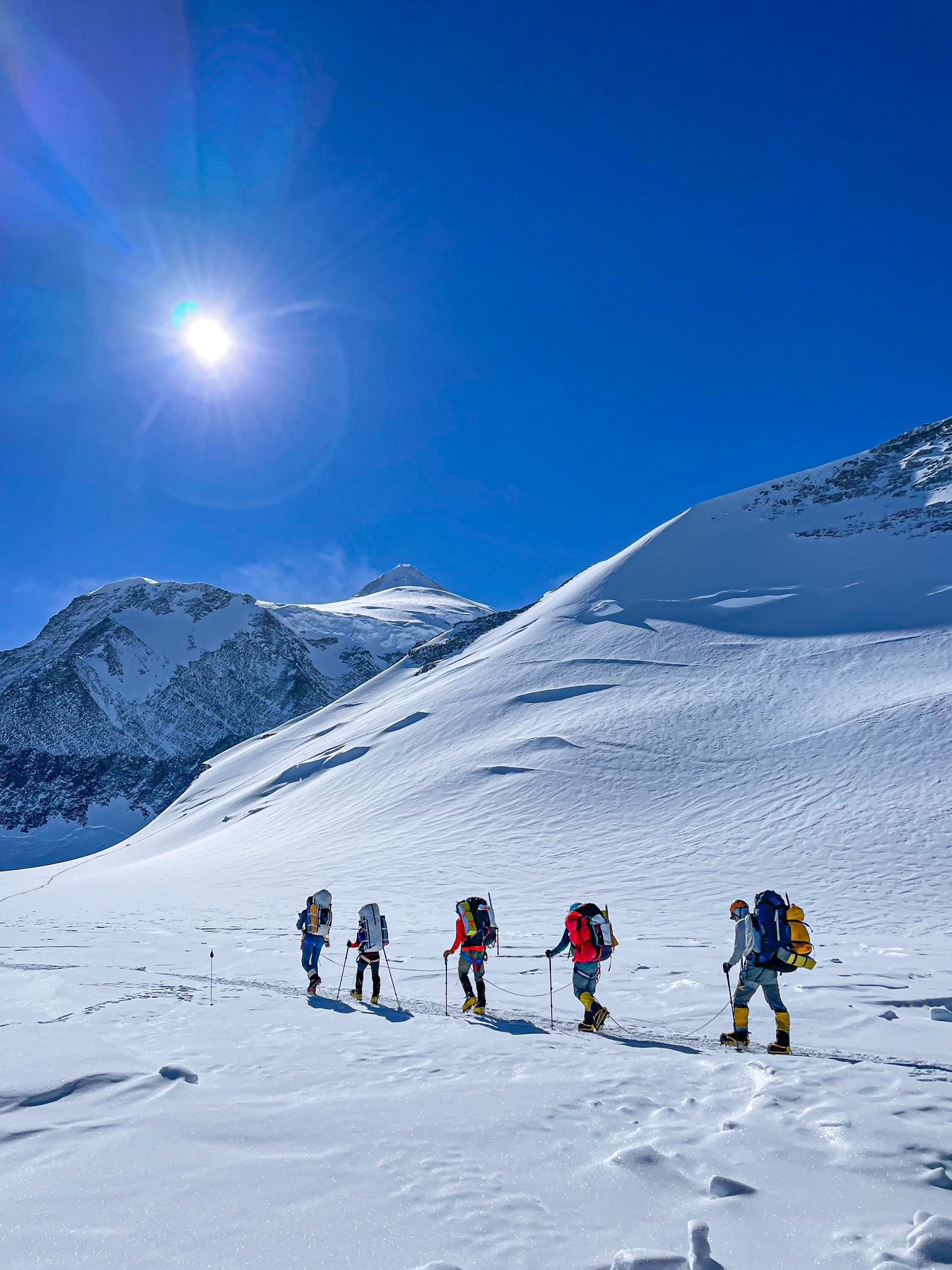
Forty years ago, Dick Bass became the first person credited with reaching the tallest point on the world’s seven continents.
After bagging six of the seven summits in the early 1980s, Bass – a businessman who built Utah’s Snowbird ski resort – scaled Mount Everest in April 1985, earning the title as the first person to climb the world’s Seven Summits.
A year later, Pat Morrow, a Canadian climber became the first to complete the Seven Summits using a separate list – one that used Carstenz Pyramid in Indonesia as the highest point in Oceania, a region that includes Australia. Bass had climbed Mount Kosciusko in Australia instead.
They had the other six entries in common: Everest, the tallest point in both Asia and the world at just over 29,000 feet; Aconcagua, the 22,841-foot peak in South America; Denali, the 20,310 peak in North America; Mount Kilimanjaro, at 19,341 feet, in Africa; Mount Elbrus, at 18,510 feet, in Europe; and Antarctica’s 16,050-foot Vinson Massif.
For reference: Mount Spokane tops out at 5,887 feet.
The feat remains relatively rare, though it’s hard to pin down exactly how many people have done it. An online registry lists just over 400 verified finishers, but its records appear to only go through 2016. Other estimates put the total somewhere between 500 and 750.
Among the first dozen climbers to complete the Seven Summits was Spokane’s own Chris Kopczynski, who got his seventh summit in 1991. His climbs were unguided.
Kay LeClaire, another Spokane climber, completed the list in 2009.
Much has changed in the past 40 years. In some ways, the peaks are more accessible now. There are plenty of professional mountaineering guide services that take climbers up the various peaks, complete with food service and other luxuries.
Ropes and other aids are now in place on some climbs, helping climbers navigate particularly technical sections.
Other aids have shortened some climbs significantly. On Carstenz Pyramid, a helicopter is now the standard way to reach base camp rather than a lengthy walk through the jungles of western New Guinea.
But the challenge is still tough enough that only a select few manage to finish it. The climbs require serious mountaineering skills. Climbers have to be in good shape and able to handle long days at high altitude.
They also need a lot of free time and a high tolerance for international air travel.
Oh, and a mountain of cash.
The guide service Climbing the Seven Summits urges people interested in chasing the project to budget at least $135,000 for the climbs, not including gear and travel.
That’s just a starting point – the cost of booking guides for any of the seven climbs runs into the tens of thousands. The same company’s starting price for Everest is north of $54,000. Alpine Ascents International, a climbing guide service based in Seattle, lists the cost for its trip to Everest at $80,000.