
Invasive European green crabs discovered in Skagit Bay
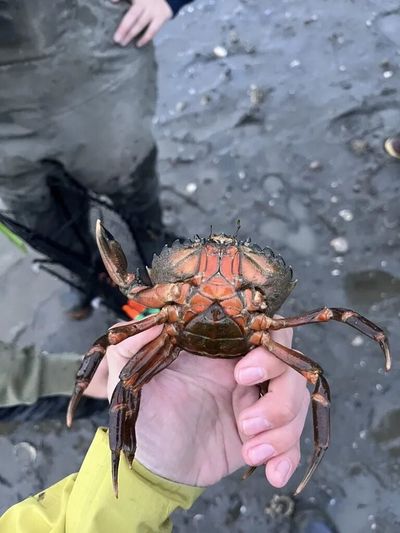
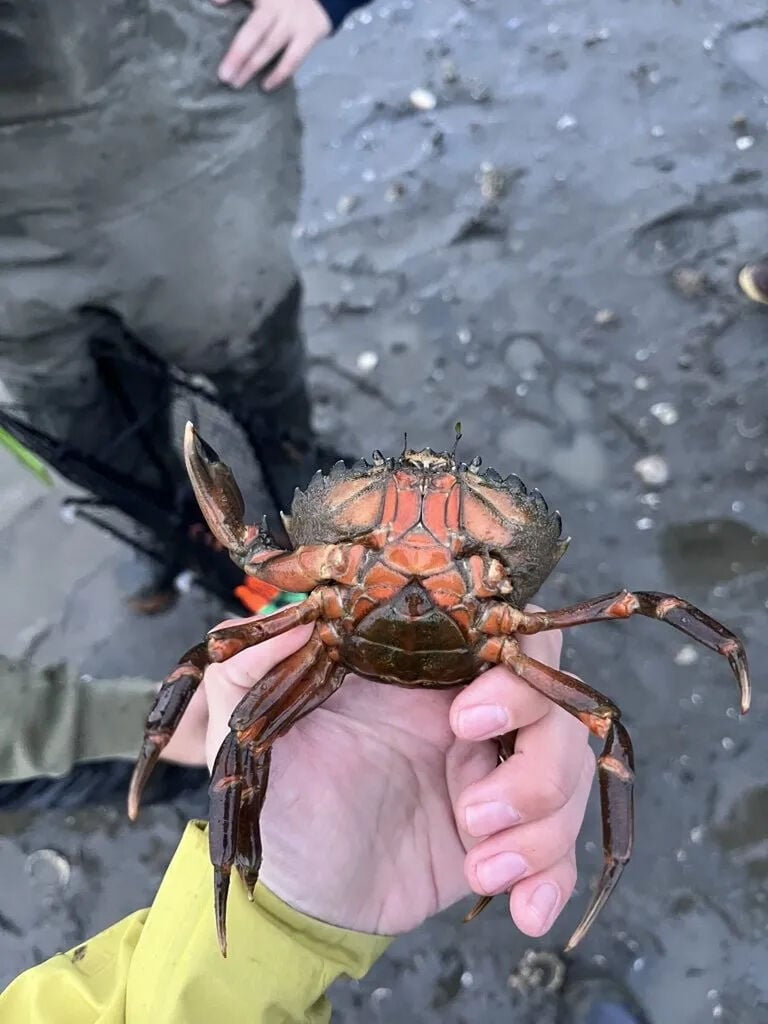
Researchers found the first evidence of European green crabs in the northern Whidbey Basin, a sign that one of the world’s most harmful marine species has made inroads in the Salish Sea, the Washington Sea Grant Crab Team announced Tuesday.
European green crabs are small, invasive shore crabs that damage bed sediments, leading to the loss of eelgrass, an essential habitat for Dungeness crab and Pacific salmon, according to the U.S. Geological Survey.
Community member Shirley Hoh found a green crab molt in late September while participating in Molt Search, a volunteer early-detection program run by the Sea Grant Crab Team. The molt was discovered at Similk Beach, on the northern end of the Swinomish Reservation, according to a news release.
Crab molting occurs when a crab sheds its shell.
Green crabs have been present in the Salish Sea for nearly a decade, but the discoveries in Skagit Bay highlight the need for ongoing management, Sea Grant program lead Emily Grason said in an email.
“This is exactly what Molt Search was designed to do – fill in the places where people aren’t currently trapping for green crab, and leverage other ways of looking for evidence that green crab might be there,” Grason said in the release.
Based on the size of the trapped crabs, scientists believe the population has been in the area for several years. A total of 12 green crabs have been captured across three sites in Skagit Bay, according to the release.
Researchers expected the northern part of the basin would be more protected from invasive crabs because of the narrow inlet at Deception Pass. Instead, they found crab larvae coming into the Strait of Juan de Fuca can get shot right through Deception Pass,” Grason said.
Crews from the Crab Team, the Washington Department of Fish and Wildlife and the Swinomish Indian Tribal Community conducted the trapping.
This year’s detections reflect a broader trend across Washington’s inland waters.
Earlier this year, the Tulalip Tribes reported the first detection of a green crab in the southern Whidbey Basin at Mission Beach.
“SITC Fisheries Department staff knew that green crab would eventually reach our shores, but it was still disheartening to catch those first few crabs,” Talia Davis, a fisheries technician with the Swinomish Tribe, said in the news release.
Early detection is crucial, especially in areas with high water retention, such as the southern Hood Canal and South Sound, Grason said.
Hoh’s discovery underscores the importance of beachgoers being able to distinguish green crabs from native species.
“It can definitely be a roller coaster to make a finding like this,” Grason said. “We hear this story from monitors and volunteers again and again. We spend hours training them to search very hard for this creature; they ultimately hope not to see it.”
To learn about how to identify European green crabs and to volunteer with Molt Search, visit wsg.washington.edu/crabteam/moltsearch.