
Getting There: U.S. Transportation Secretary wants you to dress better on flights. Should you? We asked Spokane travelers

You’ve seen the photos from the 1950s and ’60s: Airline passengers are laughing, enjoying a hearty meal on a cushy, wide seat in immaculate and lavish clothing as they enjoy what many considered a luxurious experience.
Over the years, flying transformed into a more accessible method of travel for many people as it became less expensive and more efficient. The efficiency of flying replaced its luxury within a few decades, and slowly the roomy, comfy chairs and the heightened attentiveness of airline attendants changed to accommodate.
Now, travelers face hourslong layovers in an airport . Many affordable flights take off early in the morning before the sun peeks over the mountains. People have adapted to the efficiency and long hours on a plane by prioritizing comfort – if you walk through the airport now, chances are you will see more people in sweatshirts, sweats or pajama pants instead of a skirt and heels or a suit and tie.
U.S. Transportation Secretary Sean Duffy wants to change that.
“Let’s try not to wear slippers and pajamas as we come to the airport,” he said last week at Newark Airport. The statement was issued as part of Duffy’s airport “civility campaign” to “restore courtesy and class to travel,” the department said in a news release. The campaign, titled “The Golden Age of Travel Starts With You,” began as a push to curb the behavior of unruly passengers on flights, the release said. The transportation department said they have seen a surge in the last six years of disruptive behavior during flights.
Within the campaign, Duffy has posed five questions to Americans, asking them if they are keeping control of their children, helping the elderly and saying “please” and “thank you.”
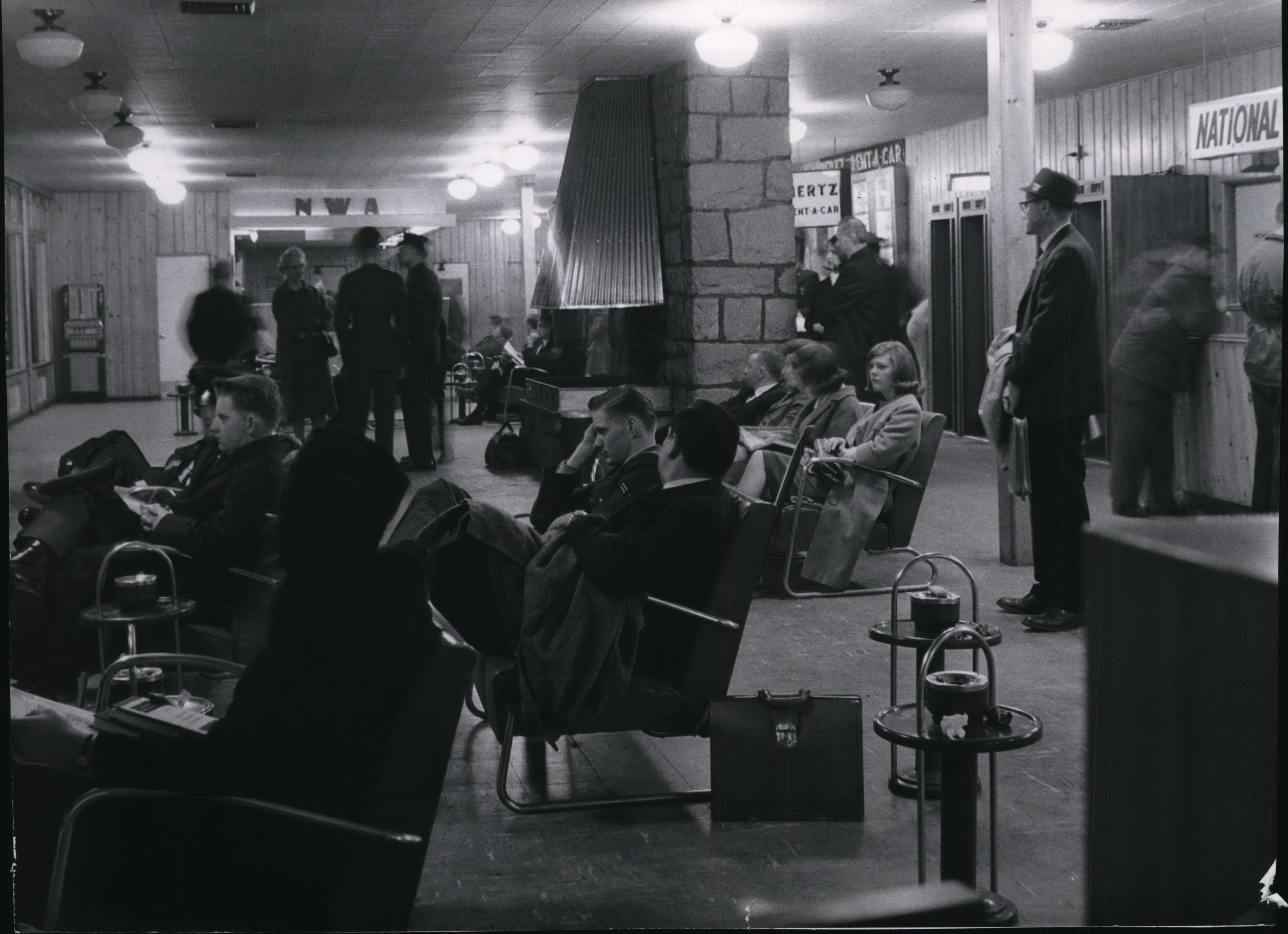
The department also poses the question: “Are you dressing with respect?”
“I would encourage people to dress a little better, which encourages us to maybe behave a little better,” Duffy said last week.
Those at the Spokane International Airport on Friday may have a different idea about that. Out of the hundreds of people that were passing through the day after Thanksgiving, few were dressed in anything other than comfortable clothing. Those who were dressed up, were on a business trip.
“Our flight left at 7, so we left at 3:30 a.m.,” said traveler Eric Sawyer, who was waiting at baggage claim with his family. Sawyer said he probably wouldn’t mind dressing up, but the circumstances would have to warrant it.
“To press a suit and tie – I’d have to wake up at midnight,” he said.
Pressing a suit and tie is a thing of the past. Previous airline advertisements depict men in suit and ties and women in collared shirts as far back as the ’30s, but the style was most prominent in the ’50s. The ads flaunt comfortable “lounge seats” and card games. And as the passengers laugh, they enjoy a large gourmet “red carpet meal” that is “fresh and full of flavor,” from an exclusive chef, a United Airlines brochure from the ’50s says. The menu is very different from the pretzels and black coffee or soda passengers get today: beef tenderloin tips in wine sauce with buttered rolls, peas, a tossed salad, cheese and crackers and a chocolate cupcake to finish it off.
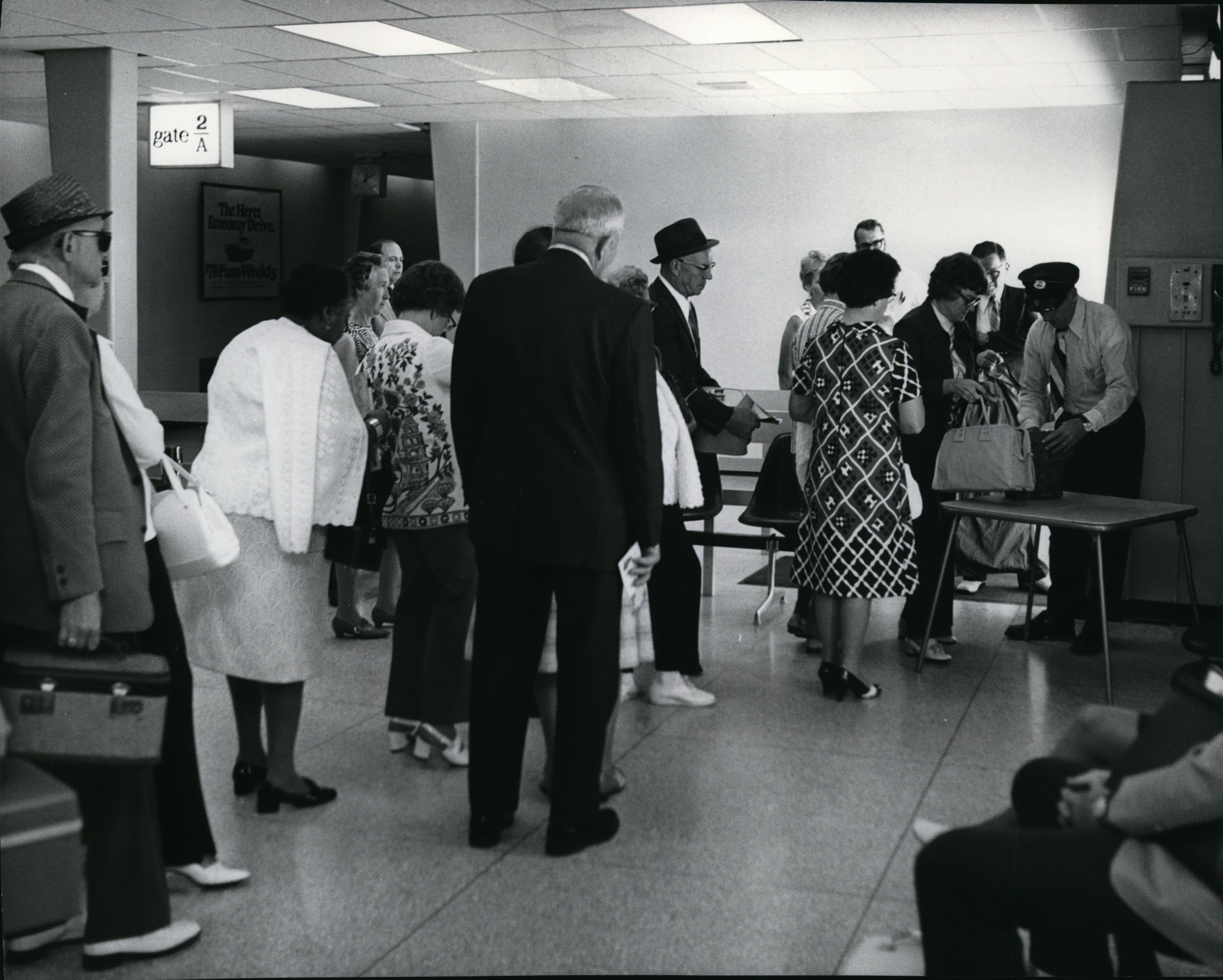
According to the National Air and Space Museum, in the early era of flight, air travel was less available and only offered to wealthy people. Most airlines didn’t make money from Americans buying tickets, but by flying mail for the federal government.
Early air travel was also uncomfortable and cold and planes were not pressurized. Many people got sick, the museum says. But in 1955, most of that changed. People had an itch to travel after World War II and airlines were flooded with people. Just two years later, air travel surpassed boats as the most popular way to cross the seas.
The jet engine eventually changed air travel as it was able to accommodate more people, according to the museum. More people wanted to be on a plane to show off their status of wealth. But as airline fares dropped in price, the exclusivity of being on a flight declined.
Nearly half of Americans had flown on a plane by 1972, according to the National Air and Space museum.
Since the ’70s, traveling by air has mostly changed out of efficiency and convenience.
“In exchange for low fares, passengers have had to sacrifice convenience and amenities,” the museum states. “To offer low air fares, airlines have had to cut costs in other ways, often by reducing, eliminating, or charging for amenities that air travelers once took for granted.”
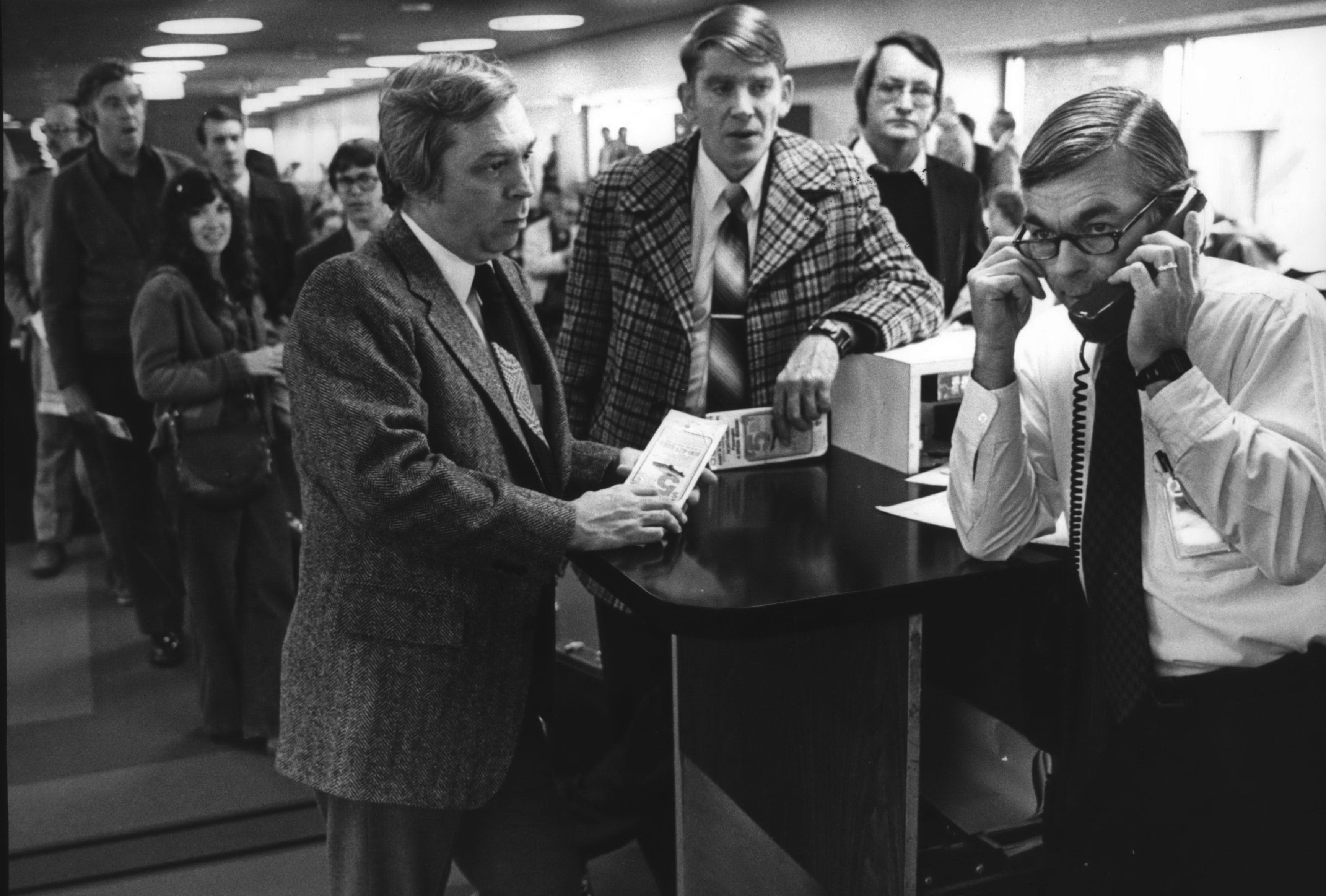
That sentiment is felt. Traveler Josh Needham, who was flying to Reno, Nevada, would need a more persuasive argument to abandon his sweatshirt based on how uncomfortable the airline seats are and how restrictive the space inside the plane is.
“Not without good reason,” he said, when asked if he would wear a suit and tie on a plane. “It’s about comfort and convenience. The seats are more cramped. Being in a nicer outfit in a smaller (seat) is hard.”
JoJo Bryant, a 17-year-old who was flying into Spokane on Friday from San Diego, was sporting some plaid pajama pants with his friend. When asked if he would want to ditch the fit for something classier, he laughed. He also flies frequently as a basketball player, and Bryant’s team is often told to dress for comfort so they can sleep on the plane to rest up for big games.
“If you have a long flight, you should be able to wear what you want,” Bryant said. “I had to get up at 5 a.m. There’s no way I’d be comfortable.”
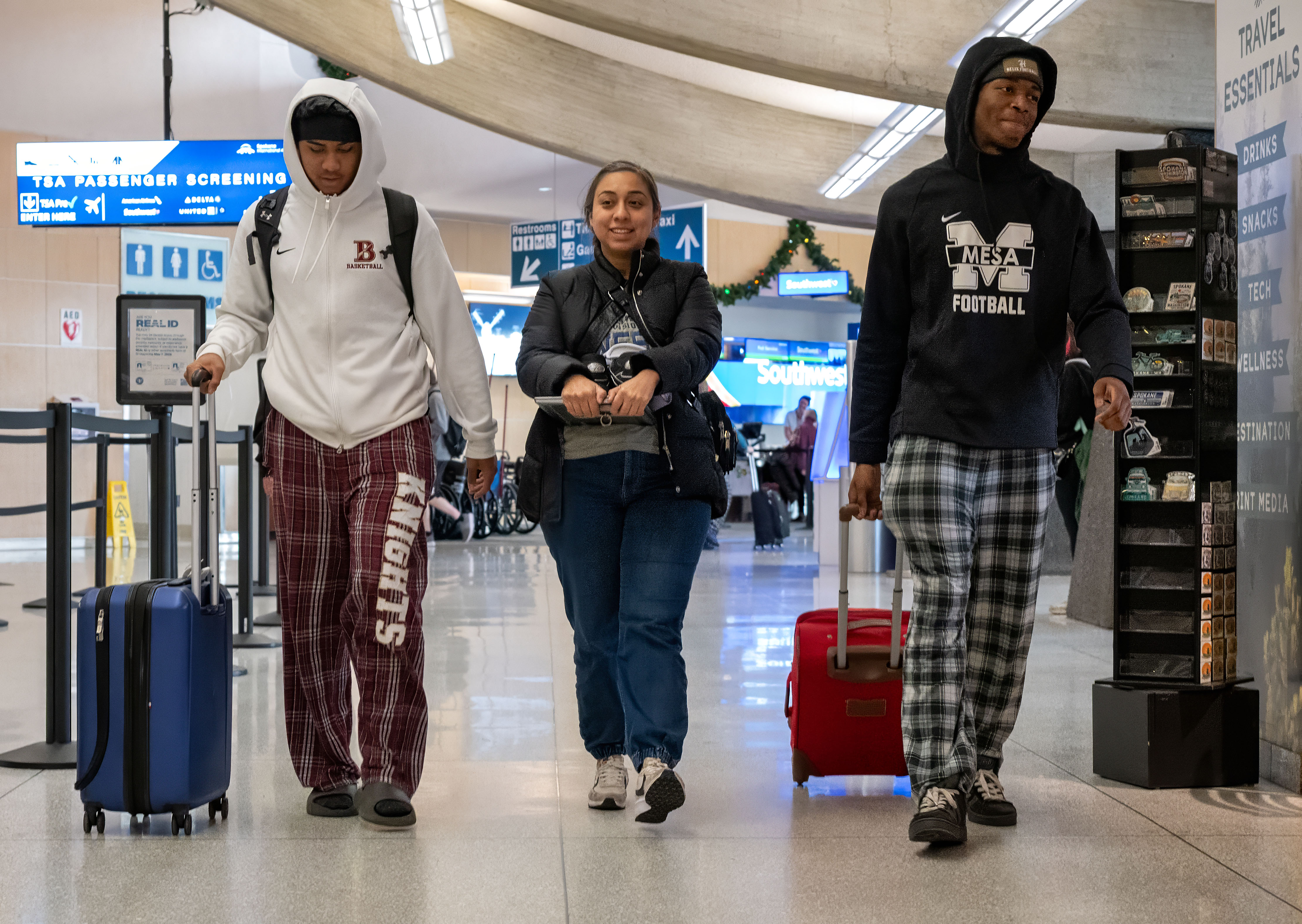
Also walking through the Spokane airport in pajama pants Friday was 12-year-old Tanner Steidl. His father joked, “These kids wear this to school now.”
But like the others, Steidl believed it’s about comfort. A suit and tie is the opposite of that, he said.
“It’s more normal now to fly. No one should care what you wear,” he said. Steidl did flaunt he would be able to sleep in a suit and tie. Perhaps he’d also be able to sleep anywhere, he suggested.
“I mean, I could do that,” he said of wearing a suit on a plane. “I just don’t want to.”