
‘That instrument is very dear to me, and it’s dear to Spokane’: Historic piano among items damaged in Capitol break-in
OLYMPIA – While officials continue to determine the extent of the damage done during a recent break-in at Washington’s Capitol, an initial assessment found that a 19th-century Blüthner piano with deep historical ties to Spokane is among the historical artifacts that suffered damage.
According to the Washington State Patrol, a suspect identified as 29-year-old Gunnar Schubert entered through a broken window on the north side of the building at approximately 10:15 p.m. on Sunday with two hammers. He broke small office equipment, including card readers and hand sanitizer dispensers, before going up to the building’s large rotunda and “escalating damage.”
Schubert has since been released without bail, though he is not allowed on the Capitol campus without an escort.
Built in 1893, the damaged grand piano was transported by musicologist Hans Moldenhauer from Germany in 1938 and arrived in Spokane the following year when he opened the Spokane Conservatory. This grand piano is 6 feet and 3 inches long and features a light rosewood veneer and black accents.
Moldenhauer is credited for gathering a massive and rich collection of musical manuscripts and artifacts that now resides in the Library of Congress, Harvard University, Washington State University and other places.
Following his death, the instrument was gifted to Washington in 1990 by the Moldenhauer Estate and has been prominently displayed for more than three decades in the Capitol.
According to the Secretary of State’s Office, the item was a gift to the state as an expression of Moldenhauer’s gratitude for “finding a new home congenial to his affinities.” A mountaineer, Moldenhauer was fond of Spokane, a city where he could climb, hike and venture into the great outdoors.
Nearly 40 years after his death, the legacy of Moldenhauer remains visible throughout the state. His home was added to the Spokane Register of Historic Places in 1991 and listed in the National Register of Historic Places last year. As Concertgoers enter the lobby of the Fox Theatre, they are greeted by a bust of Moldenhauer.
An initial assessment of the piano by the Department of Enterprise Services, which oversees operations of the Capitol, revealed the instrument has “light smoke damage and cosmetic damage” to its front, while a non-historic bench that accompanied it was destroyed.
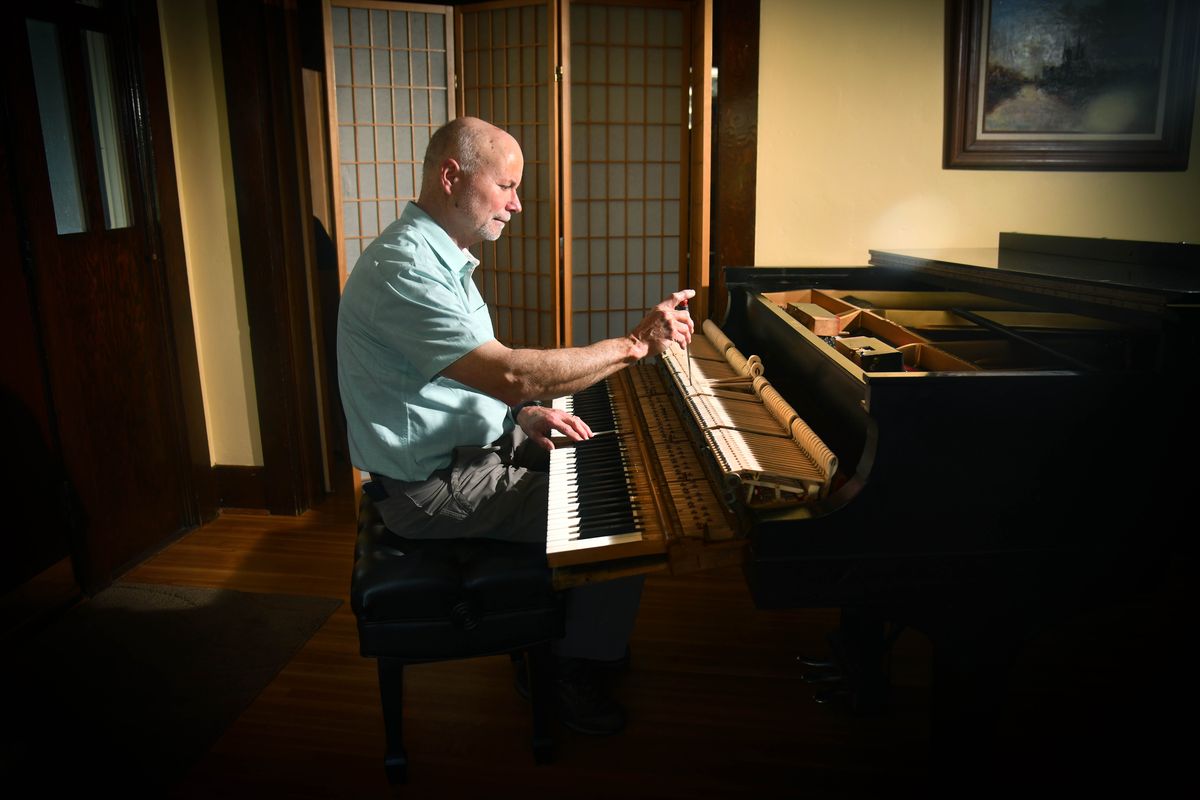
The damaged piano, though, is of particular interest to Ken Eschete, a Spokane-based piano technician, who repaired the piano in 2017.
“That instrument is very dear to me, and it’s dear to Spokane,” Eschete said.
Adam Holdorf, DES spokesperson, said Wednesday the bench was set on fire, and heat from the flames blistered the front of the instrument, causing bubbles the size of “bubbles in a pot of water that is beginning to simmer” to form on the instrument’s exterior.
The damage is not visible in photos provided by the agency, as the fire did not cause discoloration. The Department of Enterprise Services is bringing in historic preservation and material experts to assess the damaged artifacts and what repairs are needed to restore the room.
While Eschete has not examined the instrument since the break-in, he said in an interview Tuesday that fires could have caused damage that will need to be carefully repaired.
“When it’s been through a change in environment like that from the exposure to high humidity situations, the strings and metal parts in the piano will be affected, and may, if not treated, rust, sometimes severely,” Eschete said.
According to Eschete, the fire could have damaged the instrument in ways that are harder to see. Smoke from the fire, he said, could leave soot and residue on the piano “that’ll be a big cleaning operation.”
“Cleaning generally causes the spread of soot and stuff like that, so keeping it from going anywhere else is one of the issues,” Eschete said.
As crews worked to extinguish the flames, the steam could have also damaged the wool felt inside of the instrument.
“There could be a good deal of damage done to the instrument,” Eschete said, adding that it would need to be carefully repaired by a restoration specialist.
According to the assessment of damage, the break-in resulted in damage across the building, including chips and cracks on the stairs in the Capitol’s Rotunda and surface damage and scratches to the marble floors and the state seal. The intruder set fire to a Columbia County flag in the Rotunda, and flags representing the state’s 38 other counties suffered minor scratches on their bases from being knocked over.
Once he made his way to the third floor, the intruder knocked over busts commemorating George Washington and Martin Luther King Jr., which resulted in light damage to the statues and floors.
To enter the State Reception Room, the suspect broke a historic glass door and set fire to a U.S. and Washington State flag once inside. The flames caused “significant smoke and fire damage” to a 1928 chenille rug, and the original teak floor and a mohair drapery and tieback also suffered burn damage.
According to the assessment, lingering burn and smoke smells persist throughout the room.
Eschete said those who restore the piano will need to consider how the damage “generally impacted the sound of the instrument.”
“That’s a concert instrument, and it’s kept in very pristine conditions,” Eschete said.
Eschete is quite familiar with what it takes to repair the instrument.
After nearly three decades in the Capitol, the piano was in need of restoration when it was brought to Eschete’s north Spokane shop in 2017. The work was meant to bring the instrument back to as close to its original aesthetic and sound as possible, without making it appear new.
Photos of the process show the instrument was carefully taken apart to repair chips, scuffs and other damage caused by 27 years of public display.
Before it was brought back to the Capitol, a free concert was held in Spokane to showcase the instrument, an event that drew an overflow crowd to the Northwest Museum of Arts and Culture.
The sound from the piano, he said, is different from the instruments built today.
“I would say it is a very pleasant, much more mild-sounding instrument,” Eschete said. “It doesn’t have the sharpness of a Steinway, which is designed to cut through a big orchestra. This is an instrument that’s more for the home.”