Meet three ex-Zags who were on the ground floor decades before GU’s move to the penthouse | West Coast Conclusion
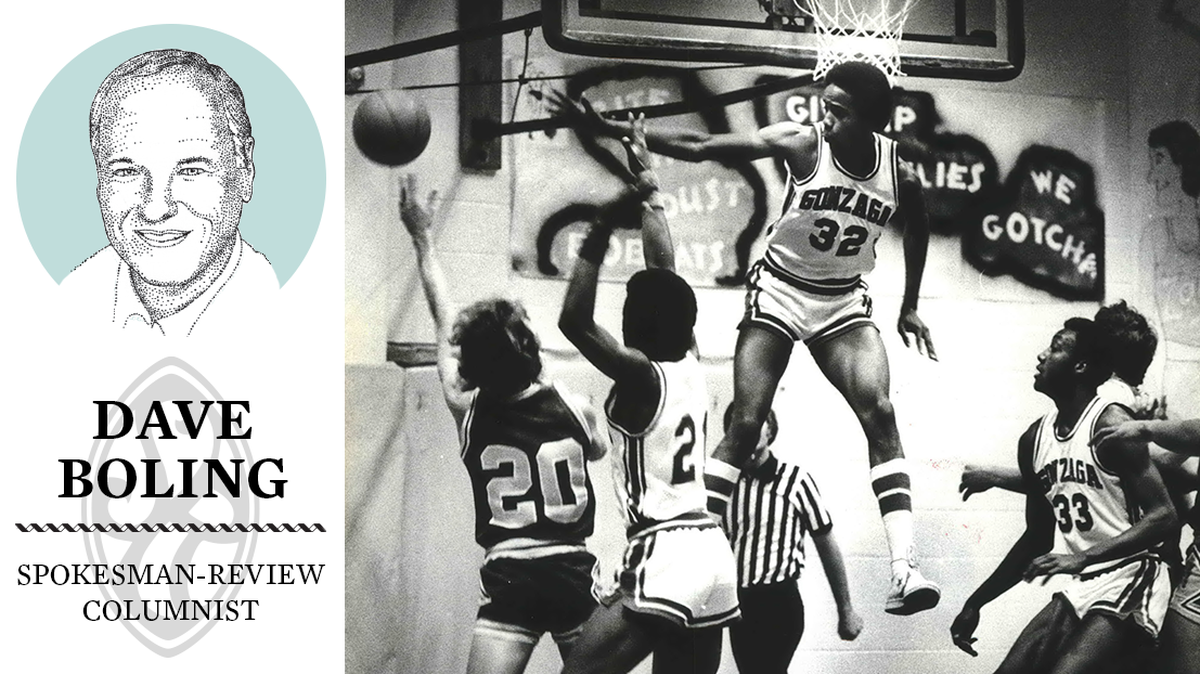
Toward the end of a recent autumn evening, Ed Taylor took a nostalgic walk across the Gonzaga University campus.
It had been more than four decades since Taylor played basketball for the GU Bulldogs, back during a transitional time when the past was entirely unremarkable and the future utterly unimaginable.
The campus was settled in for the night, peaceful – except for one place – ablaze with lights, glowing like a shining factory of athletic industry.
“I looked at the practice facility, and it was all lit up; players were in there working out at 10:30,” Taylor said.
The sight triggered a comparative flashback for Taylor, back to the late 1970s-early ‘80s when players like him had no after-hours access to the basketball floor or facilities, when the school’s cumulative weight-equipment amounted to “a couple barbells … sitting in an old classroom.”
This facility in front of him, surely among the finest in the nation, was an inconceivable contrast to the one lodged in Taylor’s memory, from a time when Gonzaga was growing out of the Big Sky Conference and venturing into what would become the West Coast Conference.
The Zags will say goodbye to the WCC at the end of this season, joining the newly reconfigured Pacific-12 Conference. It should be a fond farewell, as the WCC has served them well.
So well, in fact, that a consensus exists among Taylor and two other former Zags – from periods before and after and during the move out of the Big Sky: All agree, Gonzaga could never have reached its current elite status without first making that conference shift in 1979.
•••
Scott Finnie, a Zag guard from 1975 to 1979, describes the magnitude of Gonzaga’s transformation from a middling Big Sky Conference team to a franchise going on 26 straight NCAA Tournament bids, including a pair of Final Four appearances.
“It’s like I’ve gone into a future world I never dreamed could have existed,” Finnie said. “I go there now and it’s like, ‘where am I?’”
Finnie spent his entire career competing in the Big Sky. His final season, ‘78-79, was the first for head coach Dan Fitzgerald.
Fitzgerald recognized that, as a private, faith-based university, Gonzaga was an odd fit in a far-flung confederation of intermountain state schools.
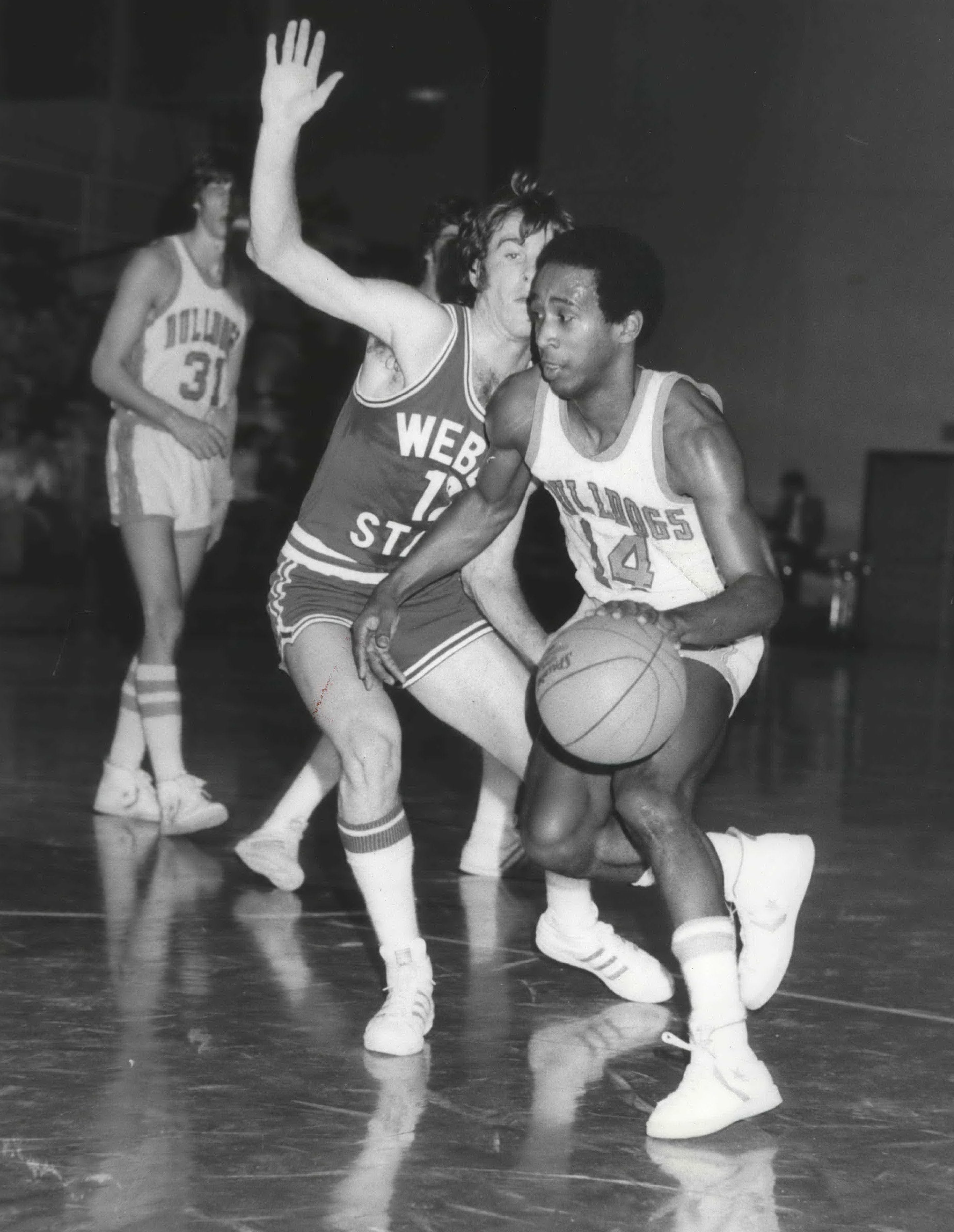
Finnie recalled the arduous travel through Montana, Idaho, Utah and Arizona. Especially vivid was the basketball facility at Montana State in Bozeman. The Bobcats’ arena also hosted indoor rodeo competitions, and the players had to clean off their sneakers after the walk between the locker rooms and the court.
During Finnie’s four years at GU, the Zags never finished higher in the Big Sky than fourth, or had better than a .500 conference mark. Nor did his teams ever win on the road at Montana or Weber State.
For a middle-of-the-pack Big Sky team to move into the more competitive West Coast Athletic Conference felt like “a big leap of faith,” Finnie said, in part because it meant facing generally higher-regarded opponents.
Finnie said he likes to tell people at GU that he’s “one of the faceless founding fathers of today’s (basketball) dynasty.”
Finnie had another firm opinion about the Zags’ move into the WCC: “Dan Fitzgerald was the man who laid the foundation for everything. He really had the foresight. And if any man ever had a heart for the game, or mind for the science of the game, it was Dan Fitzgerald.”
•••
Ed Taylor didn’t know much about the Big Sky Conference when he came to Gonzaga in 1978, but he shaped two strong impressions: 1. For some reason, the prevailing culture and mindset held that GU would never be able to compete on the road with Montana and Weber. And, 2. new coach Dan Fitzgerald saw the desperate need to get out of that loop.
“I remember Fitz saying my freshman year, ‘we have to be a West Coast team; we have to recruit the West Coast, we have to be with peer institutions up and down the west coast.’ He knew it was a huge move.”
Improved travel, higher level of competition, attention from bigger media markets. So many changes were brought on by the move. But the most important, Taylor said, was in changing the team’s mindset.
“With all due respect to playing in Missoula, Boise and Weber, it’s a different thing when you’re playing the caliber of team that a (San Francisco) is,” Taylor said. “It’s a huge cultural shift.”
Suddenly, the Zags were playing at Santa Clara against a young Kurt Rambis, or Rick Raivio at Portland, or Quintin Dailey at USF. “We knew we were playing against NBA-caliber players almost every game.”
Perhaps that helped them land one of their own, Gonzaga Prep’s John Stockton. “My senior year, Johnny was a freshman, and he was so competitive,” Taylor said. “He played up to the competition and was not going to be marginalized as just some kid from Gonzaga Prep, he was going to play up to the league.”
Taylor questioned why traditional Big Sky front runners were held in such awe. But by his senior year, as a West Coast Athletic Conference team, Taylor and the Zags beat both Weber and Montana in nonconference games on the road.
By then, given the level of competition in their own league throughout the season, wins over Big Sky teams were taken as an expectation.
“It changed the culture,” Taylor said. “We went from ‘maybe we can make it into the upper tier of the Big Sky,’ to something much higher.”
The flights and buses through the mountains in the winter were now replaced with trips to more desirable destinations. Taylor pointed out the appeal: “Leave Spokane in January and go to Pepperdine (Malibu) and L.A. and San Diego.”
Another measure of change during that first year: In January of 1979, the Zags had been wiping grime off their gym shoes for a game at Bozeman, Mont., but in January, 1980, they scored their first WCAC road win over San Diego in the San Diego Sports Arena.
Taylor remembered marveling at the contrast: The Clippers’ Bill Walton had played in that arena just two nights before, “maybe he was sitting on the very chair I was.”
It didn’t mean the arenas were filled, as The Spokesman-Review’s report of the win over the Toreros included this line: “A thin crowd estimated at 175 watched at the San Diego Arena.”
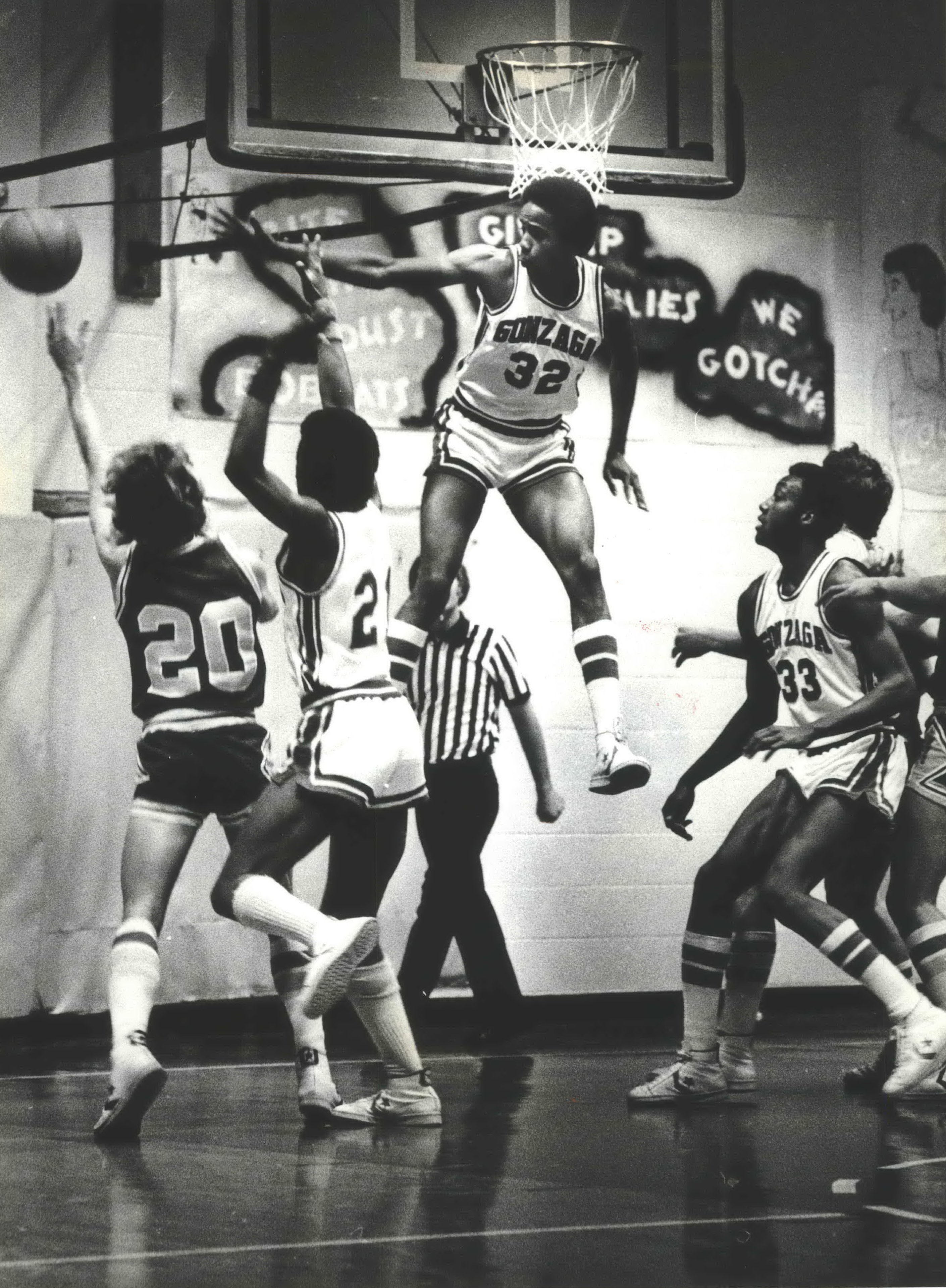
Symbolically, though, the Zags had come a long way from wiping rodeo-residue off their sneakers.
Taylor remembers a subtle but extremely significant moment, as a senior, when someone dared make a tangible reference to a destination previously unspoken – perhaps considered impossible.
Taylor said teammate Ken Anderson, a junior-college transfer from southern California, “walked into the locker room one day and wrote four letters on the chalk board.
NCAA.
“It was the first time I’d seen this aspiration,” Taylor said.
•••
The difference of conference realignment to recruits? Pretty obvious.
“I doubt I would have come to Gonzaga if we were still in the Big Sky,” Ken Anderson said. “I was an L.A. guy, and that raised the level of the program … saying we played USF or Santa Clara twice a year as opposed to saying we played Northern Arizona and Montana State twice a year.”
Almost every school in what would be renamed the WCC had a pro-caliber player then, he said. Such familiarity diminished much of the awe they might have felt.
Asked about his introducing the concept of an NCAA Tournament appearance on the chalk board, Anderson couldn’t recall that, specifically. But everybody on the team knew that the previous season USF and Pepperdine had both not only made the NCAAs, but both won games in the tournament.
What Anderson did recall about that season, though, was a group of veterans, “bringing a different mindset to the program, the academic part, the competitive part, or, to Eddie’s point, the aspirational part.”
Yes, several NBA stars were sprinkled across opponents’ rosters, but that first season, the Zags finished a respectable 8-8 in the league, tied for third place.
“We brought a different attitude and intensity to it, and I think that’s the biggest impact of those early years,” Anderson said. “We defined a way to go about things. It certainly helped having Johnny (Stockton, as a freshman), because he fit right in, attitude-wise. Athletically, it was like, okay, we’re pretty good, and we were in every game.”
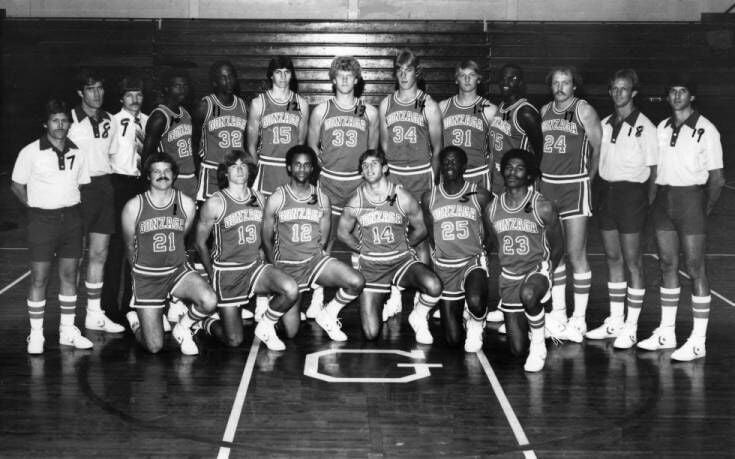
All three of the former Zag players interviewed for this story gave respect to the athletes and programs at the Big Sky schools. And all three talked about another dimension to Zag teams of the era: Balancing academic success with athletics.
All three earned PhDs. All three became educators. Taylor is Vice Provost and Dean of Undergraduate Academic Affairs at the University of Washington, and also a Trustee Emeritus on the Gonzaga Board. Finnie is a professor at Eastern Washington and a member of the GU Board of Trustees. And Anderson is Dean of the Gonzaga School of Business Administration.
So many stories are told of the ways those in the underfunded athletic programs at GU used to have to scrimp on athletics travel and recruiting and facilities and expenses before the turn-of-the-century emergence. It makes the current sustained status even more impressive.
“The university athletics and (coach Mark Few) have done a great job of, I’ll call it ‘keeping up with the Joneses’ … our facilities are as good as anybody’s in the country,” Anderson said. “That is a tribute to the university leadership, leadership in athletics, and to Mark. To have that vision and … to be able to execute that.”
The early fiscal hardships of the athletic department didn’t seem like that much of a negative, Anderson says now. “I never thought we were disadvantaged,” Anderson said, granting that they might have been naïve, “not knowing what we didn’t know.”
Something they also didn’t know: How important they were to what was taking root at that school in those years.
Somehow, a group of faceless founding fathers had an audacious vision in the direction of some unexpected future world.
And one of them set out a goal for every Zag player to follow, faint as a few chalk-marked letters on the blackboard in a shabby locker room more than 40 years ago.