
Labor Day ‘Workers Over Billionaires’ protests convene across nation, including in Coeur d’Alene
In June 1894, Congress officially adopted Labor Day as a federal holiday to be observed the first Monday in September.
Many states had already acknowledged the holiday in their jurisdictions in recognition of the contribution of workers advocating for minimum wage, overtime pay, the 40-hour work week and an end to child labor, each eventually secured in the Fair Labor Standards Act of 1938.
Decades later, 76-year-old Paula Marano still observes the spirit of the holiday, standing along the shoulder of U.S. Highway 95 in Coeur d’Alene, holding a sign and thanking essential workers, or “heroes,” as she puts it.
“When you look at the history of Labor Day, it’s the significance of our history and to pull people together to protect the working class people,” she said.
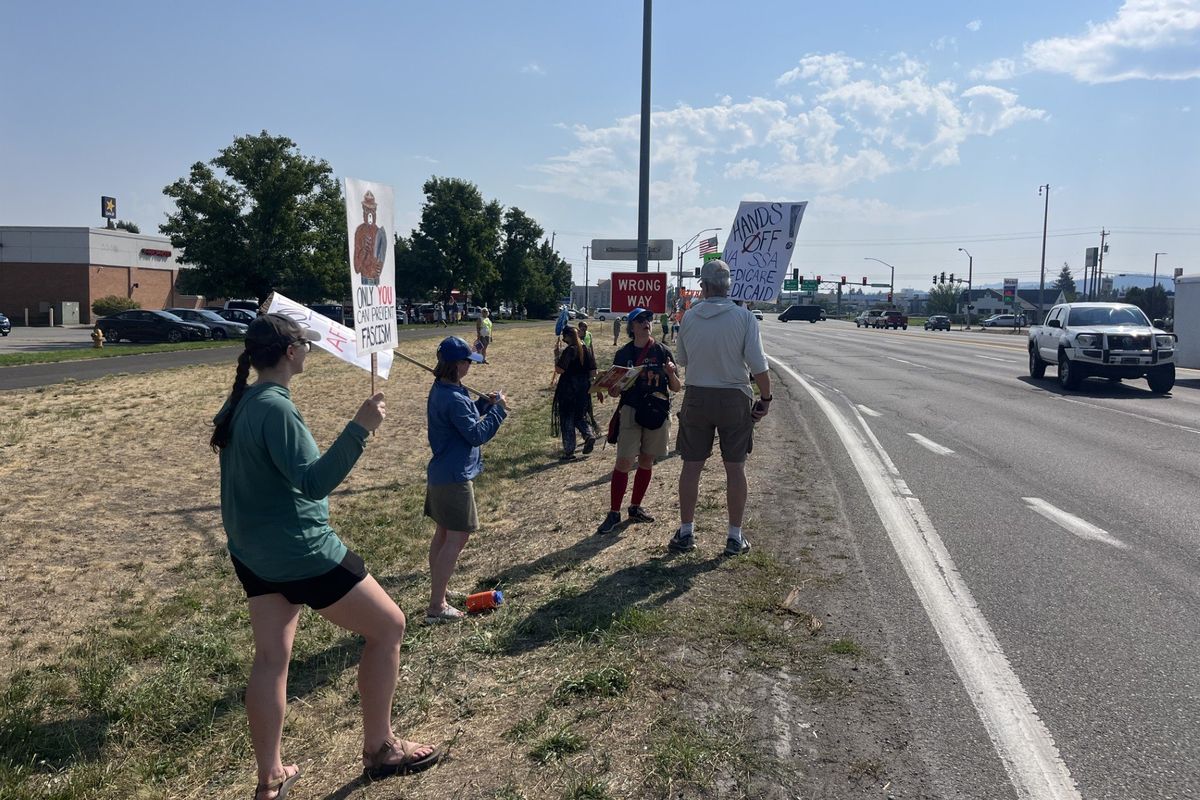
Marano was one of more than 100 people who lined the street in Coeur d’Alene in a national ”workers over billionaires” movement that spurred hundreds of rallies around the United States protesting the federal government and uplifting wage workers.
Attendees carried American flags, signs decrying President Donald Trump and related topics like Immigration and Customs Enforcement, the proposed sale of public lands, cuts to Medicaid, privatization of public school systems and the recent mobilization of the national guard in D.C.
“We know large corporations and billionaires have been manipulating the government for a long time, I mean, this is not something new,” said Julie Celeberti, an organizer at Coeur d’Alene’s rally. “They’re stealing from working parent families. They are dismembering our democracy and they’re building private armies.”
A chief concern for attendee Dan Toms was recent cuts to Medicaid. He works in health care administration and predicted a ripple effect to any cuts to government programs. With fewer people eligible for Medicaid to pay for health care, rural hospitals in particular are at risk of closing should they see a reduction in patients. He sees the potential for other ripple effects in other sectors, like agriculture, for example.
“I think the country is in trouble, and I don’t think we’ve seen how bad it’s going to get yet,” he said.
Toms, 76, is from Spokane and is a regular presence at recent protests against the federal government. He’s compelled to join rallies to add his voice to a collective push for change.
“I have history to look at,” he said. “I want to be on the right side of history that says I did what I did to stop what’s happening.”