‘Just a magical ride to be on with him’: How Washington State played a central role to the legend of George Raveling

George Raveling’s passing, at age 88, will elicit sorrowful comments and fond remembrances from around the world.
Proof, truly, that Raveling had forged an unimaginable path from his rugged youth in a Pennsylvania home for boys into a global ambassador to the world of basketball.
It started with a fierce desire to take possession of any basketball that failed to find the net, and spread into a successful coaching career capitalizing on his powers to recruit and instruct and motivate young men.
His unrelenting intellectual curiosity, charisma and wisdom then expanded into a life of limitless depth and dimension.
Tales will be told of how he influenced Michael Jordan into representing Nike (Jordan: “Without George, there would be no Air Jordan”), and how Charles Barkley said: “Coach Rav is like my grandfather.”
Noteworthy, also, was his knack for being around enormous cultural events, coming into possession of Rev. Dr. Martin Luther King Jr.’s “I Have a Dream” speech after having served as King’s bodyguard that day.
For as much as he came to influence the worldwide basketball community, Raveling often pointed to the importance of his career taking root in 1972, when he was hired as head basketball coach at Washington State in Pullman.
“So much of my adult life started in Pullman; Washington State took a helluva chance on me when they hired me,” Raveling said in an interview with The Spokesman-Review last summer. “I had no head coaching experience. I’m from the East. I’m an African-American, and the race part was never, ever, an issue at WSU. But they took a gamble on me.”
He never forgot the value of his 11 years in Pullman, during which he revived the basketball program, getting the Cougs to two NCAA Tournaments – meaning that the fans in the Inland Northwest wouldn’t forget him, either.
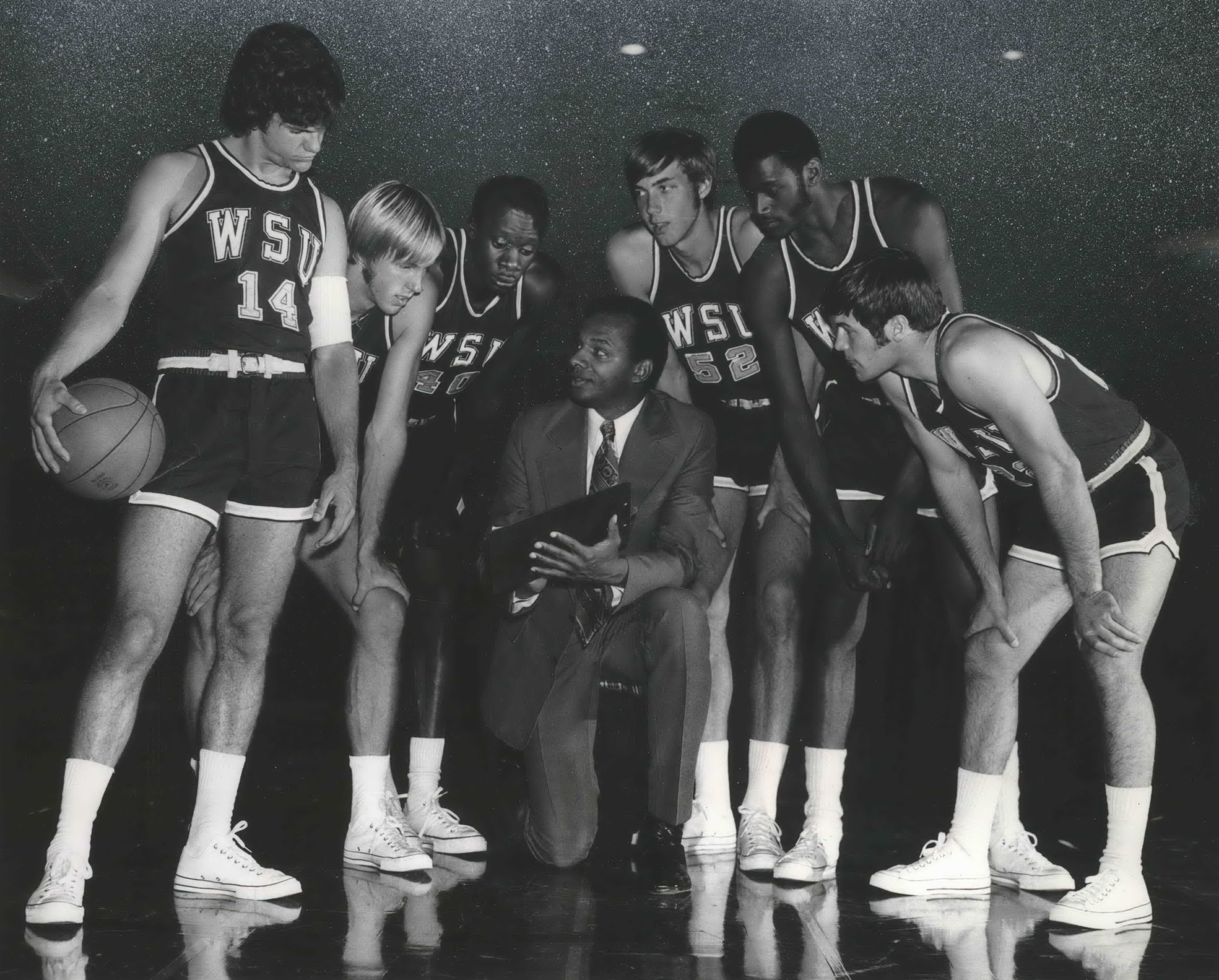
“I would say that he was unique in every way, yet he was relatable in every way, too,” said Terry Kelly, Spokane attorney, who played for Raveling at WSU.
Kelly and Raveling became so close that Kelly was asked to introduce Raveling at his 2013 receipt of the Joe Lapchick Character Award.
“He brought a class that was evident in everything he did,” Kelly said Tuesday after hearing the news of Raveling’s cancer-related death. “Class in the way he spoke, the way he addressed people, the way he went about his business – pure class.”
Raveling’s talents were always about so much more than basketball tactics, or even basketball itself. Kelly used to watch and try to internalize the lessons Raveling taught whether he was dealing with the university president or the janitor at Bohler Gym.
The biggest lesson?
“How you communicate and interact with people, being authentic and genuine,” Kelly said.
“It wasn’t just the players that played for him, but the fans loved him, too. The media loved him, other coaches throughout the nation … wanted to be friends with him. He just attracted that type of attention by the charisma that he had. He was just a rare human being,” said Kelly.
Jim Walden, Cougar football coach during Raveling’s later years at WSU, said that “as a young head coach trying to get established (myself), he was the perfect guy to be in the building with.”
Walden recalled Raveling’s humor and charm, and his strength as a role model as the first Black head coach in Pacific-8 Conference, but also related an unseen influence Raveling had on young basketball coaches.
“I don’t think any of us will ever know how many people he helped, because he wouldn’t tell anybody about it,” Walden said. “Young coaches would call him to ask for (job referrals). He had such a great reputation that he could help young guys trying to move ahead, or maybe send them some money.”
Money? Cash out of his own pocket?
“Absolutely, I guarantee it,” Walden said. “And, remember, that’s when none of us were making much money.”
Kelly stayed in regular contact with Raveling, as he became increasingly prominent, with coaching stints at Iowa, USC, with the 1984 and 1988 USA Olympic teams (as assistant coach), and later induction into both the College Basketball and Naismith Basketball halls of fame.
He then became prominent in the corporate basketball world as director of international basketball for Nike.
None of which surprised Kelly. “It was just a magical ride to be on with him, because you always knew he had a lot bigger things ahead of him, and we were just blessed to be a part of it.”
Raveling’s personality was so winning, and his exterior so polished, that it surely camouflaged the toughness and determination that powered his rise. One can only imagine the lessons learned in that parochial “boarding” school of his youth, after his father died when he was 9, and his mother was institutionalized when he was 13.
Raveling battled his way to an education at Villanova by being a maniacal rebounder. In his book, “The War on the Boards” (2017), he wrote: “(Rebounding) is symbolic of the sacrifice, the emotion, mental toughness and hard work which precedes victory in most of life’s endeavors.”
That’s the way he started, and the way he eventually became a hoop “Godfather” to so many.
“He wasn’t ever trying to be anybody other than who he was,” Kelly said.