
Gonzaga climate report calls for changes at city to protect Spokane from extreme heat and wildfire smoke
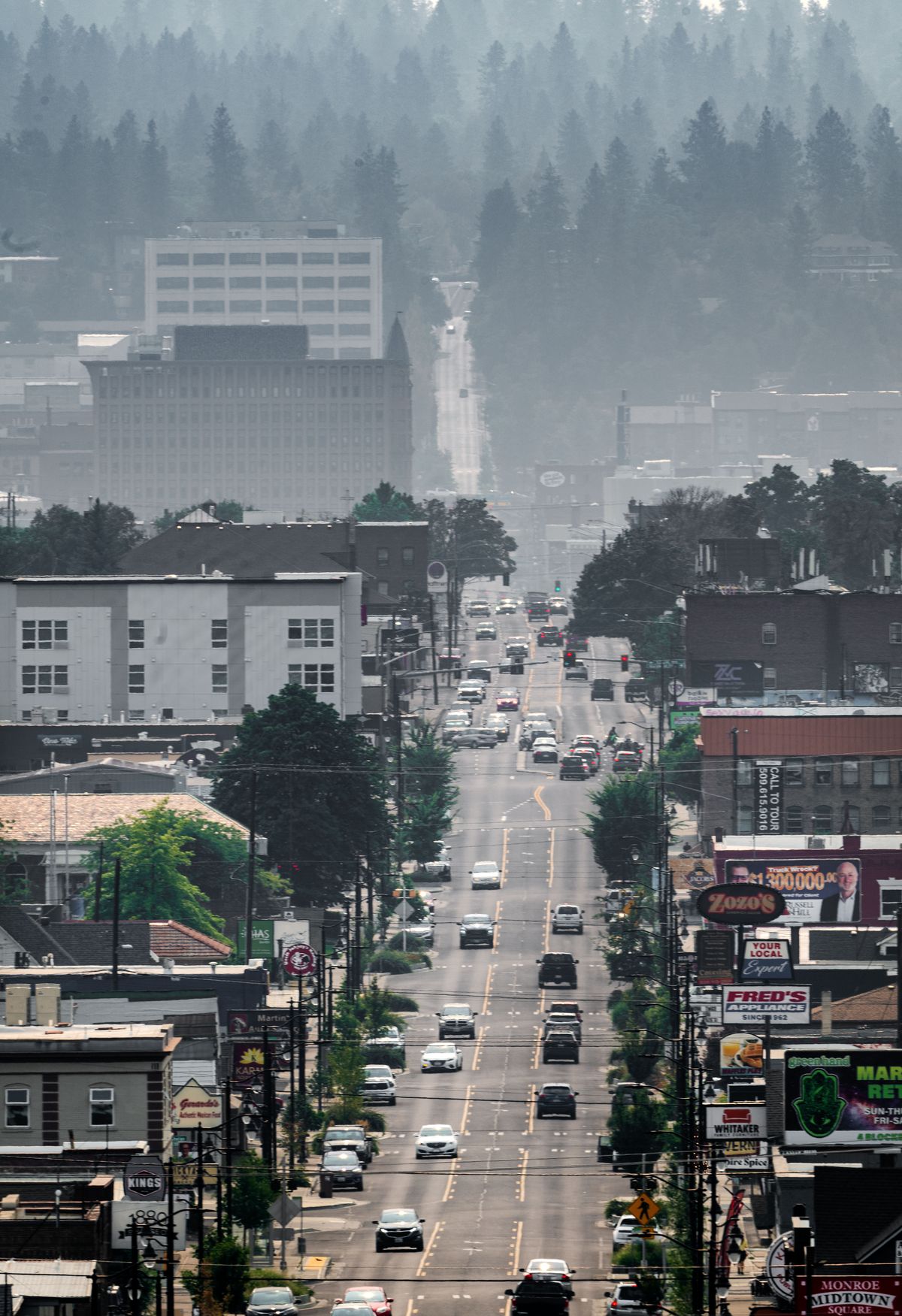
A new plan from the Gonzaga Climate Institute calls for the city to better prepare for extreme weather on a more regular basis.
The dual reports on extreme heat and wildfire smoke outline how Spokane city government, nonprofits and residents can be ready for increasing extreme weather events.
According to the institute’s director Brian Henning, another heat dome like that seen in 2021 likely will happen again sooner rather than later. The heat dome gave Spokane its hottest day on record at 109 degrees. Since 2015, the Spokane region has experienced a 353% increase in poor air quality days, according to the report.
“As a community, we really need to find ways to prepare and respond, recover and mitigate these changes. It’s only a matter of time until we have another really severe heat dome,” he said.
The reports were created by Spokane Community Resilience Collaborative, which is facilitated by the climate institute and includes representatives from the city of Spokane, Avista Utilities and the Spokane Regional Health District.
“Extreme heat and smoke are not just inconveniences, they are deadly,” Spokane Mayor Lisa Brown said in a statement. “These new resilience plans will save lives, protect our most vulnerable neighbors, and make Spokane stronger in the face of a changing climate.”
Twenty people in the Spokane area died from heat during the 2021 weather event.
The reports call on the city to lower the threshold to activate both cooling and safer air centers. These spaces provide a temporary temperature-controlled space during periods of extreme heat or a space with clean air when air quality becomes hazardous. These centers typically service homeless individuals and others who cannot access spaces with clean air.
Currently, these centers open when Spokane is at 95 degrees or hotter, or an Air Quality Index of 200, which is considered “very unhealthy” air, according to federal standards. The report calls on the city to lower both measures to 90 degrees and an air quality index of 150, which is considered “unhealthy” air. According to Henning, when the index is in the 151-200 range, approximately 30% of individuals experience at least moderate impairment of the lungs.
“The health implications are pretty significant for everybody at 150 AQI. The threshold for these facilities and for activating cooling spaces needs to be lowered. We don’t need pop-up facilities, we need a resilience hub network that is more comprehensive,” he said.
These hubs would be open before, during and after extreme weather events – providing services during and preparedness education after extreme heat.
“People need somewhere safe to be during poor air quality events but convincing them to use cleaner air centers can be difficult. Retrofitting existing community buildings that are already trusted places throughout Spokane could be an effective approach to meet this need and reduce hesitancy for community members,” reads the report.
Spokane City Councilman Paul Dillion said he supports these proposals “100%” and that the city is working to improve its response to these types of extreme weather events.
“It’s important to invest in these response measures, but also preventative measures. We need to go further and look at ways to incentivize and provide more assistance and support,” Dillon said.
Dillon added that while council has focused on extreme heat, not enough attention has been given to poor air quality.
Changing the activation threshold “might make sense,” said Councilman Michael Cathcart, depending upon the science used. But Here here here
NFL: Here
he remains opposed to any proposed changes that may increase costs to residents.
The report recommends city building codes be updated to require air filtration systems that remove smoke particulates and increase energy efficiency standards that can make the indoors stay cooler during extreme heat.
“I’m not in favor of any policies that price out more families,” Cathcart said of the proposal. “We’ve seen significant increases in costs for many reasons – changing energy codes are a big reason. I also oppose anything that would limit choices for folks who may want affordable heating and cooling infrastructure versus higher costs.”
The report also calls on the city to open public transportation to free or reduced fair when the air quality becomes unhealthy, the same way they do when the city experiences extreme heat. Other recommendations in the report call for greater public outreach and centralized communication for upcoming extreme heat or poor air quality episodes.
The institute is in conversation with the city planning department to include some of the reforms in next year’s comprehensive plan, Henning said.
“Right now, these are just recommendations for consideration. But with refinement over the year, we can hopefully move from recommendations to action items,” he said.
The proposals can be found on the institute’s website.