
Fire commissioner candidates in northern Spokane County debate staffing, equipment and budget issues
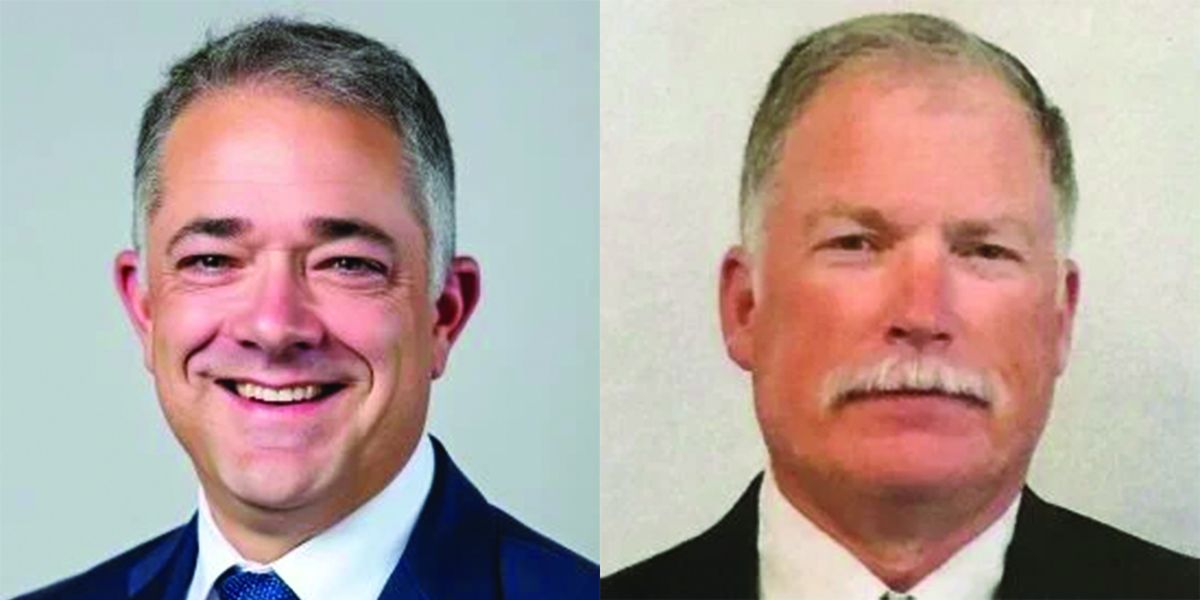
Recently retired firefighter Dan Garner has launched a challenge to Spokane County Fire District 4 commissioner incumbent Roger Krieger, pulling in just over 100 votes more than the incumbent in the August primary.
As the November election approaches, the two are each campaigning on the strength of their experience.
Krieger, the current chairman of the board of fire commissioners, has been a volunteer firefighter for more than four decades, first in Petersburg, Alaska, and then in District 4. Garner recently retired from Spokane County Fire District 9 after nearly 30 years, having been a firefighter, paramedic and station captain.
Krieger was first appointed to his fire commissioner seat in 2011, then elected.
“I’ve always just wanted to be involved in the district and service,” he said.
Krieger, 69, said he’s too old to be a volunteer firefighter now and continuing his time on the board as a way to still serve the community he’s lived in for decades.
Though Garner retired in 2023, he still volunteers as a water truck driver. He also teaches wildland firefighting at Spokane Community College and sometimes serves on wildfire incident management teams on large fires in the area.
“I just feel my many years of frontline experience brings an important perspective to the board,” he said. “I’m not really a politician. I’m a firefighter. But I want to continue to serve.”
One of the issues on which the candidates differ is staffing. Fire District 4 sprawls across 330 square miles, including the communities of Chattaroy, Deer Park, Elk and Colbert. The district responds from 10 different stations.
In years past, the district relied heavily on volunteer and part-time firefighters, having about 140 volunteers at its peak, Krieger said. In recent years, however, the number of volunteers has dropped sharply and while the district still has some, it relies heavily on 40 full-time firefighters. Each station is typically staffed with two firefighters.
Garner said his concern with the staffing level is that, by law, three firefighters must be on the scene before anyone can enter a burning building, whether that’s to fight the fire or rescue someone trapped inside. Krieger argues multiple engines are always sent to working fires, so that shouldn’t be an issue.
“There’s always enough staffing when everyone gets there,” he said.
Garner argues that, because the stations are spread out from each other, it takes time to get two crews to the incident. “You’re talking time,” he said. “It depends on where the second engine is coming from when minutes matter.”
The district spends $5.6 million of its $14.7 million annual budget on staffing, Krieger said. While he would like to see more staffing as well, it’s just not feasible for the district to find an additional $2.8 million to add 20 more firefighters, he said.
“If everybody had unlimited resources, that would be absolutely fantastic,” he said. “But that’s not real anywhere.”
Krieger said he’s unwilling to make the steep cuts required to add that much staff or raise taxes high enough to pay for more firefighters. “It’s not in my conservative budget process to go out and ask for more taxes,” he said. “It gets to be a hard thing to sell taxpayers.”
Eighty percent of the district’s calls are for medical services, and usually only two firefighters are needed for those, Krieger said.
Garner said many fire districts typically spend 80% to 85% of their budgets on staffing, and District 4 is far below that. He said he would rather the district spend money on firefighters than new buildings. “It’s not shiny new fire trucks and new stations that save lives,” he said. “It’s people on the trucks who save lives.”
Garner said he also believes District 4 is not meeting some equipment needs for firefighters.
“Currently, Fire District 4 doesn’t have any hearing protection on the fire trucks,” he said.
He points to his own hearing loss as to why firefighters should be protected from wailing sirens while they respond to calls.
There’s also an issue with the heavy turnout gear the crews wear when fighting a fire. During a fire, the gear becomes contaminated with toxins that have been shown to cause certain types of cancer. The stations have special machines to decontaminate the turnouts, but the process takes between 90 minutes and two hours and most firefighters have to wait until the end of their shift to clean their gear, Garner said, which means they could wear the contaminated gear more than once in a shift.
“Most of the guys don’t have a second set of turnouts,” he said.
He’d like to see the district provide a second set of turnouts to firefighters so they have clean gear for every fire. Turnouts are expensive and the National Fire Protection Association recommends turnout gear be replaced at least every 10 years, though it can wear out faster if heavily used.
Krieger said the district has been taking steps to be proactive in recent years. It now has a staff member dedicated to working on wildfire prevention in the largely rural district. “We’re spending a lot of resources and getting grant funding to work on fuel reduction,” he said.
Two years ago, the district bought its own ambulance and applied for a transport license to take patients to local hospitals, because it became difficult to get ambulances to respond to calls quickly. “We had runs where we were waiting 30, 45 minutes for an ambulance crew,” Krieger said.
Not only did that impact patient care, it tied up firefighters who had to wait for ambulances to arrive. The district was successful in getting a transport license and now has several ambulances. “We did that to take care of the northernmost residents,” Krieger said.
Krieger said he hopes his experience as a board member persuades voters to return him to his seat so he can continue to serve. Garner, who has been endorsed by the District 4 firefighters union, said he brings decades of experience as a frontline officer to the table. He said he’s proud to be endorsed by the firefighters in the district. “I’ve literally been in their boots,” he said.