
Plight of the bumblebee: Eileen Garvin’s new novel once again shows the resilience of humans, nature
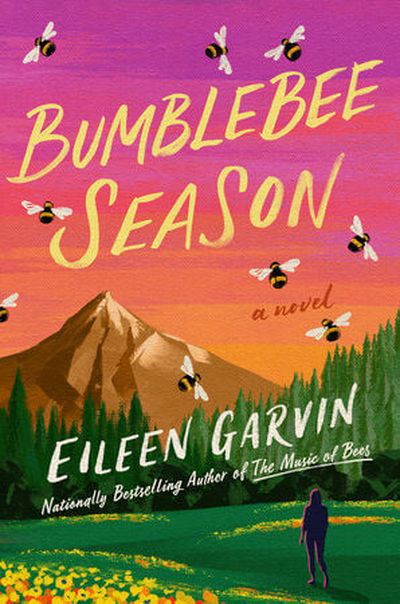
Jake Stevenson, one of my favorite characters of any novel I’ve read for Northwest Passages, is back as the king beekeeper in Eileen Garvin’s “Bumblebee Season.”
We first met Jake four years ago in Garvin’s “Music of the Bees.” Following his fall during a high school party that left him in a wheelchair, he found new life helping Alice, a farmer, with her growing beehive business.
Jake has always felt like an outsider, painfully aware of the stares he receives in his wheelchair and despite all of his accomplishments, people still see him as less able than others. But this time, he’s joined by two others who, as smart and talented as they might be, find themselves feeling as if they’re on the outside looking in on lives others are living.
As she has in her two previous novels (including “Crow Talk”), Garvin blends human frailties, strength and courage with the beauty and serenity of nature. She returns us back to the vivid descriptions of the landscapes of Hood River, Oregon.
While Jake’s beekeeping still is a focus, Garvin uses this book to explore the plight of the bumblebee.
Abigail Plue is a focused and determined graduate entomology student at Oregon State University. Abigail is a portrait of a neurodivergent life, one in which Garvin allows us to hear via Abigail’s inner dialogue during conversations with others.
“Before she opened her mouth there was a neutral space, a two-dimensional field that she could exist on, suspended, in orientation to other people,” Garvin writes in the opening passages. “She felt like a stick figure on a flashcard, fulfilling the correct requirements. Human. Woman. Person. But something changed in the air after she’d spoken … And then she was Other, Different, Strange.”
Or “odd” as the neighbor called the little girl next door, finding Abigail trailing the path of insects from her own yard to the tree in the woman’s yard. Abigail is much more interested in beings that crawl on six legs rather than her fellow two-legged creatures. In the insects, she sees beauty. They go about their business. They don’t make fun of her mannerisms or call her names. After struggling and then soaring at school, she finds her world in entomology.
After being drummed out of the teaching program for her impatience with students who don’t follow directions, Abigail grabs the attention of another scientist – also neurodivergent – who recognizes the graduate student’s apparent eccentricities as strengths. Dr. Daphne Lavin puts Abigail in charge of a field expedition to Mount Hood in search of the western bumblebee, which humans have driven out of the Oregon landscape.
Flaco is the third person wandering seemingly out of place in the story. A 14-year-old, Flaco’s mother sent him out into the world on his own to escape the slavery of drug cartels. But not because of drugs. The cartel is now forcing young boys and men into labor after they’d taken control of the agricultural industry, invading Flaco’s small town.
A smart youth who has fallen in love with nature, including mountains and volcanoes, by reading “National Geographic Español,” Flaco leaves on the next truck out of town. Flaco’s mother gambles her life’s savings to send her boy north to Oregon to meet up with a cousin who will help him assimilate into America.
Each of the three face struggles just to keep their lives together.
Jake has just won a prestigious award for his honey, creating a demand for his Queen of G honey that he’s afraid he can’t handle. As honey harvest approaches, and heartbroken after being jilted by a summer romance, Jake finds friends and those he usually depends on busy and unavailable, leaving him fearful of facing an overwhelming task alone.
Abigail fights her inner battles of self-denial, fueled by a life of being bullied and discounted by practically everyone but her father. He seems to be the only person who really understands Abigail, until she meets Dr. Lavin, and encounters the world of bumblebees.
“Now, working with the bumblebees, Abigail experienced a sense of Contentment,” Garvin writes. “Also Calm. And yes, maybe even Happiness.”
Flaco survives travails of a hardened coyote guide who could turn the boy back on a whim, a trip that killed another child his age, until he reaches the U.S. He is then abandoned by the adults who he had counted on for his safety. He walks more than a hundred miles on foot from Bend, Oregon, to reach Mount Hood, where he stumbles upon Jake’s bee farm.
Abigail, meanwhile, gets lost driving to Dr. Lavin’s research camp and drives upon Jake and his beehives.
This unlikely pair is bound to become friends in a world where prejudice and human disruption threatens the peace of their lives and the Oregon wilderness they love.
Garvin is adept at painting characters who excel outside other’s expectations.
She does it again with “Bumblebee Season,” introducing us to those who live exceptional lives, no matter how others may discount them.
Kind of like the bumblebee, which keeps buzzing to beat the odds.
If You Go Eileen Garvin What: The Spokane-raised author will discuss her new novel with Outdoors columnist Ammi Midstokke When: 7 p.m. Wednesday Where: Bing Crosby Theater, 901 W. Sprague Ave. Tickets: $10, general admission. Bundled seats with autographed books and reserved seating start at $50 per ticket. Buy tickets at spokesman.com/northwest-passages. Note: Students are admitted free. To receive a student ticket or if cost is an issue, email kristib@spokesman.com.