
What the sigma? Gen Z and Alpha’s netspeak: A dictionary for the rest of us
If it seems like your kids are conversing in alien tongue these days, don’t get salty (upset) about it, you’re just a newbie (novice) to this mind-numbing jargon. Tweens and teens are inundated with text messages, TikTok videos and Instagram reels. It shouldn’t come as any surprise their vocabulary would reflect that influence. Widely recognized as “netspeak,” this Gen Z-Alpha slang blends abbreviations with social media memes and intentional mis-spells. The end result? A fire (awesome) mishmash of grammatical oddities such as “bruh,” (brother) and “skibidi,” which could be a nod to the YouTube series, “Skibidi Toilet,” or perhaps just a person who is annoying.
Day by day, it’s giving (sending) different vibes.
“All language changes all the time,” said Mark VanDam, a professor of Speech and Hearing Sciences for WSU-Spokane. “Kids are certainly tapping into things within their language to try to express their individuality, to try to express their own ideas.”
No cap, (no lie) this is all about communication and belonging or perhaps, not belonging.
“One of the things we do with language is to show our identity in a group or outside of a group,” VanDam said. “We’re all really good at language so if you don’t do it quite right then it’s easy to tell who the poser is … who’s not quite on the ‘in’ group.”
He cited that viral “6-7” meme made famous by rapper Skrilla’s 2025 song, “Doot Doot.” “If you got it wrong and said ‘5-6’ that would be very bad,” VanDam said.
Indeed. Totally cringe (embarrassing).
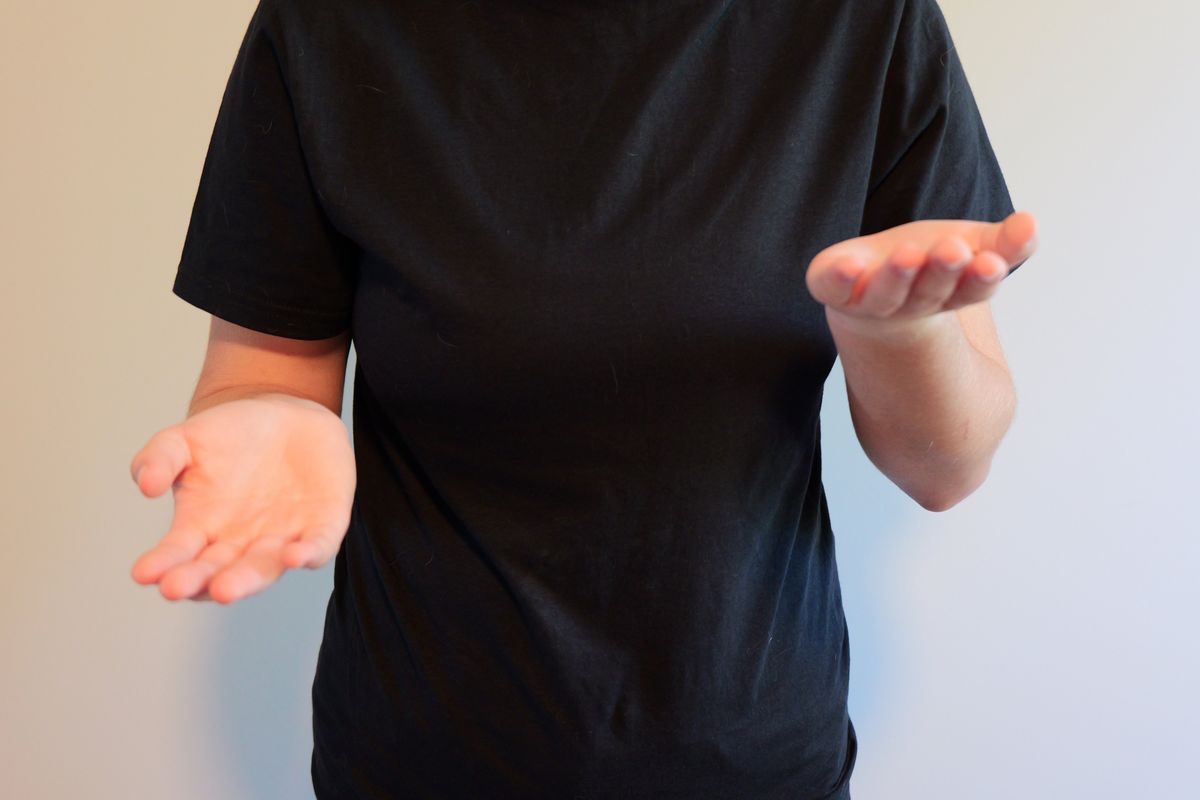
At 18 years of age, Eastern Washington University student Abigail Martin is an OG (original gangster, veteran) to this vocabulary. With six or seven (give yourself bonus points for those hand gestures) younger siblings, you could say her knowledge of this lingo is lit (amazing). Take that “Ohio,” meme.
“It doesn’t mean anything. It just means the state. Everything bad happens in Ohio,” said Martin, who tied a lot of this generational speak to online gaming. “They really want to be funny. They want to be liked. They want to be popular.”
Users should exercise caution. Words, phrases and definitions shift quicker than you can say “fanum tax,” which meant stealing food the last time I checked Urban Dictionary.
“It’s so fast-paced that even I can’t always keep up with it,” Martin said.
Punctuation marks are equally sus (suspect).
“The connotation behind a period in a text in an informal setting has kind of become like, ‘I’m mad at you,’ ” Martin said.
What the sigma (heck)?
Emojis have also morphed.
“Nobody uses the laughing-crying emoji unless you’re like older or didn’t grow up on the internet,” she said. “When I text my mom, I use the normal, laughing-crying emoji. When I’m texting my friends I’m sending the skull emoji, because that means like dying laughing or the straight crying emoji, because that’s just like laughing.”
Marinate (reflect) on that one for a bit.
Technology has always shaped language. Decades ago, the phrase “boob tube” was coined to describe mindless television viewing. In a similar fashion, the scrolling of sketchy internet content is now called “brain rot.” History has certainly repeated itself. Still, even experts have a difficult time pinpointing the exact roots and evolution of new language.
“It’s like predicting the next political wins or the next popular music,” said VanDam, who did acknowledge a celebrity bandwagon factor. “If the greatest pop star of today, for example, decides that this brand of candy bar is her favorite, people would certainly tap into that, right? So, if you hear these athletes in an interview or the pop stars or politicians even using these phrases, people tap into that and say, ‘Oh, that’s cool!’ It’s about being cool, right?”
Bet (agreed).
We aren’t taught this vocabulary in school. In fact, it flips that traditional K-12 educational model upside down. “The writing system and the grammar that’s in books and that prescriptive thing … things like don’t end a sentence with a preposition … these kind of rules, so to speak, those are just bad descriptions of what the real language is.
“The real language is what people really use,” said VanDam.
Yeah, like that “6-7” thing. Here’s some juicy tea (gossip). My own teenage daughter slays it (does it well). A while back, she noticed her checking account balance was at $67.67. A flex (show off) moment, she captured a screen shot and texted it to all of her friends.
Cynthia Reugh can be reached at cynthia13048@gmail.com