
Symphony review: Pascal Rogé and Elena Font residency concludes
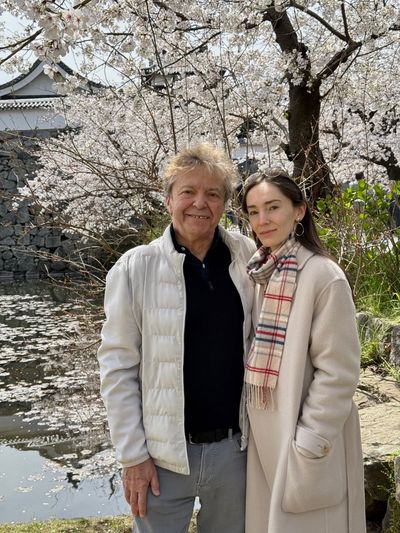
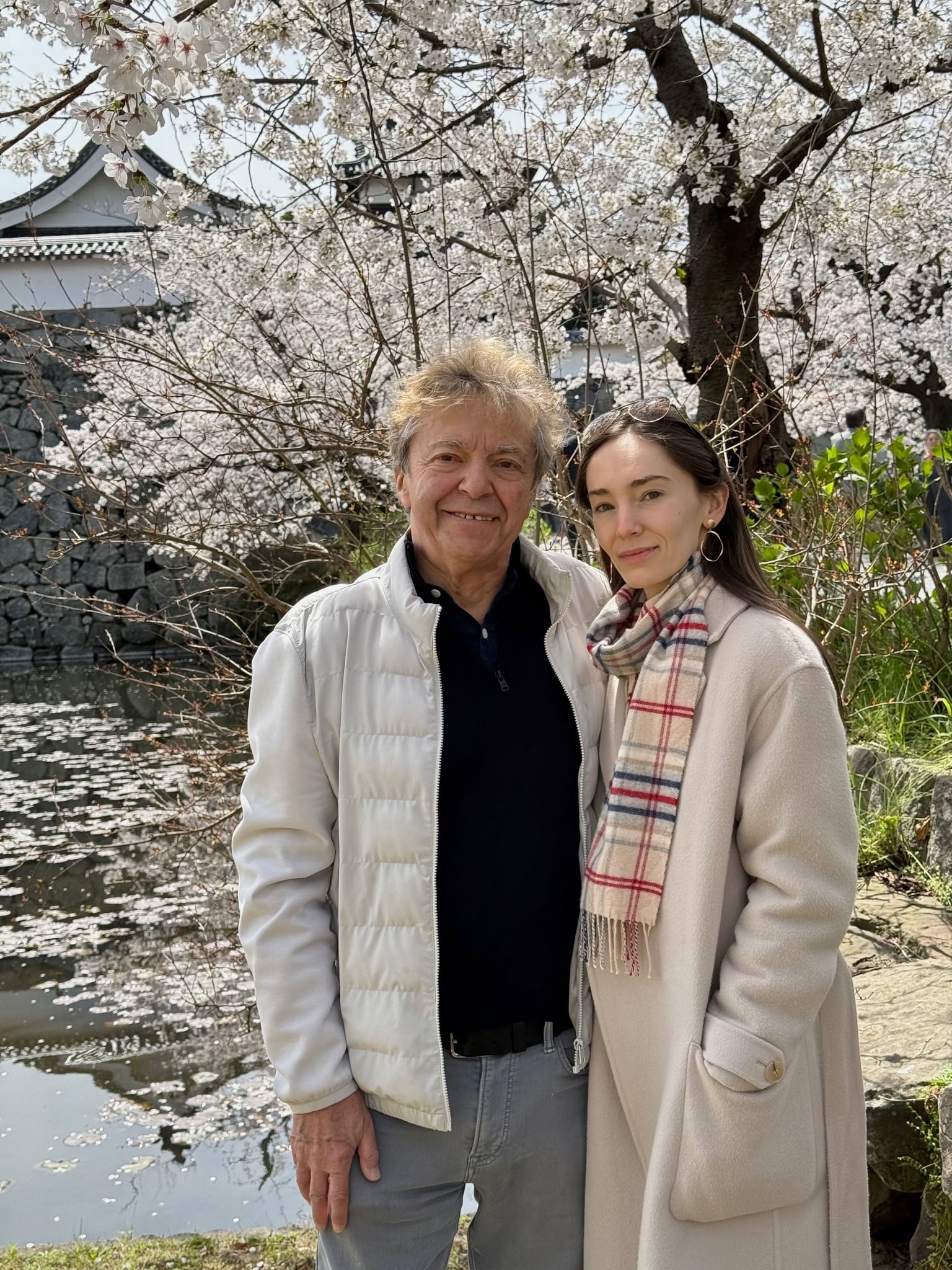
The generous residency in Spokane by the piano duo of Pascal Rogé and Elena Font concluded with a performance on Monday evening at the Myrtle Woldson Performing Arts Center in which they were joined by the Gonzaga Symphony conducted by Professor Kevin Hekmatpanah. On the weekend of April 18 and 19, they presented first a program of music, both for two hands and four hands by French and Spanish composers, and then a demanding program of music for cello and piano in which Hekmatpanah joined them at the cello.
The final works at both of those recitals were written by Francis Poulenc (1899-1963), all of whose music for piano has been recorded by Rogé in definitive performances just released by Decca as part of a compendium honoring his 75th birthday. Poulenc, whose music Rogé feels is undervalued by the French musical establishment, also composed the work featured on Monday night: his Concerto in D minor for Two Pianos and Orchestra. It displayed the remarkable qualities we heard last week from both artists when they performed on a single piano, as well as others that we could appreciate only when the second Steinway was added.
Prior to pianists’ appearance onstage, Hekmatpanah treated us to one of his signature programs of orchestral music regarded as standard fare by American audiences in the 1930s and ‘40s: Wagner’s Overture to his opera, “Der Fliegende Höllander” (“The Flying Dutchman”) (1843), Franz Liszt’s “Symphonic Poem Les Preludes” (1854) and Nikolai Rimsky-Korsakov’s “Russian Easter Overture” (1888). It was no accident that each one of these composers is noted especially as a master of the art of orchestration. In keeping with Hekmatpanah’s commitment to offering his community orchestra and his community audience only music that is immediately engaging, understandable and enjoyable, each of these works offered a profusion of melodies, a spicy diversity of rhythms and, perhaps most importantly, an exhilarating wealth of orchestral color. We have the immense benefit of hearing such brilliantly colorful music in the Coughlin Hall at the Woldson Center, one of the most perfectly tuned orchestral auditoriums in the country, in which every shade of timbre, every segment of the harmonic rainbow can be savored by a listener, regardless of where he or she might sit in the hall.
Whether it was the delicately balanced union of winds and brass at the opening of the “Overture to The Flying Dutchman,” or the glorious brass chorale that evokes the image of the Dutchman’s ship as it overcomes the dangers of stormy seas, every detail of Wagner’s brilliant orchestration was scrupulously rendered by the Gonzaga Orchestra. Whether at full volume or in the more transparent passages in which Wagner portrays sailors joining in what must be history’s most sophisticated sea shanty, the sonorities Hekmatpanah drew from his orchestra gave pleasure.
While both Liszt’s “Les Preludes” and Rimsky-Korsakov’s “Russian Easter Overture” were presented by their composers as meditations on weighty matters of life and death, the plain fact is that no one would ever have paid the slightest attention to either one had it not been for their beguiling melodies and ingenious touches of instrumentation that seize one’s attention and persist in the memory. Wagner’s use of the oboe to suggest the loneliness of his melancholy “Dutchman,” for instance, was poignantly rendered by Keith Thomas. Larry Jess’ trumpet soared above the strings to suggest exaltation in “Les Preludes.” As he does in “Scheherazade,” in the “Russian Easter Overture,” Rimsky-Korsakov stilled the frenzied activity of a full orchestra to concentrate on the meditative chanting of a single violin, played beguilingly on this occasion by concertmaster Carrie Samsen, and Heather Johnson’s flute wove in and out of Rimsky’s tapestry of Old Russia, now to evoke serenity and to brighten the flames of religious ecstasy.
While the first half of the program was devoted to works of the 19th century, the second half was unmistakably a product of the 20th, specifically, of Parisian life of the period between the world wars. Poulenc would have nothing to do with the aristocratic notion that certain genres of music should never be combined, not even to the extent of performing them in the same place before a single audience. His Concerto for Two Pianos of 1932 has but one guiding principle: the pursuit of pleasure. The piece mirrors the activity of a sensitive mind and feeling heart as they seek – through art, religion, cuisine, sex and, above all, music of all kinds – to experience joy in life.
Accordingly, his Concerto for Two Pianos does not attempt to guide us in the contemplation of great truths, or to feel the tragic blows of fate. It may recall the heaven-storming gestures of the Romantics, only to thumb its nose at them by introducing a vulgar music hall tune or an off-color ditty heard on the street. Poulenc may demand a strenuous scale in octaves from the pianists, only to follow them with the banter of a few dissonant, staccato notes chosen apparently at random. The music may proceed at a steady speed or volume only so long as it provides pleasure, and will then, without transition, take on an entirely different character.
Such music requires from its performers – the pianists and the orchestra – constant alertness and flexibility, and the very high level of technical accomplishment needed to change without preparation from intense lyricism to extreme silliness, or from sophisticated complexity to naive simplicity. Rogé and his partner, Elena Font, displayed an ability to do this, and to do it without the slightest sense of difficulty or strain. The synchronicity of their playing was astounding: one would begin a crescendo, and the other would complete it, or both would begin a ritard (slowing) at precisely the same instant, and continue to apply it at precisely the same rate over the course of several measures. One suspects that telepathy was somehow called into play.
There was no sense of opposition between the orchestra and the piano duo, as one finds in concertos of the Classical period. Rather, there was a sense of collaboration as solid as the one between the two pianists, resulting in an experience one can only describe as pure joy. Following the conclusion of the concerto, and in response to a persistent storm of applause, Rogé and Font sat down together at one piano to reprise the final whirlwind movement of Poulenc’s Sonata for Four Hands, which we heard at their Saturday afternoon recital. This was followed, in turn, by embraces all ‘round which were plainly based not on formality but on real affection and gratitude for an artistic partnership that was as rewarding to them as it was to all of those fortunate enough to have witnessed it.