
These Spokane firefighters thought they didn’t do enough during the city’s devastating fire. The neighborhood they battled flames in for hours shows they did
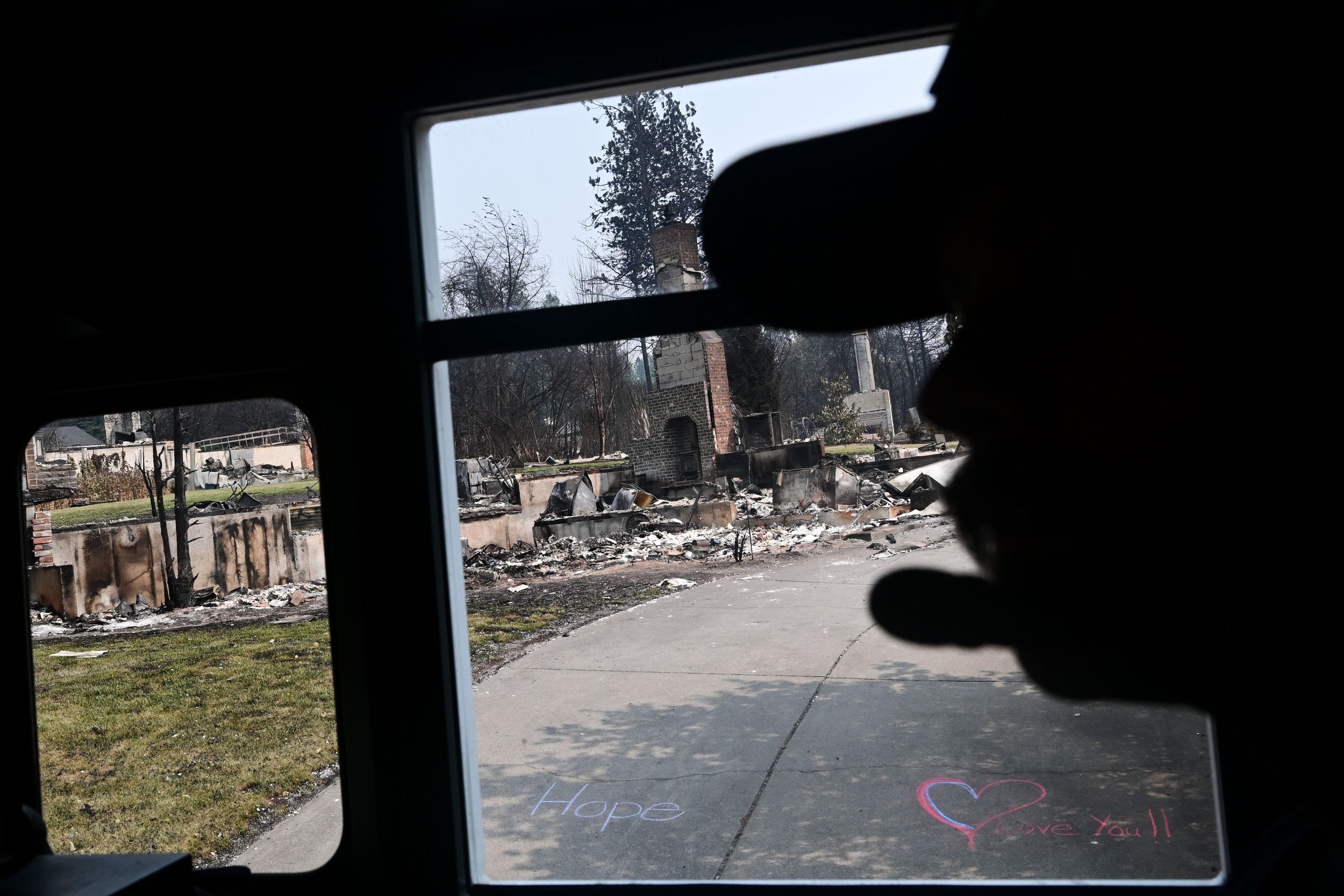
Children’s chalk art scrawled on a driveway in the middle of a barreling, uncontrolled firestorm jolted Noah Plowman out of exhaustion.
His mind flashed to his own young children. He turned to his fellow firefighters.
“We have to stop,” he said.
They had already spent five hours trying to save homes, only to watch them go up in flames again in front of their eyes. Other firefighters were battling the flames just streets away.
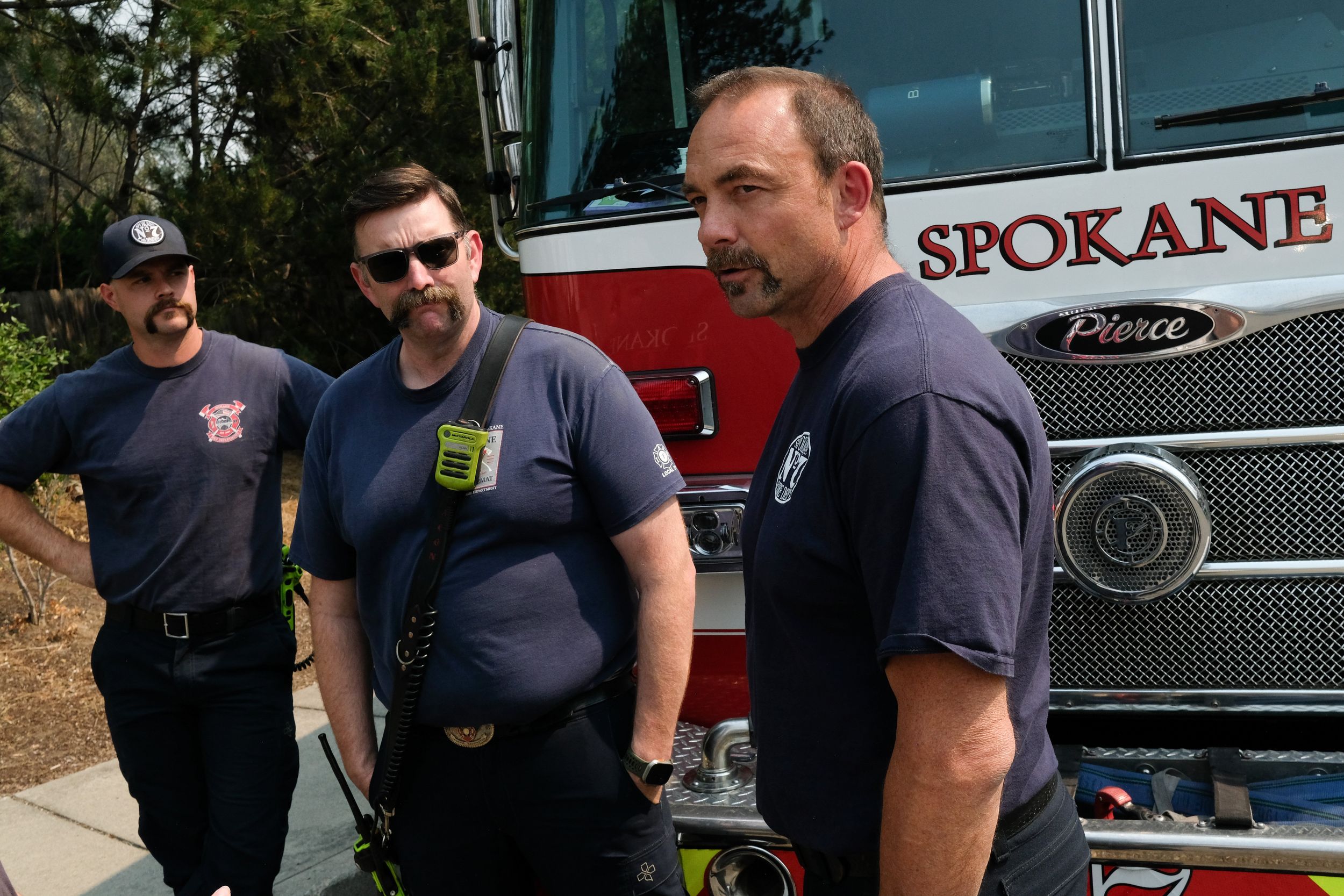
The three-man Spokane Fire Department Station 7 crew – Plowman, Lt. Brandon Bacon and fire equipment operator Jerry Sander – began the most challenging shifts of their lives on Aug. 1 in a brush truck on the edge of the Spokane River. They were up against one of the worst fires in Spokane’s history.
At first the three thought they’d catch it. They positioned on the east side of the Spokane River and rushed to areas where the wind sent burning material across the water. They were quickly overtaken by flames, jeopardizing their safety. Flying embers caught on their ears as they swatted them away. The wind was raging through the trees, resembling a blowtorch, they said.
The three fled, trying to put out flames along the way to protect a nearby neighborhood. They couldn’t move fast enough.
“I’m thinking, ‘We’re trying to save this one house,’” Sander said, “and 10 more are already on fire.”
They didn’t have access to a fire engine, where they would have found breathing masks and heavier, more protective fire-resistant gear. There wasn’t time to ponder that – so the three drove their brush fire truck to a spot to make their stand on Skyline Drive, which was already burning, and set up to keep the fire from jumping farther down the road.
The blaze was so hot, some of the men were convinced their facial hair was gone. Flames were shooting into the trees, which exploded over their heads. The air was thickening into a toxic smoke from melting vinyl fences. Plowman needed to breathe so desperately, he forced his face into his water hose for cleaner air.
He thought to himself: “If another house catches on fire, I’m going to throw up.”
Remembering horror
On Sunday, eight days after the fire, the three prepared themselves to recount the harrowing hours of last week’s devastation. Bacon and Sander, who have a collective 40 years in the city’s fire department, wandered around the station’s kitchen, waiting for breakfast. But they were too busy for breakfast, they said, so it instead rolled into the lunch hour.
The smell of sausage hung in the air. Plowman flipped the patties for egg sandwiches and placed cheese atop rows of crisp bread. The station was absent of music, but if there were to be some playing, it would be Bacon’s doing – an onslaught of Candlebox, Creed and Soundgarden.
Bacon nursed his coffee, which never appeared to stain the thick mustache he’s worn since 2019. A rotating tray in the middle of the table was covered with bags of Costco brand trail mix, some multi-colored toothpicks, a jar of pens, a crossword puzzle and an upside-down bucket of Coffee Mate powdered creamer.
Somewhere in the clutter, Bacon pulled out a basket of gadgets he’d made with a 3D-printer after his kids abandoned the interest and ran his fingers over the ridges of a blue toy.
“They haven’t been too into it. I’ve made some practical stuff, like a little phone charger thing. This one’s for Jerry,” Bacon said, and laughed. He fished out a piece of round, brown plastic. Sander smiled.
Resting on top of the empty creamer was a purple, flowery thank-you card from a man in the neighborhood near the fire station who had recently died.
“We’re supposed to be writing him cards,” Sander said, “And he’s writing us a card.”
“We’ve been to his house a lot,” Bacon added. “It’s tough. We’ve come to know him quite a bit.”
Bacon pushed the white basket full of 3D prints back near the tray as he recounted the day before the fire, when he told his wife to pack a go-bag for Saturday. The National Weather Service had issued a “particularly dangerous situation” notice for that Saturday, alerting residents that high winds and high heat could make any spark turn catastrophic.
Local fire departments added extra staffing and extra engines to prepare, not knowing how destructive the day would be.
Bacon, whose home is located near where the fire would later sweep over on Indian Trail, thought to himself that his wife likely wouldn’t have to use the bag.
“I wasn’t stressed about it,” Bacon said. “I should have been.”
The crew signed on at 8 a.m. that Saturday. The fire started around noon, nowhere near the city, though high winds pushed the flames east toward Indian Bluff. By 1:30 p.m., it was headed straight for the Spokane River. The three headed to North Aubrey L. White Parkway with their brush truck, donning wildland gear and feeling confident they could stop the fire inside the forested areas of Riverside State Park. The environment turned on them instead.
“We pulled up on the road because roads are usually a natural stopping point, so it’s a good spot to take a stand. But as soon as we pulled up, the flames were blowing from one side to the other,” Plowman said. “One of the rules is, you don’t want to be between live fuel and live fuel. We said, ‘We got to hightail it out of here.’”
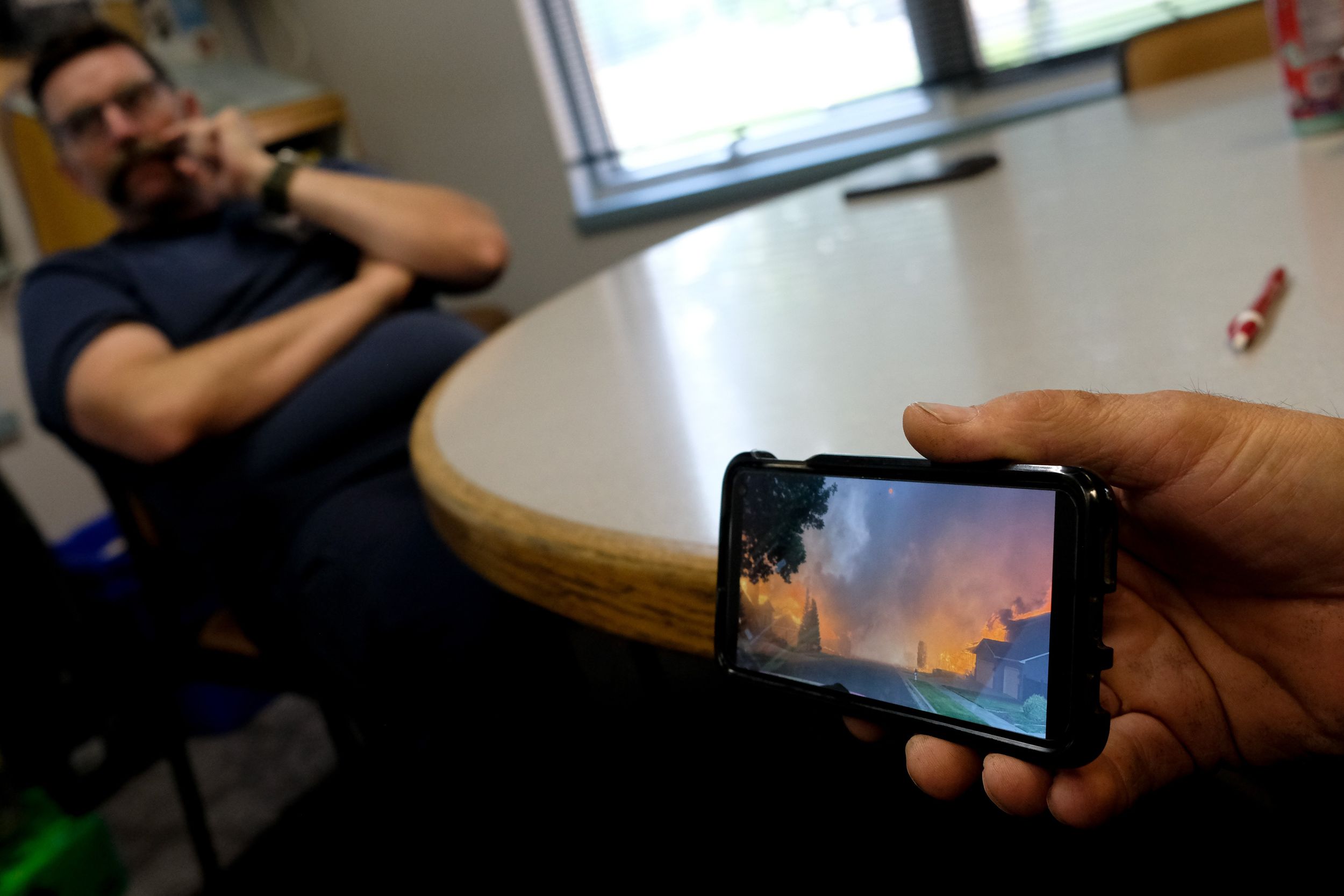
The blaze stalked their brush truck as they raced up Rifle Club Road. Before they even pulled into the neighborhood surrounding Westgate Park, it was already there.
The three followed the fire east but jumped from the truck to fight the fire near West Francis Avenue. There was no time to race back to the station and swap out their truck for an engine.
“We started trying to stop it,” he said. “But it was just a losing game at that point.”
Sander, who has been with the department for 24 years, sat to Bacon’s right, quietly staring out the window behind him and recounted the chaos – hour after hour of flames raging and homes erupting one by one.
In the midst of the mayhem, the scanner was raging, Sander said. The voices of the men and women they trained with repeatedly sounded over the radio, asking for help.
“We know their voices. We know who they are. They’re our friends, they’re who we train with. They’re calling for resources,” Sander said, “And we can’t go.”
A house fire would normally render around five fire engines with 15 firefighters and a battalion chief vehicle. Sander said two homes on fire at the same time likely would put around 10 fire apparatus out of service in the city. On Saturday, it was one apparatus to more than 10 houses.
The firefighters, now feeling the unwarranted guilt of the aftermath, had to abandon one burning home to attempt to save a cluster of 12. It’s now the first thing they think of when they wake up, they told The Spokesman-Review. When Sander would close his eyes, he’d imagine the homes he had saved burning over and over again, a dream that would startle him awake.
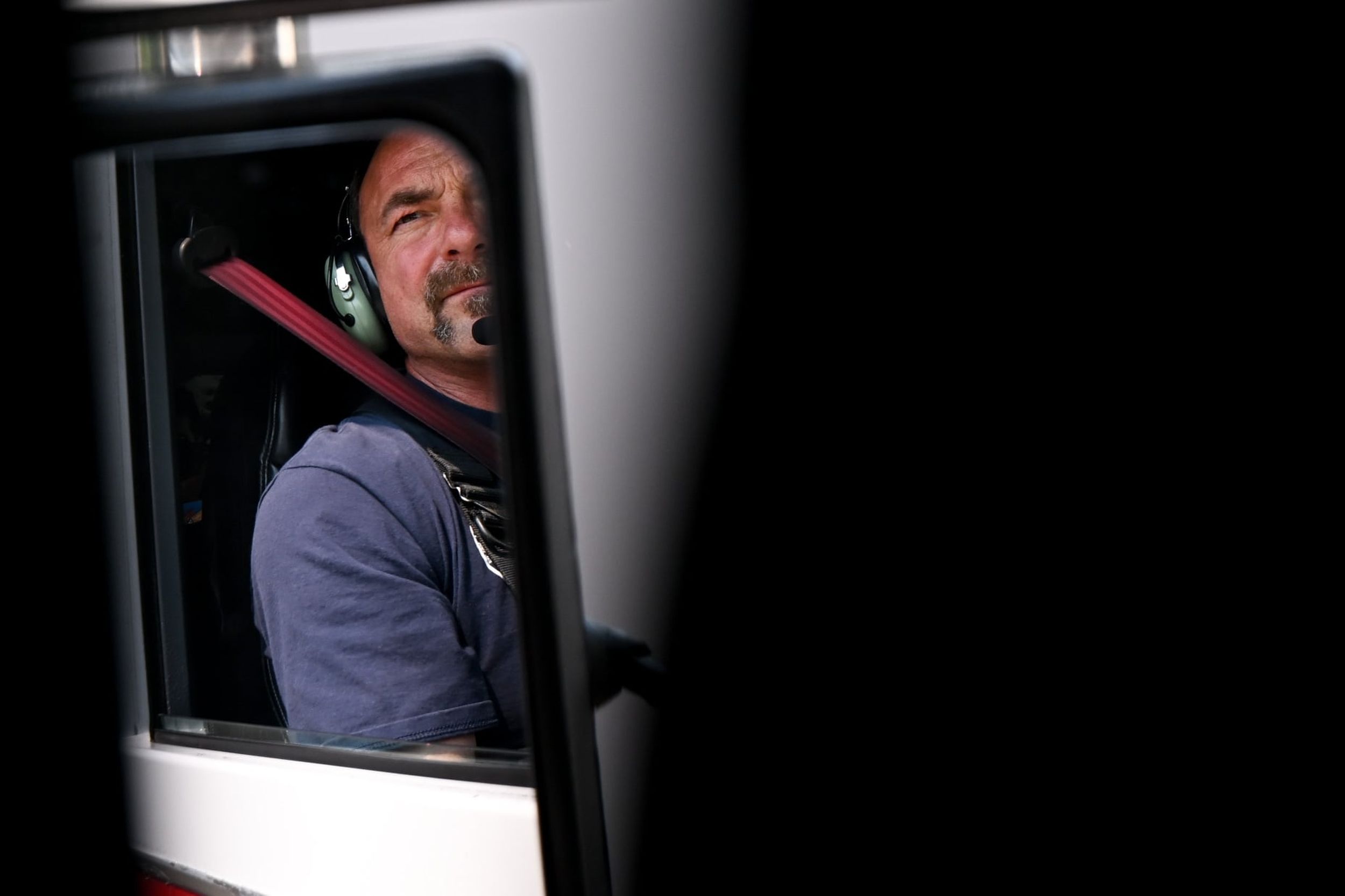
“We are down here with 500 houses burning. We’re supposed to save houses, and we couldn’t do it,” Sander said as he sipped out of a yellow cup with the label “Happy Cup.”
“It weighs on me. It weighs on me a lot,” Sander said. “I’ve never seen anything like it.”
The home Plowman vowed to save in the cul-de-sac of West Bing Court was blanketed with faded chalk that celebrated the 250th anniversary of America’s independence. Outlines of pink stars and blue fireworks littered the concrete.
He felt pulled to the home because seeing it “struck a nerve.”
Plowman crouched behind some bushes, peeked behind the home’s porch, and started spraying, hoping it would offer some reprieve and cool the home. The siding started to melt and the windows began to crack, but the home survived.
“The next morning, a neighbor told me there are four little girls who live in this house,” he said. “That is a win.”
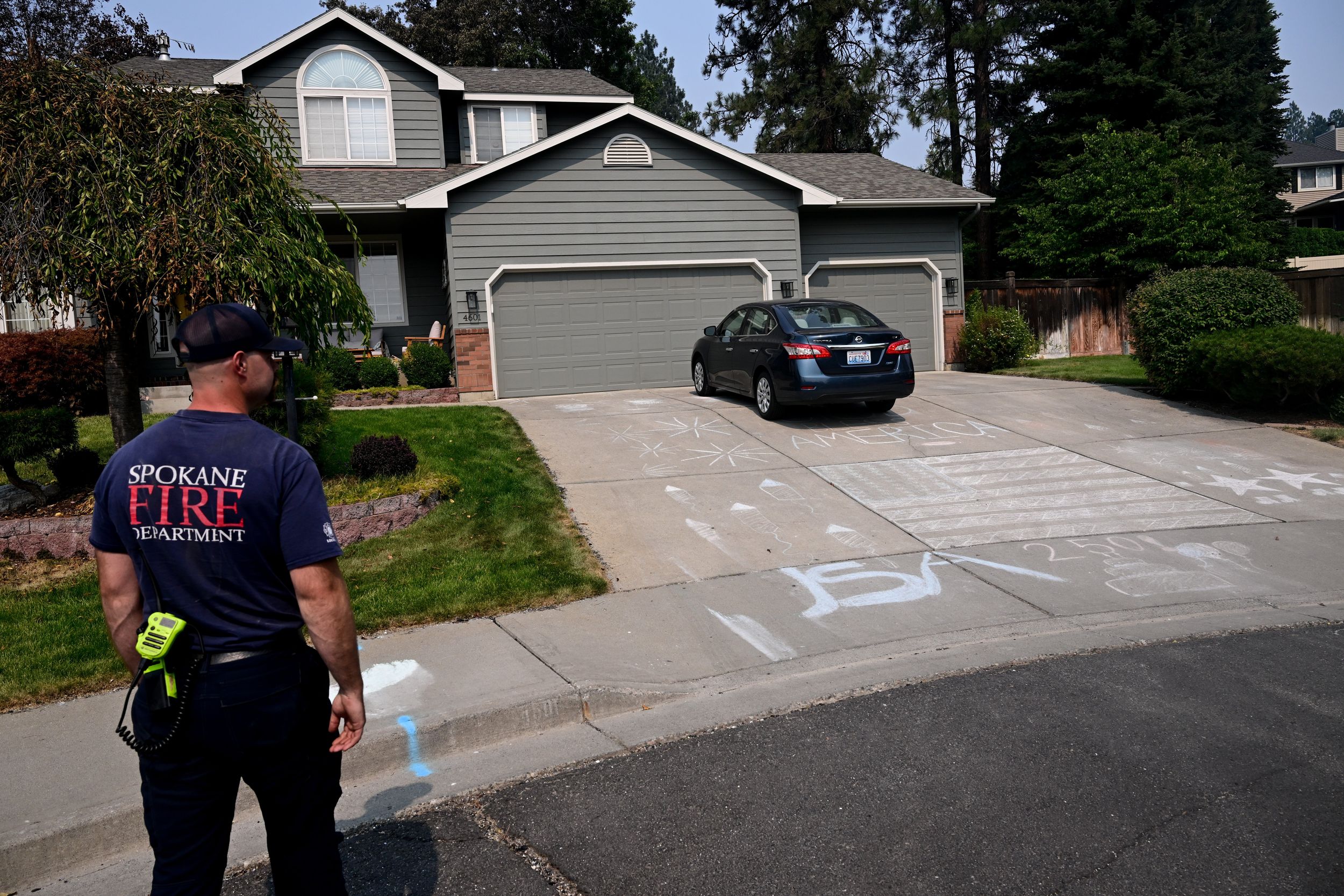
Countless times the men had to act without the protection of their normal structure fire turnouts. They recalled getting so hot they had to take turns spraying down homes. Other times, they had all but 30 seconds to hatch a plan before everything around them exploded in fire.
“There was one house in particular where we saw the chimney around the base of the chimney smoking, and Brandon said, ‘We got to go.’ Jerry and I said, ‘OK, give us 30 seconds on this house. We’ll figure it out,’ ” Plowman recalled.
They prepared to do something they’ve never done – rather than use a ladder they didn’t have, they used their bodies.
“I climbed up onto Jerry’s shoulders (and) got onto the roof,” Plowman said. “There was a bunch of debris that was just on fire, so I sprayed it, scraped it off and said ‘OK, hopefully that one’s good.’”
At one point, Bacon was lying on the ground, dumping water into his eyes to relieve the burning.
“I couldn’t keep my right eye open very long,” he said. All the while, Bacon believed his house on Indian Trail was gone, and he had no time to think what happened to his family.
“We were just so focused on just trying to save as many homes as we could,” Bacon said. “At some point, I got a text that they all made it out.”
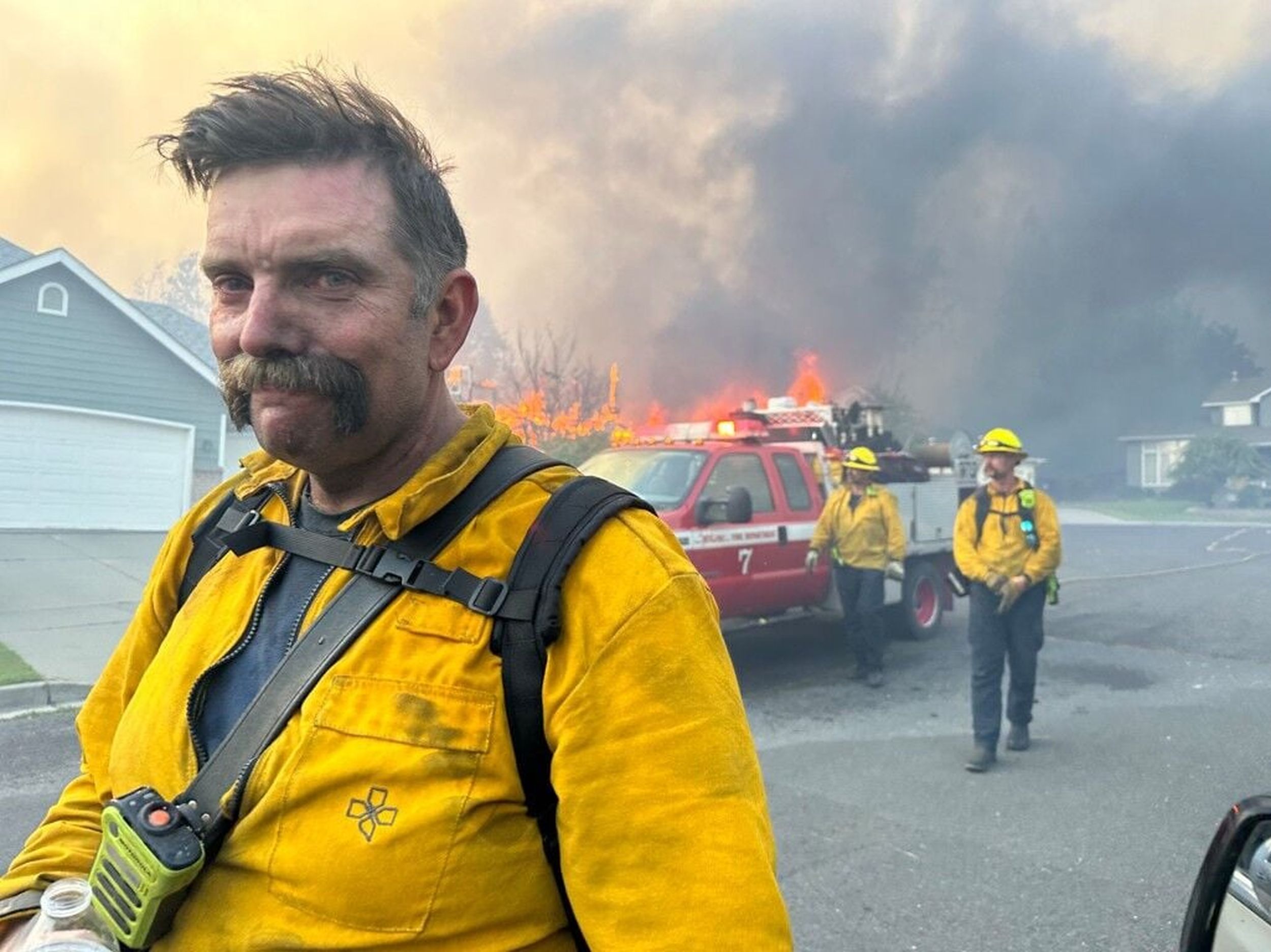
He knew his wife was safe, he was safe, and she had their go-bag. It’s just stuff, he thought. Those things can be replaced.
“The photos,” Bacon said, “I told her to grab the photos. That’s all I cared about.”
Plowman, Sander and Bacon ended up on North Fischer Court around 7 p.m., a cul-de-sac that was saved from the fire, likely due to their efforts. There was one home that was the exception.
A piece of decorative driftwood outside caught an ember, and the flames climbed into the attic. Once it was there, the home started to burn. The men felt helpless.
Minutes later, something peculiar happened – the garage attached to the burning home opened up, unprompted. The firefighters, concerned someone was trapped inside, called out into the opening. No one called back.
They rushed into the inside door, through a cloud of haze, where they reached two sets of car keys on the wall. Bacon threw one set to Sander.
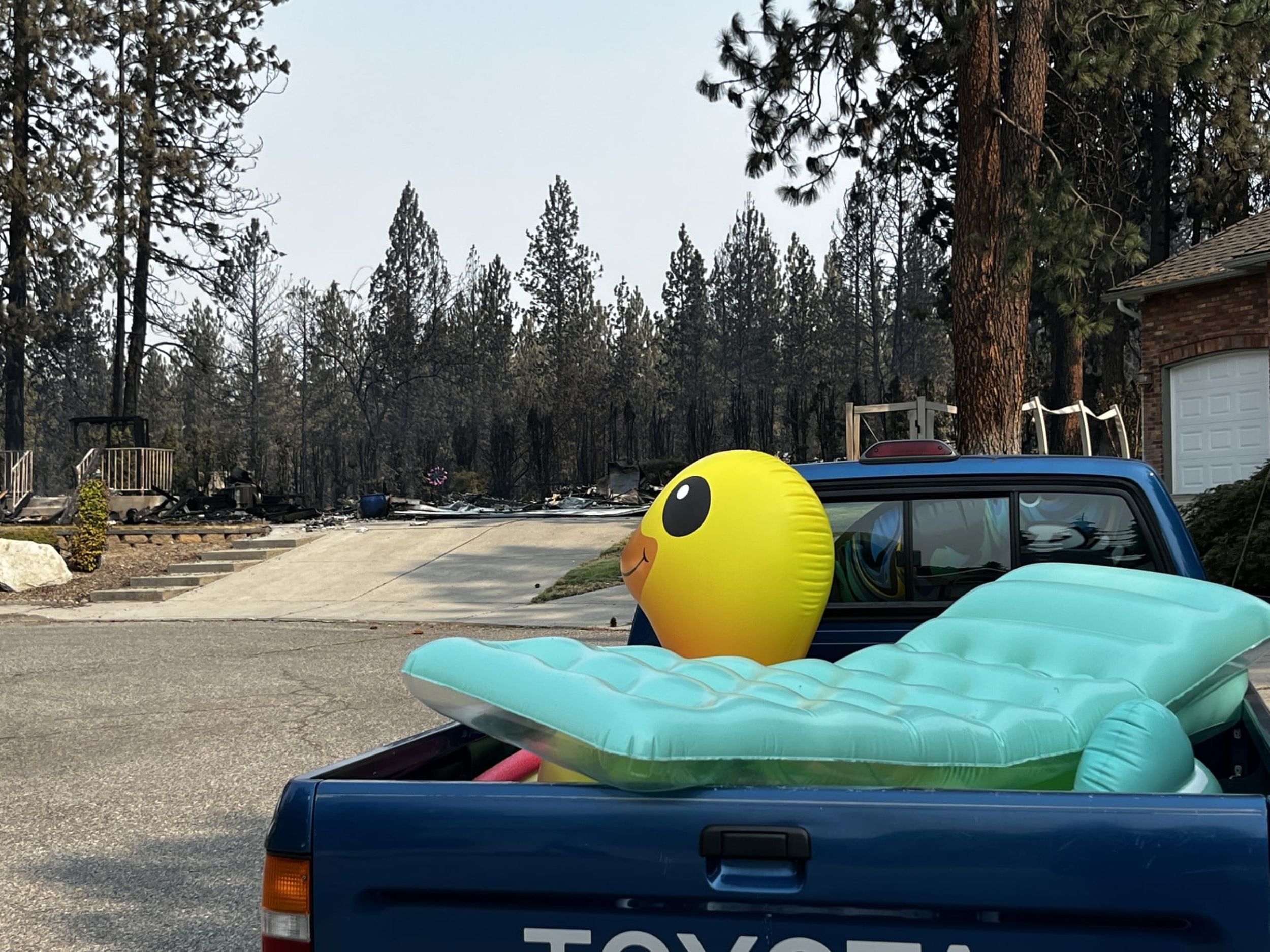
One put the keys in the ignition of a Toyota RAV 4. The other, a blue pickup truck with a duck-shaped pool floatie in the bed.
“We tried the keys, and they worked,” Sander said. “We pulled them out into the cul-de-sac. We thought we’d save as much as we can.”
The men had no idea what became of the cars, or the family that lived there. They just hoped something survived.
Revisiting tragedy
On Sunday, Plowman, Sander and Bacon went out of service to head back to the homes that were lost, and the homes they had saved. As they drove, one car sped up next to them and rolled down its window.
“Brandon,” Plowman called, motioning for him to look to his right. A child in the backseat stuck out their hand and gave a small wave. Bacon and Plowman both rolled down their windows and waved back. In just the short route up to the Indian Trail area, multiple drivers waved down the firefighters to thank them.
Families sitting on their porch steps said hello and gave them a thumbs-up. One man standing in his driveway mouthed, “Thank you.”
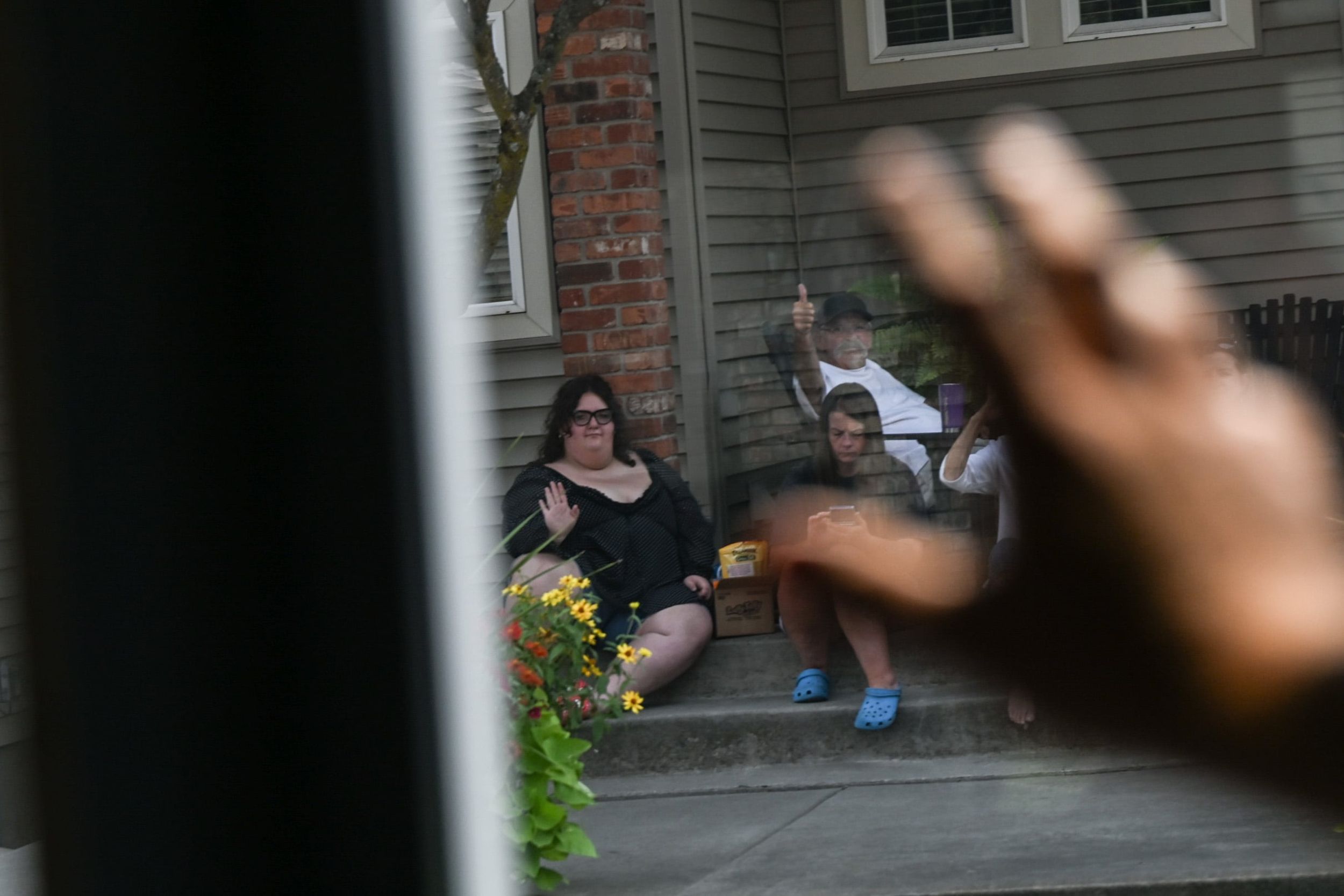
Driving through the neighborhoods Sunday, Sander slowed down in front of the spots they had been fighting to save for hours just a week earlier.
“Wow, I don’t know how that didn’t go,” he said, pointing to a house.
“It’s the way the wind swirls,” Bacon replied.
Plowman peered out the window where the men were pointing. “It’s apocalyptic.”
The men pulled over on West Bing Court, where they battled flames until 11 p.m., and jumped out to survey the home Plowman had wanted to save. Bacon and Sander quietly followed him into the street. With their hands on their hips, they squinted in the light and observed the rubble of the homes that were lost.
Though they saved most of the homes on that cul-de-sac by spraying the giant trees and fences, they still vocalized feeling disappointed in themselves that they couldn’t do more.
The smoke turned the cul-de-sac into night, though they were trying to put out the flames during the day. The landscape looked different now, baking in the sun, they said.
The men eventually parked on North Sutherlin Street, a place they had been on Saturday to put out flames in overhead trees. There, the men looked to their feet, where chalk lined the sidewalk with messages of sympathy for a resident there who lost his home. Bacon pulled out his phone to take a photo of a GoFundMe QR code taped to a trashcan on the sidewalk.
A woman who lives nearby, Gabby Graham, darted across the road and approached the three with a box of fresh-picked peaches.
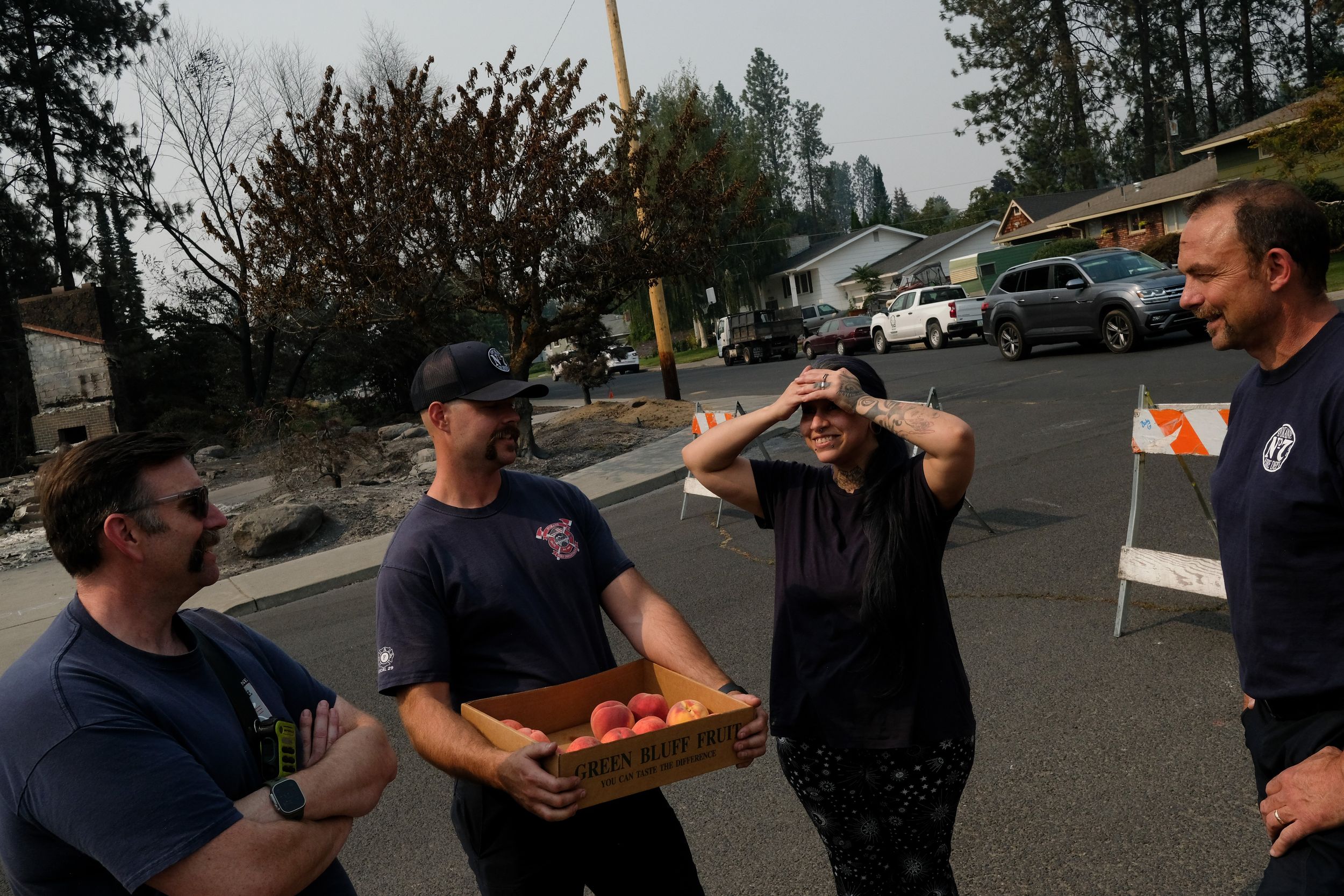
“You need paper towels when you eat these,” Graham said. “You helped save our neighborhood. Thank you.”
There was one place the firefighters had to visit before they bustled back to the station to finish out their Sunday shifts. The only home to burn on North Fischer Court.
The men pulled up behind a wildland firefighter’s brush truck and cut the engine. In the distance, a family milled about the rubble. A Toyota RAV4 was backed up into what used to be the driveway.
A woman in a mask approached Plowman, Bacon and Sander. Her eyes widened as she appeared to connect the dots: she was looking at the men who saved her family’s cars.
“Oh my God!” Chelsea Reilly cried, and slapped hand across her heart. “Oh, God bless you!”
She grabbed her mother, Bridget, and homeowner Suzanne Johnson, and pulled them toward the firefighters.
“You got to come talk to these guys!” she told her. “That story is a family legend, an absolute legend! These are the guys that saw the garage door open, these are the guys that tried to save the place!”
Bacon, standing on mounds of rubble, smiled back at them. “We got lucky,” he replied.
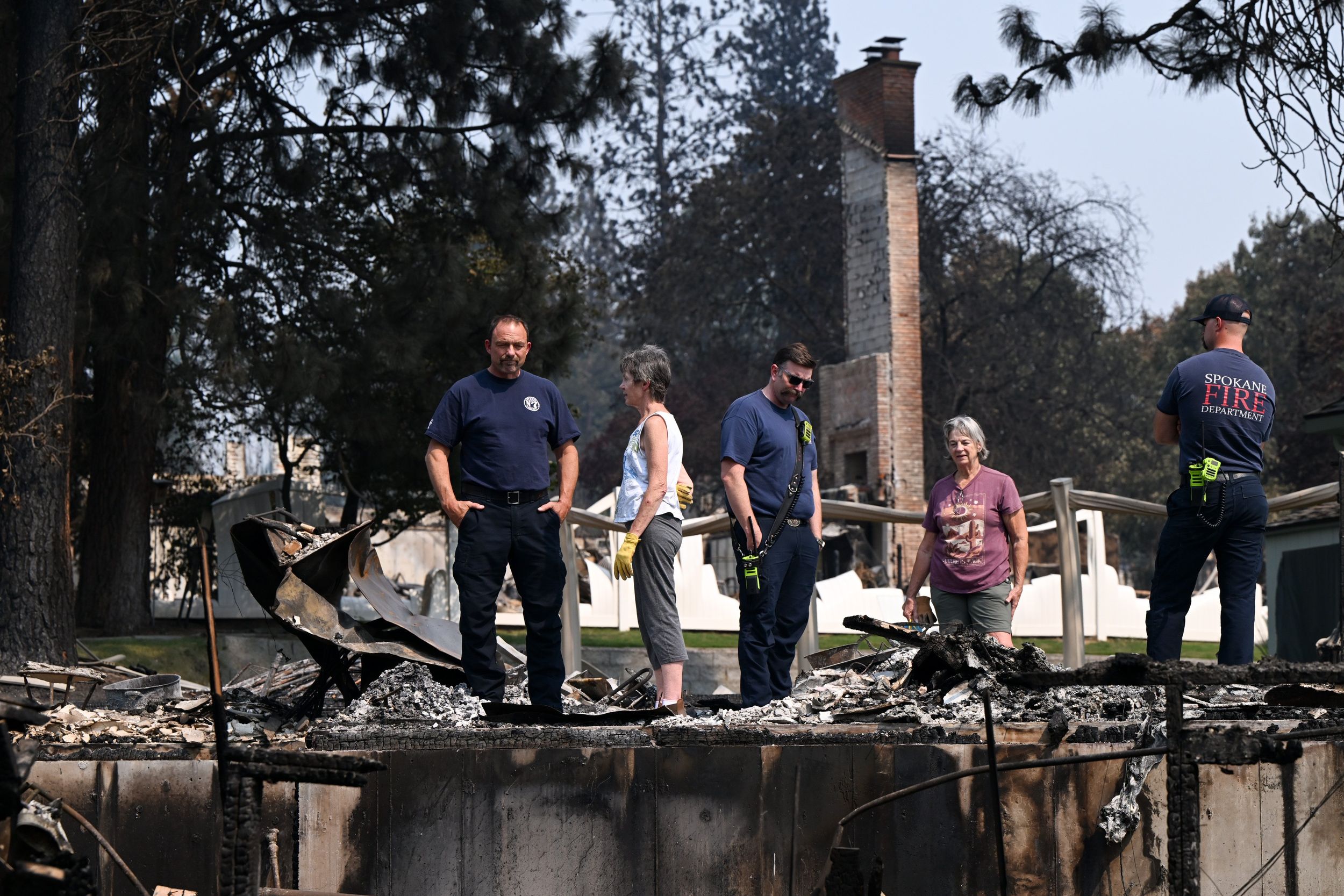
Bacon peered over what used to be the basement, then to what was left of the front yard. The driftwood that caught the ember and started the home on fire was still there, a charred clump of what it once was.
“The fire started here on your porch,” Bacon said. “We’re standing here, and the garage door just opens up. Magically.”
The Reilly family and firefighters still don’t know how the door opened on its own. No one had an automatic opener, they said Sunday, and no one was in the house at the time. Though Bridget Reilly’s home is now a mound of twisted metal and ash, she was still overjoyed the men saved her 1994 Toyota pickup truck. The truck, nicknamed “Miss Blue,” still had the yellow duck shaped pool floatie in the back.
“It’s kind of an amazing story. I just told many people that, and they’re like, “Who was telling you the garage door went open? Were they drinking?’” Bridget Reilly said as she laughed. “We’re just incredibly grateful to have something from the home, from the fire, and we’re very fortunate. We’re a lot more fortunate than other people that we have all three of our cars and our blow-up rubber duck.”
Bacon, Sander and Plowman explained to the family what they were doing that night to try and save their neighbor’s homes. They had to hide behind a nearby tree and soak the sides of the home with water over and over again, they said. Embers continued to fall on the neighbor’s roof for an hour. Plowman kept tripping on a small metal fence around one of the trees, he recalled.
“We were trying to save both these homes, and you don’t realize it until the sun came out in the morning,” he told Bridget Reilly.
The Reilly family was able to recover a safe, some burnt beer bottles they won’t be drinking from, they joked, and a large, decorative purple spinner in their backyard. Somehow, it still lights up at night. The neighbors see it and call it their “beacon of hope.”
Also recovered was a tile embellished with their family crest that their grandparents brought back from Ireland more than 45 years ago.
“We’re just grateful, so grateful for these guys and what they do,” Bridget Reilly said outside her property Sunday. “The level of appreciation just grows exponentially when you see something like this.”
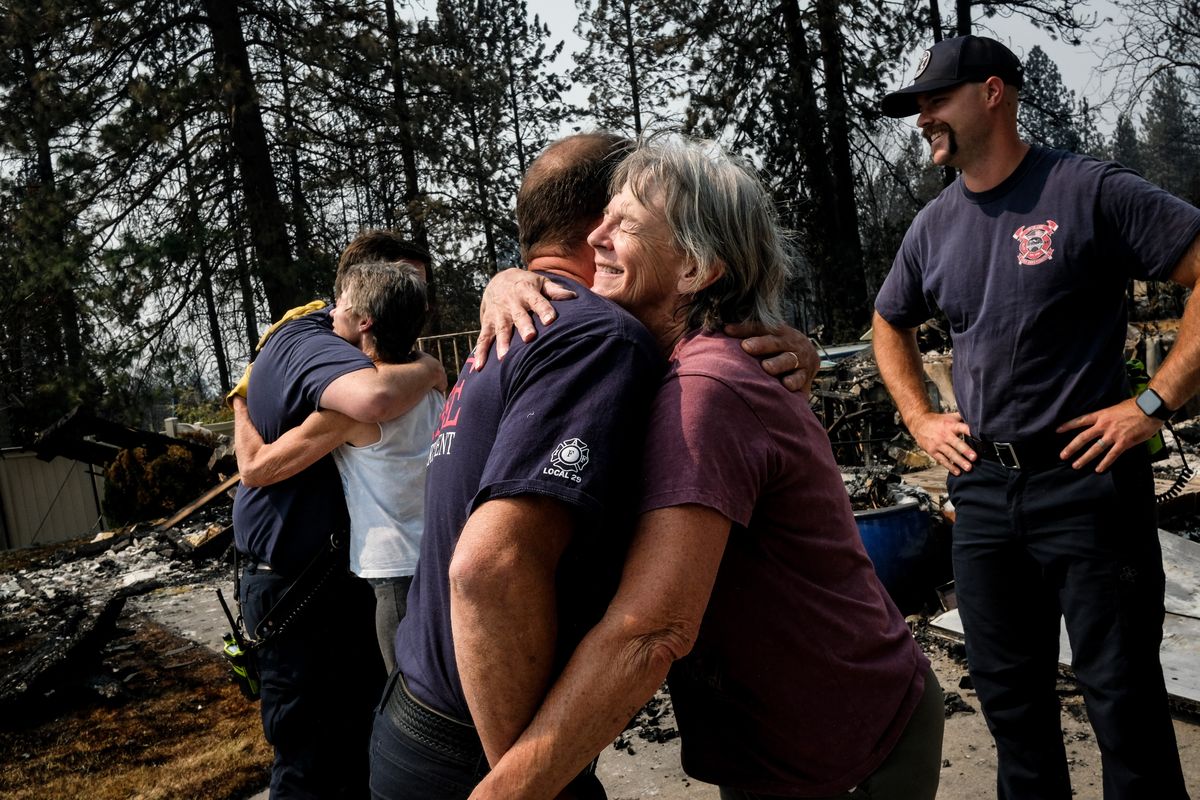
The family exchanged some tearful hugs with Bacon, Sander and Plowman on the driveway.
“Thank you,” Bridget Reilly said. “I appreciate you.”
The three wandered back across the cul-de-sac to their parked engine. Bacon leaned against the front of the grill, still hot to the touch from the midday sun.
“That’s good to see,” he said. “It’s just hard to see so many people suffer. I kind of just wish we could have done more, and wish things went differently that day.”
Asked if the trio is religious, they nodded.
“There was a lot of loss,” Plowman said. “But I think God put us where we need to be to save what we could save.”
As the group headed back to the station at 1901 E. First Ave., they admitted they felt a small sense of closure from being out in the neighborhood Sunday, their first full day back as a crew to debrief last week’s horrors.
Sander backed the engine into the garage, and Bacon jumped down, took off his shoes and slipped on some black slides. He placed his hands by his pockets and cocked his head to the left.
“I’m glad something good came out of that.”